

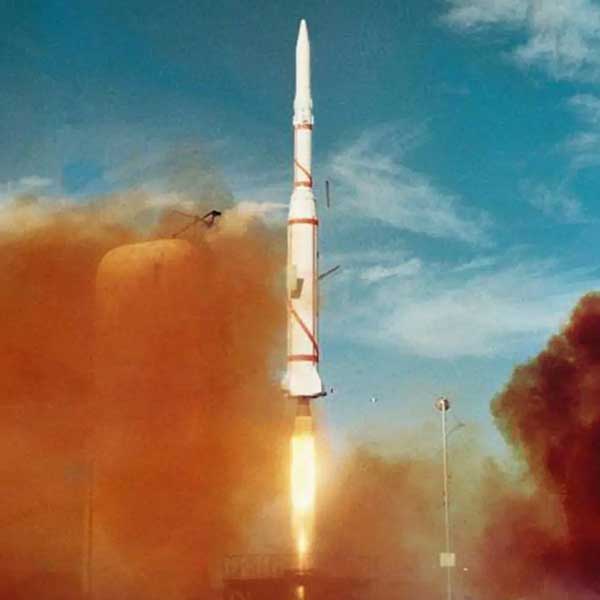
It started in 1947, not with ambition exactly, but with necessity. Engineers at the newly established Laboratoire de Recherches Balistiques et Aérodynamiques in Vernon had access to captured V-2 components and a handful of German technical documents. What they didn’t have — and what they were determined to build — was genuine, home-grown expertise. Copying the V-2 was never really on the table. It was too large, too militaristic, and too complex for what France actually needed. So they started smaller, and they started from scratch.
The work was unglamorous. Engines exploded. Injectors failed. Guidance systems drifted off course over the Saharan sky. But that’s how you learn, and by the early 1950s, France had learned enough to design its own rocket family. They called it Véronique — a name derived from “Vernon électronique,” tying the vehicle directly to the lab where it was born.
The Véronique Years
Véronique launched from Hammaguir, a range deep in the Algerian Sahara chosen for its wide safety corridors and clear skies. The early N variants established the basics: liquid propulsion using nitric acid as oxidiser, high-altitude telemetry, guidance stabilisation. These weren’t glamorous achievements, but they were essential ones. Each failure fed the next iteration.
The 61 and 61M variants represented genuine leaps forward. Engine performance improved, structural efficiency increased, and payload capacity grew enough to carry real scientific instruments — temperature and pressure sensors, ionospheric probes, radiation detectors — to altitudes approaching 100 kilometres. France wasn’t just testing rockets at this point; it was doing science, and contributing data to international research efforts.
The most capable and best-known member of the family was the Véronique AGI — the name standing for Année Géophysique Internationale, the International Geophysical Year of 1957–58. The AGI could reach apogees of around 140 kilometres, placing it firmly above the Kármán line and into the territory of genuine space research. French engineers had gone from failed injectors in a desert laboratory to the edge of space in less than a decade.
But rockets aren’t only useful for carrying instruments.
In February 1961, a rat named Hector was launched aboard a Véronique, making France the third country to send an animal to space. Electrodes implanted in his skull monitored neurological activity throughout the flight — the beginning of France’s serious interest in understanding how living organisms respond to the conditions of space. Two more rat flights followed that October.
French scientists then turned to cats. The logic was sound: cats had been extensively studied in neurophysiology labs, and there was a rich existing body of data to compare against. In 1963, fourteen female cats — calmer by nature than males, and better suited to the cramped confines of a capsule — were acquired by CERMA, France’s Centre for Aviation Medicine research, and put through a rigorous selection process. Centrifuge runs, confinement training, simulated launch noise. None of them were named during training; the scientists wanted to avoid attachment.
On 18 October 1963, a small tuxedo cat designated C 341 was loaded into the nose section of a Véronique AGI 47 at Hammaguir. She experienced 9.5 g on ascent — nearly double what Apollo astronauts would feel launching to the Moon — before the nose cone separated and she floated in weightlessness for five minutes at an altitude of around 152 kilometres. Thirteen minutes after launch, her capsule parachuted down and a helicopter crew retrieved her, alive and well.
The media named her Félix, after the cartoon character. CERMA corrected this to the feminine Félicette, and that’s the name that stuck. She got a bronze statue at the International Space University in Strasbourg in 2019, more than half a century after her flight. It took that long for her story to be properly told.
Félicette was the first and only cat to reach space. She remains one of the more poignant footnotes of the Space Race — a stray pulled from the streets of Paris and sent to the edge of the atmosphere in service of a programme that the history books largely forgot.
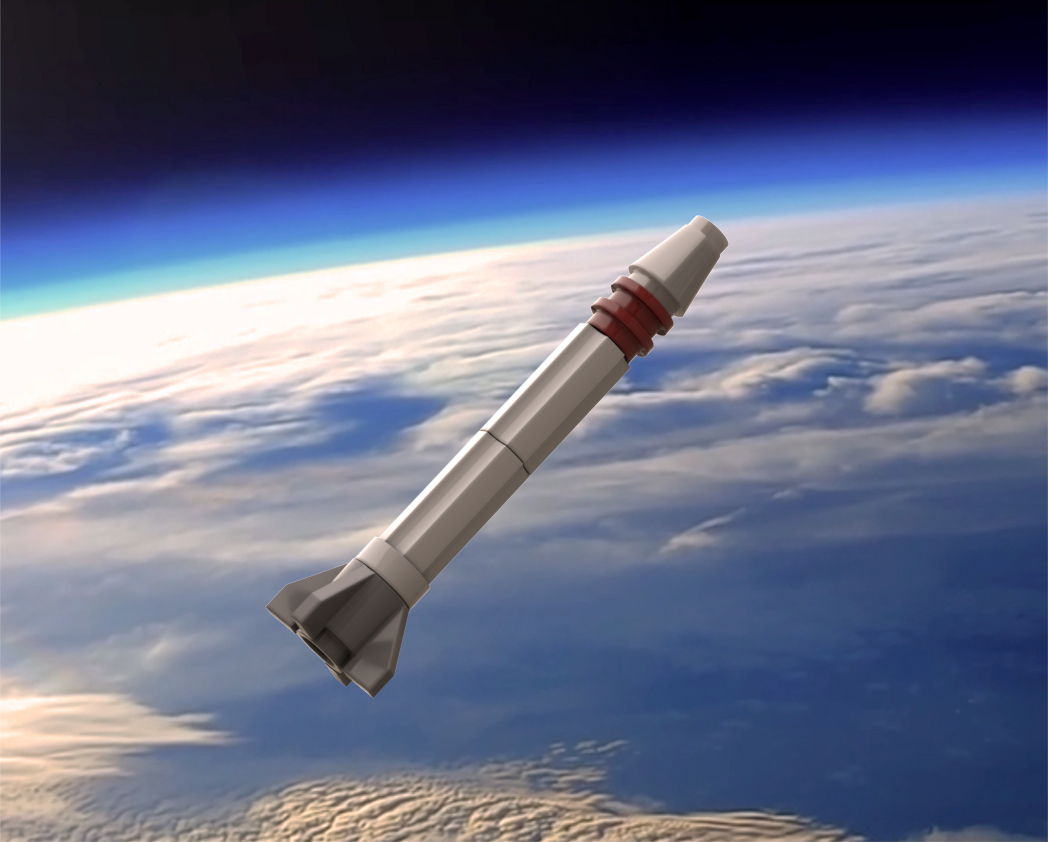
Véronique N
Véronique N
Country of origin: FranceFirst flight: 20 May 1952Launch site: Hammaguir, Algeria
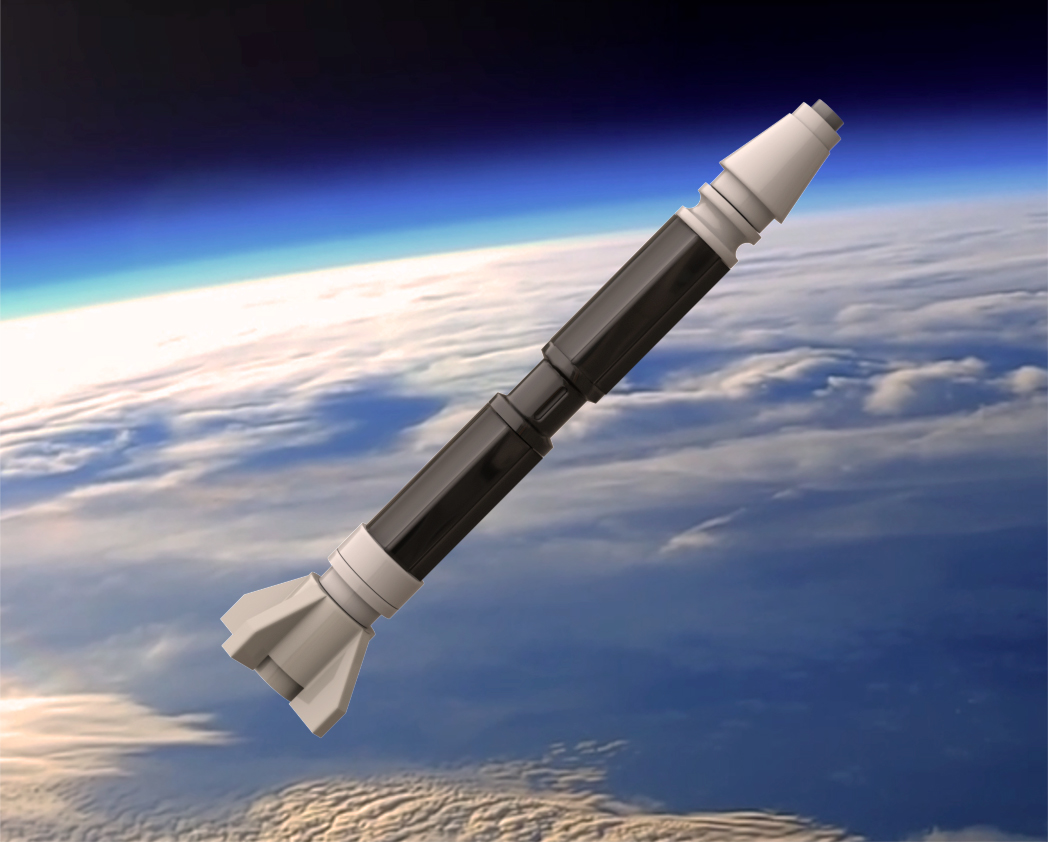
Véronique AGI
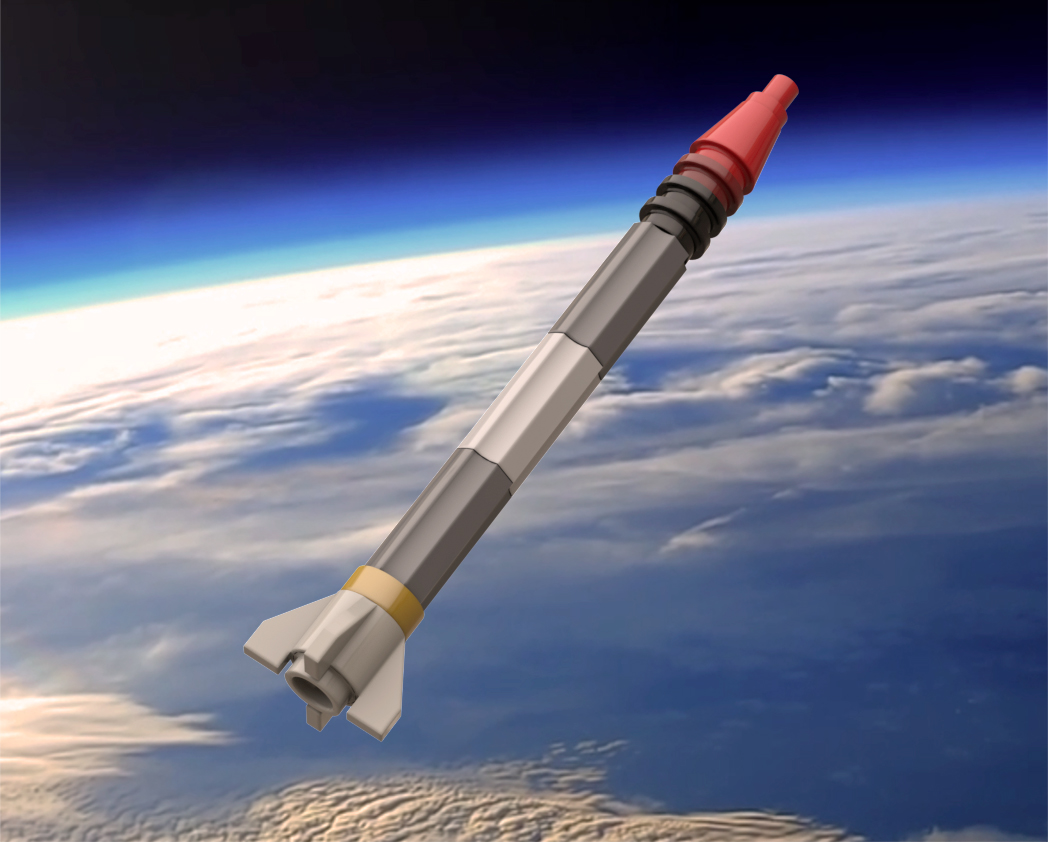
Véronique 61
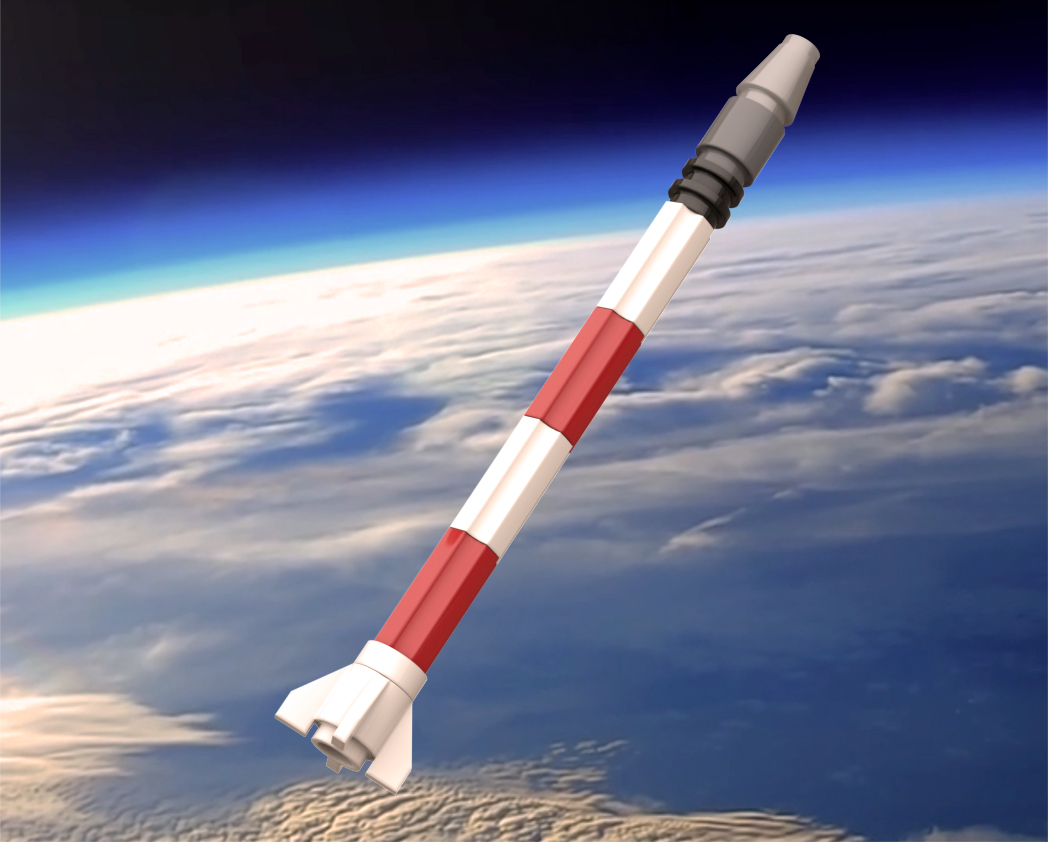
Véronique 61M
The Supporting Cast
While Véronique was the backbone, several other vehicles played crucial roles in the late 1950s and early 1960s. Bérénice handled targeted ionospheric research where a full Véronique would have been overkill. Éole served as a technology demonstrator, testing instrumentation packages under real flight conditions. Rubis bridged military missile development with civilian rocket technology, feeding structural and propulsion lessons forward into later designs. Vesta pushed apogees higher still, extending research capability beyond what Véronique could offer. And Cora quietly laid groundwork for something much more ambitious — contributing directly to the upper-stage technology that would eventually fly on Diamant, and informing early European launcher concepts.
By the early 1960s, France had a full ecosystem of test vehicles, sounding rockets, and missile derivatives. The technical groundwork for orbit was in place.
On December 19, 1961, France created the Centre National d’Études Spatiales — CNES. This was more than administrative tidying. It centralised funding, research direction, and program management, and it signalled a national commitment to space as both a strategic priority and a long-term scientific investment. It also made France only the third country in the world to have a dedicated civilian space agency.
With CNES in place, the path forward was clear.
France’s hard-won expertise didn’t stay within French borders. As the early 1960s unfolded, it became clear to several European nations that space was too expensive and too complex for any single country to pursue alone indefinitely.
France was a founding signatory of both major European cooperative efforts that followed. In March 1962, Belgium, France, Germany, Italy, the Netherlands, the United Kingdom, and Australia signed the convention creating ELDO — the European Launcher Development Organisation — with the aim of building a shared heavy launcher called Europa. Two months later, in June 1962, those same nations plus Denmark, Spain, Sweden, and Switzerland signed the ESRO convention, establishing the European Space Research Organisation to coordinate scientific satellite programmes. Both organisations formally came into force in 1964.
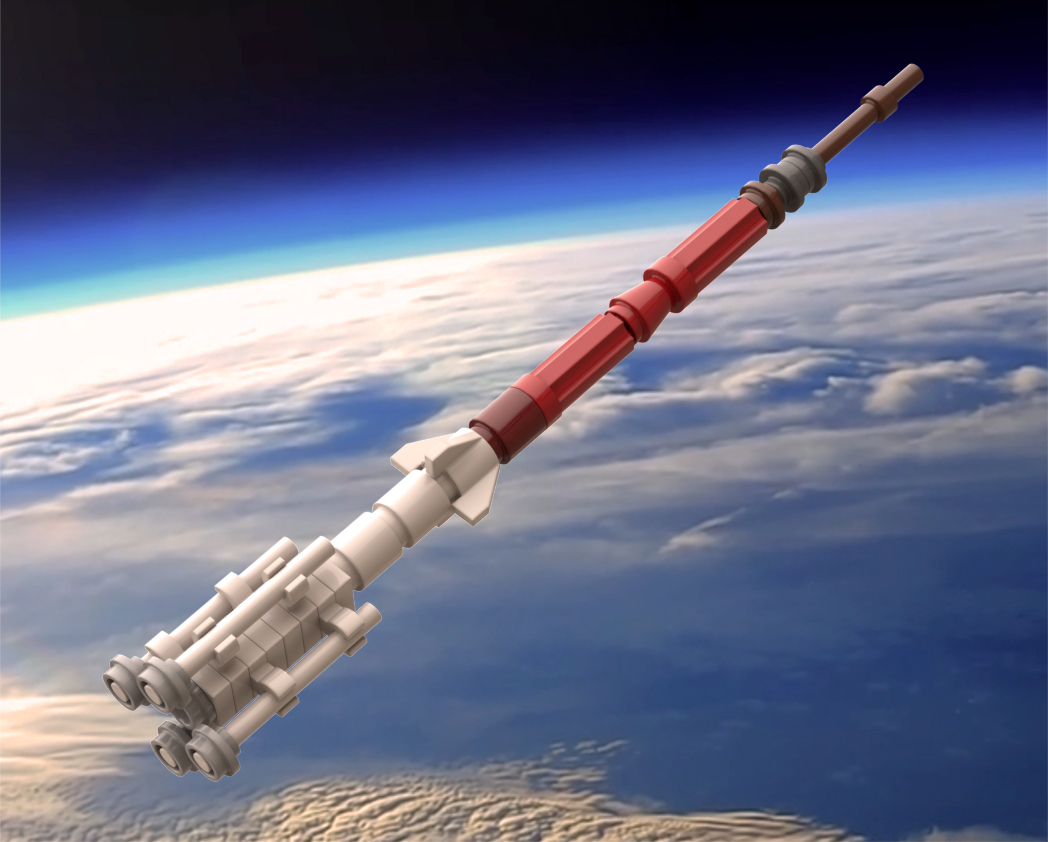
Bérénice
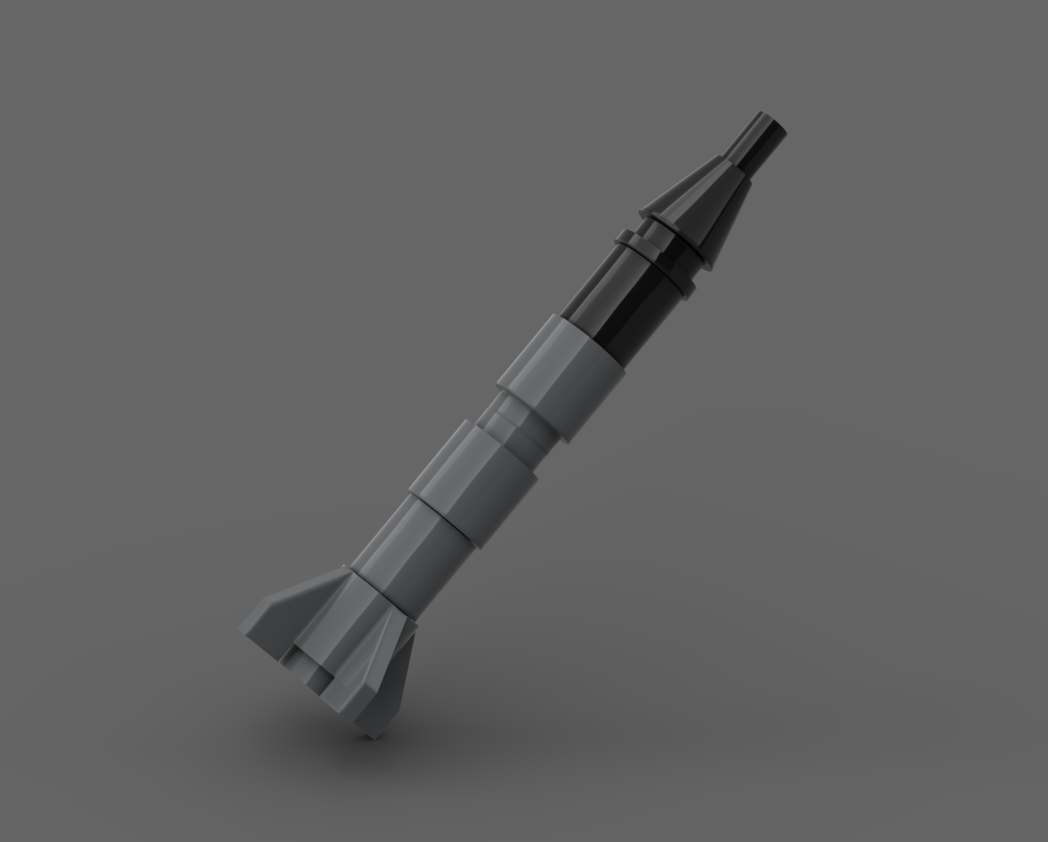
Eole
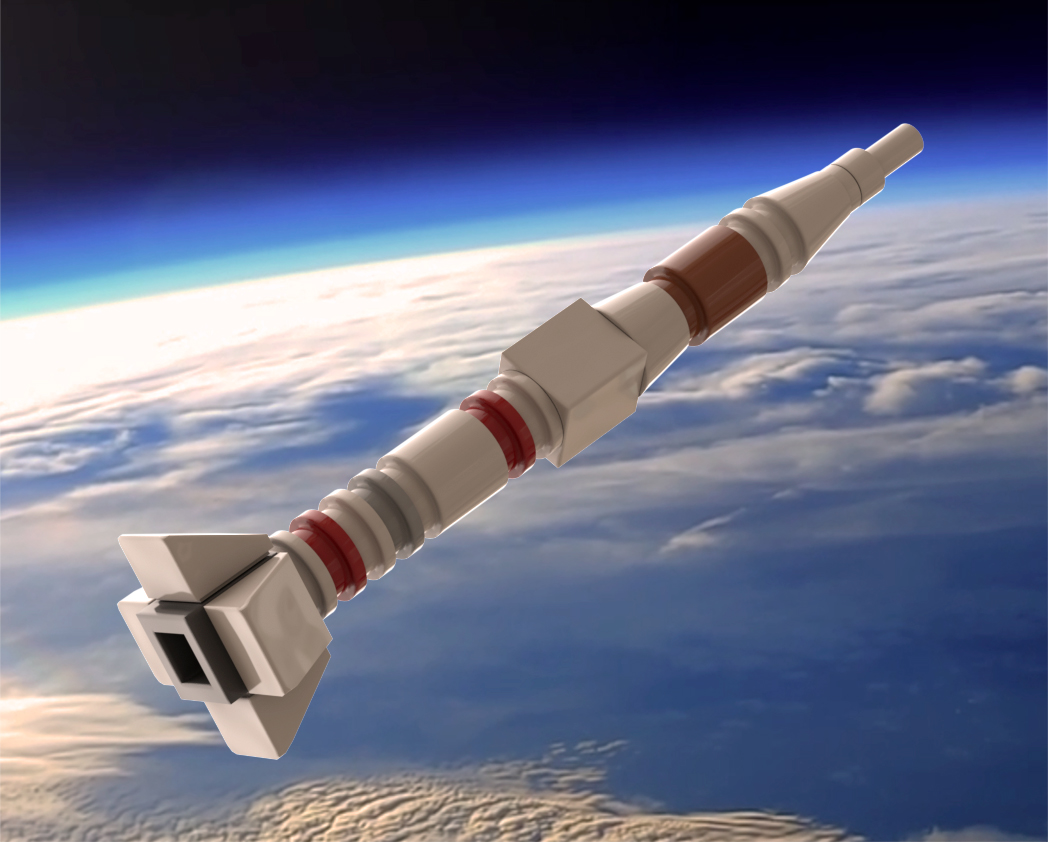
Rubis
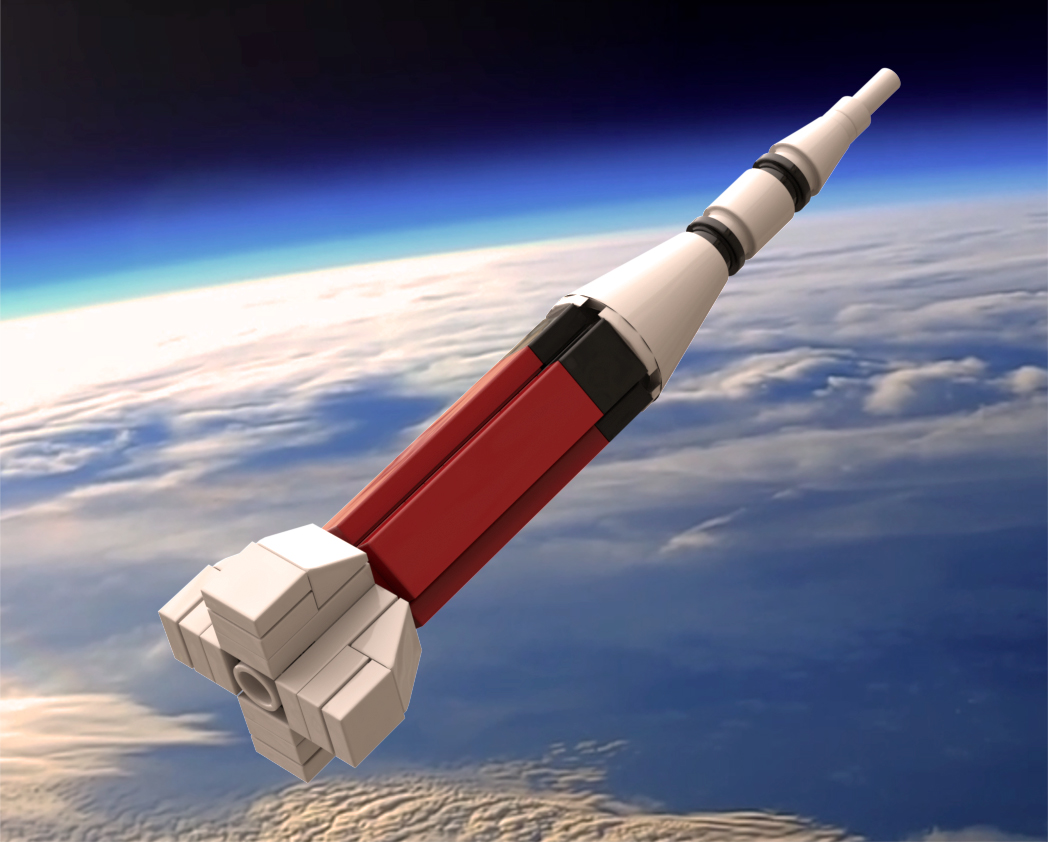
Vesta
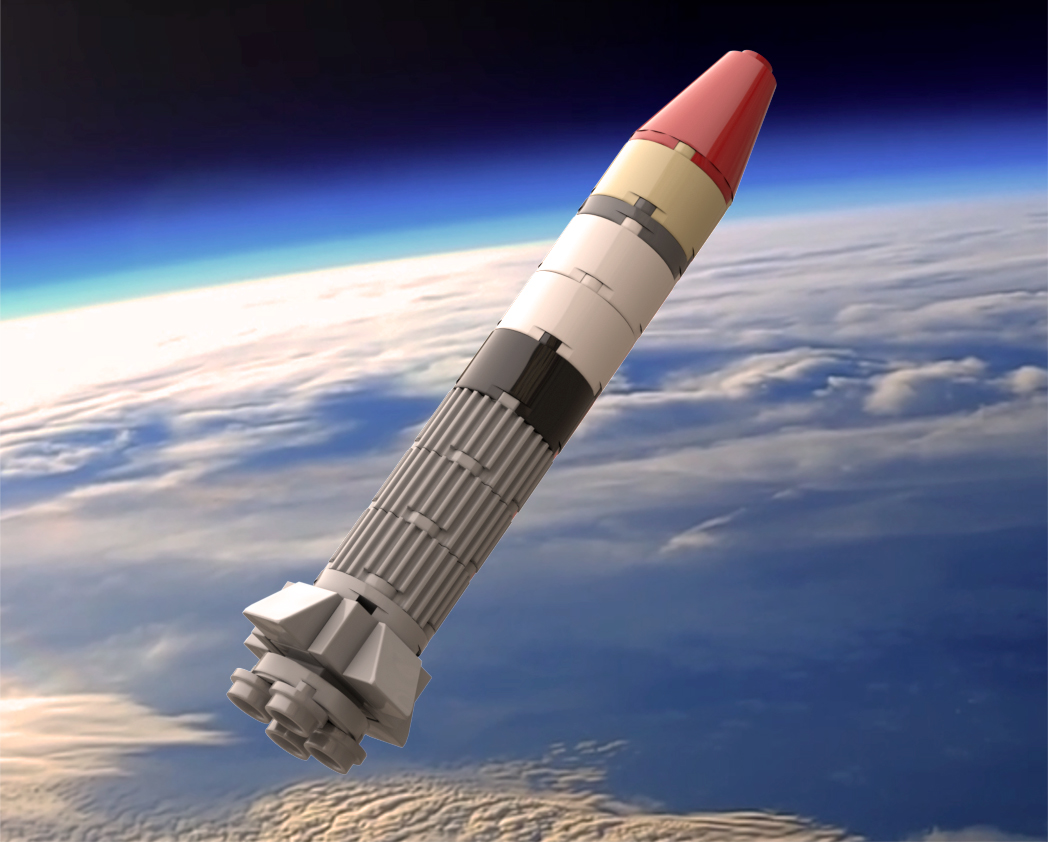
Cora
Diamant: From Sounding Rockets to Satellite Launches
Diamant was the culmination of nearly twenty years of propulsion work — but its origins were more deliberate than the name alone suggests. The rocket grew directly out of a military programme called pierres précieuses, or Gemstones, which SEREB — a state-owned research and development company — had been running since 1959. The Gemstones vehicles were a family of one- and two-stage test rockets named after precious stones: Agate, Topaze, Emeraude, Rubis, Saphir. Each one tested a different aspect of the propulsion and staging technologies that Diamant would eventually need. By the time CNES signed an agreement with the French military in May 1962 to formally develop an orbital launch vehicle, much of the hard work had already been done. Diamant A was, at its core, a repackaging of the two-stage Saphir rocket — which had failed only twice in fifteen flight attempts — with a new solid-fuel third stage that had itself been validated on Rubis test flights.
The result was a three-stage vehicle standing just under nineteen metres tall, weighing eighteen tonnes at launch, and capable of placing around 150 kilograms into low Earth orbit. Like Véronique before it, Diamant used a mixture of turpentine and nitric acid — familiar propellants to French engineers, mastered over more than a decade of sounding rocket work.
On November 26, 1965, a Diamant A lifted off from Hammaguir’s Brigitte complex carrying a small test satellite designated A-1. The vehicle worked. The 42-kilogram satellite, shaped roughly like a spinning top and carrying four antennas and a radio transmitter, entered an orbit ranging from 527 to 1,697 kilometres. France’s media quickly nicknamed it Astérix, after the beloved Gaulish comic strip character — and the name stuck.
There was a small hiccup: the payload fairing damaged Astérix’s antennas during separation, leaving its transmissions faint and short-lived. American radar nonetheless confirmed it was in orbit. The mission was deemed a success.
With that launch, France became the third nation in history to place a satellite in orbit using its own rocket — after the USSR and the United States. The British, Canadian, and Italian satellites that had previously been launched were all carried on American vehicles. This was something different: genuine, independent capability. End-to-end. The head of the Diamant project, Charley Attali, was awarded the Legion of Honour that same year.
Astérix, for what it’s worth, is still up there. Its high orbit means it won’t re-enter the atmosphere for centuries.
Diamant A flew four times before retiring in February 1967, launching French scientific satellites in the interim. Then operations shifted — in April 1968, France’s new launch facility at Kourou in French Guiana was declared operational, and the programme moved from the Algerian Sahara to South America. The geography was better: Kourou sits just five degrees north of the equator, giving rockets a significant boost from the Earth’s rotation.
Diamant B followed in March 1970, more powerful and with improved payload capacity. Its maiden flight from Kourou carried a joint French-German satellite studying the Van Allen radiation belts. Three versions of the rocket flew in total — A, B, and the final BP4 — across twelve launch attempts between 1965 and 1975, nine of which were successful. By the standards of first-generation launchers, that was a respectable record.
Ultimately, Diamant was wound down not because it failed, but because something bigger was coming. France had committed to a pan-European launcher programme — what would become Ariane — and couldn’t fund both. CNES completed its already-scheduled manifest and flew the final Diamant-BP4 missions in 1975, then shut the programme down. The same organisation, CNES, went on to serve as prime contractor on Ariane 1. The technical DNA was direct: Ariane’s design was explicitly based on the Diamant experience, and two-thirds of Ariane 1’s funding came from France.
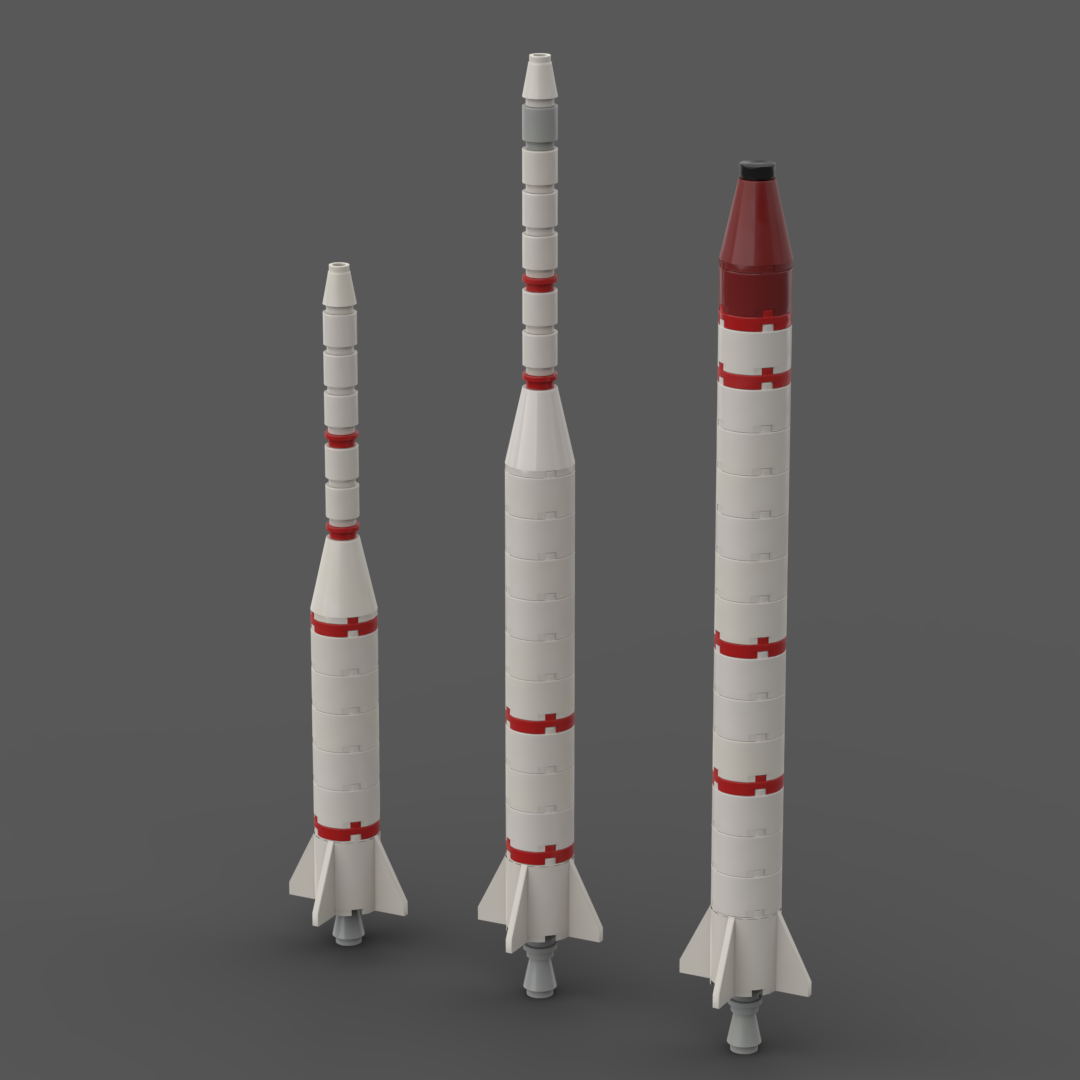
Diamant A
Diamant A
Diamant B
Diamant B
Diamant BP4
Diamant BP4