

In 1958, two physicists met at a conference and wrote a letter. Edoardo Amaldi, an Italian, and Pierre Auger, a Frenchman, had spent their careers building pan-European scientific institutions. They were among the founding architects of CERN and they saw no reason why space should be different. The letter they circulated argued for a European space agency that would allow the continent’s nations to pursue scientific ambitions no single country could achieve alone. It was, in retrospect, the seed from which everything that followed would grow although it took seventeen years, two failed organisations, and one spectacular string of rocket disasters to get there.
Two Agencies, One Problem
The early 1960s produced two separate European space organisations. In 1961, six European countries — Belgium, France, Germany, Italy, the Netherlands, and the United Kingdom — formed the European Launcher Development Organisation, ELDO, to develop and build a heavy launcher called Europa. The following year, those same countries plus Denmark, Spain, Sweden, and Switzerland formed the European Space Research Organisation, ESRO, to undertake mainly scientific satellite programmes. Two organisations with overlapping membership, different mandates, competing priorities and perpetual disagreements over funding.
Between 1968 and 1972 ESRO launched seven research satellites, building genuine scientific credibility, and established the institutional habits of multinational space cooperation. Scientists from different countries collaborated, shared data, and produced results. The model, inherited from CERN, functioned.
ELDO on the other hand, had a history of technological failures, cost overruns and political dispute. The Europa rocket was an ambitious three-stage vehicle whose stages were built by three different countries. Britain responsible for the first stage, derived from the Blue Streak ballistic missile; France for the second; West Germany for the third. The arrangement was politically elegant and technically catastrophic. Each stage worked when tested in isolation. Getting all three to work together, in sequence, in flight, proved essentially impossible.
There were eleven ELDO launches in all. None of them successfully put a satellite into orbit. Europa 2, the final attempt, launched from the newly established facility at Kourou in French Guiana in November 1971. It exploded 150 seconds after ignition. After the failure, Britain pulled out of launcher development concentrating on their own indigenous small launcher, the Black Arrow, a slender three-stage vehicle that the press inevitably nicknamed the lipstick rocket. Meanwhile Germany questioned the wisdom of developing a European rocket at all. Between Britain’s exit and Germany’s doubts, ELDO was finished. It was formally wound down three years later.
The Merger and the Mandate
By the late 1960s, many European representatives of both ESRO and ELDO were dissatisfied. Many scientists and politicians were irritated over having to rely on the United States for launchers. ESRO’s satellites flew on American rockets. Every time Europe wanted to put something in space, it went to NASA or to a commercial American provider.
At a meeting in Brussels in December 1972, a revised plan was submitted. Special projects included a plan whereby France would develop its launcher Ariane to replace Europa, while West Germany would cooperate with NASA to build Spacelab. The division of labour was deliberately structured to give each major member state a stake significant enough to justify continued commitment, a principle of juste retour, or fair return, that has governed ESA’s industrial arrangements ever since.
On 30 May 1975, at the French Ministry of Foreign Affairs in Paris, envoys from the ten member countries of ESRO signed the ESA Convention, effectively merging ESRO and ELDO into a single agency. The European Space Agency was born. Its founding members were Belgium, Denmark, France, West Germany, Italy, the Netherlands, Spain, Sweden, Switzerland, and the United Kingdom. Ireland joined by the end of the year.
The new agency inherited ESRO’s scientific programme, ELDO’s ambitions, and a shared understanding that the two previous organisations’ failures had largely stemmed from underfunding and insufficiently unified command. ESA would not repeat those mistakes, at least not the same ones. Its first satellite, Cos-B, launched in August 1975 on an American Delta rocket. The irony was temporary, the whole point of ESA was to eventually not need American rockets. France had already started work on the solution.
Building Ariane
Just three months after Europa 2’s final explosion in 1971, France had introduced plans for a new launcher it called L3S, later renamed Ariane, after the Greek mythological figure Ariadne who guided Theseus through the labyrinth. The name was apt. Europe needed a way through.
Ariane was in fact a refined modification of the Europa IIIB rocket design, drawing on the developmental work that ELDO had accumulated despite never achieving a successful orbital launch. France took the lead, with CNES as prime contractor and Aérospatiale managing manufacture. Eleven European nations contributed components and funding, with work distributed according to the juste retour principle.
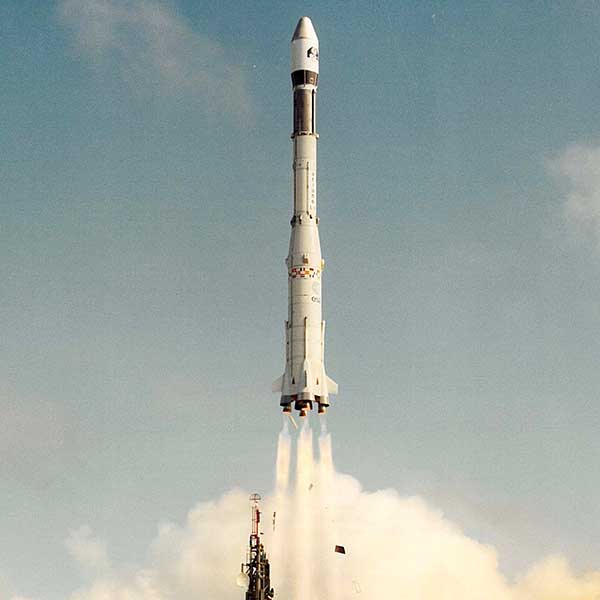
The first stage burned storable hypergolic propellants through four Viking engines, a propellant choice that sacrificed some performance for operational simplicity and reliability. The second stage added a single Viking-4. The third stage used an HM7 engine running on liquid hydrogen and liquid oxygen, providing the high-efficiency final push to orbit. ESA recognised that this upper stage design worked very well, and it remained essentially unchanged through the first four generations of Ariane.
On 24 December 1979, Ariane 1 lifted off from Kourou and placed its payload into orbit. After fifteen years of European launcher failures, it worked on it’s first time. The success put an end to America’s long-running dominance in the market for launching commercial payloads, from this point, Europe would be in the running for these contracts. Ariane 1 flew eleven times through 1986, failing twice but establishing a credible reliability record and launching payloads including the Giotto comet probe.
Ariane 2 and 3 followed in quick succession, evolutionary improvements extending the first and second stages, and pushing payload capacity to GTO from 1.85 tonnes on Ariane 1 to 2.8 tonnes on Ariane 3. By early 1986, the Ariane family had become the dominant launcher on the world commercial market. Europe had gone from having no functional launch vehicle to leading the commercial launch industry in less than a decade.
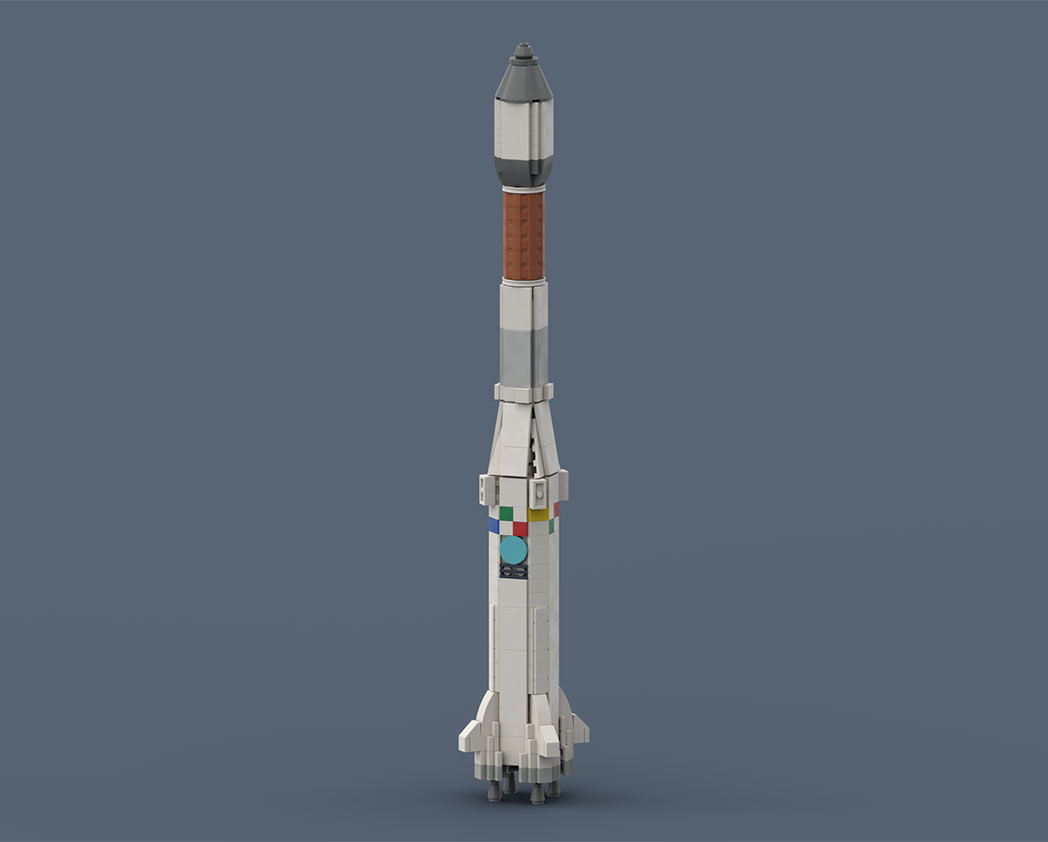
Ariane 1
Ariane 1
Classification: Medium Lift Launch VehicleCountry of origin: FranceFirst flight: 24 December 1979Last flight: 22 February 1986Launches: 11 (9 successful / 2 failures)Launch site: ELA-1, Guiana Space Centre
Florentin Möller (SkySaac)
March 2023
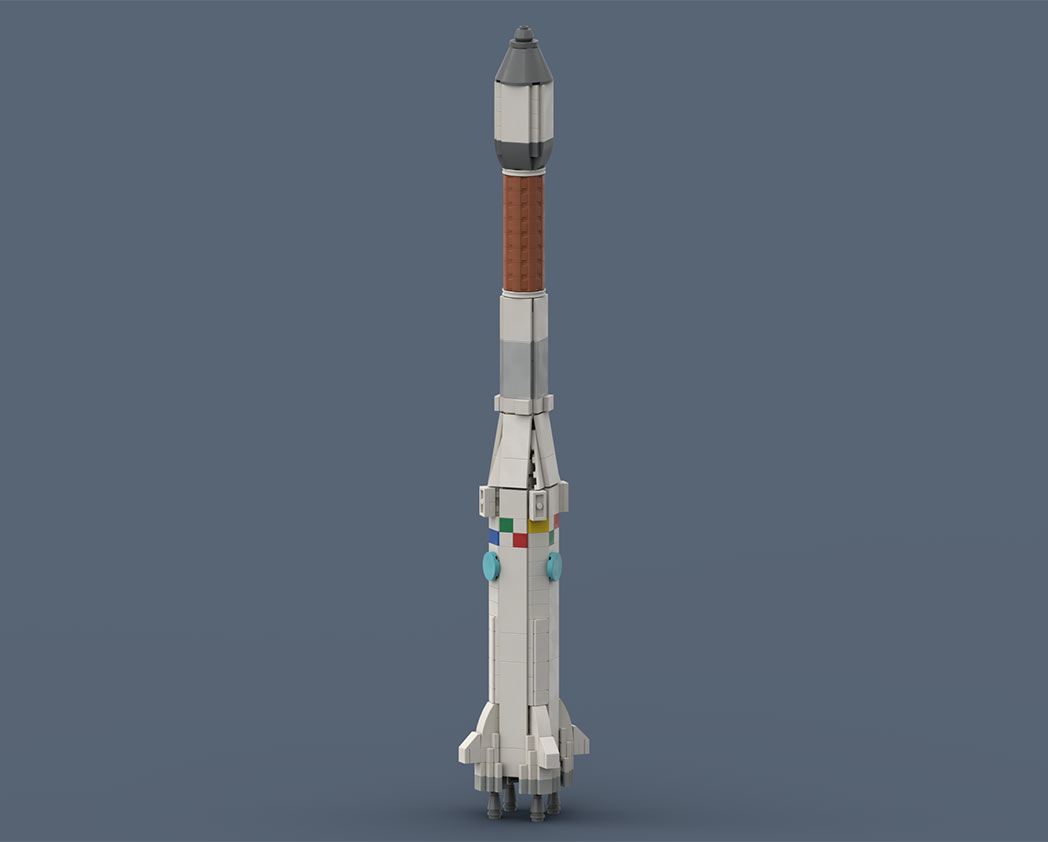
Ariane 2
Ariane 2
Classification: Medium Lift Launch VehicleCountry of origin: FranceFirst flight: 31 May 1986Last flight: 2 April 1989Launches: 6 (5 successful / 1 failure)Launch site: ELA-1, Guiana Space Centre
Florentin Möller (SkySaac)
March 2023
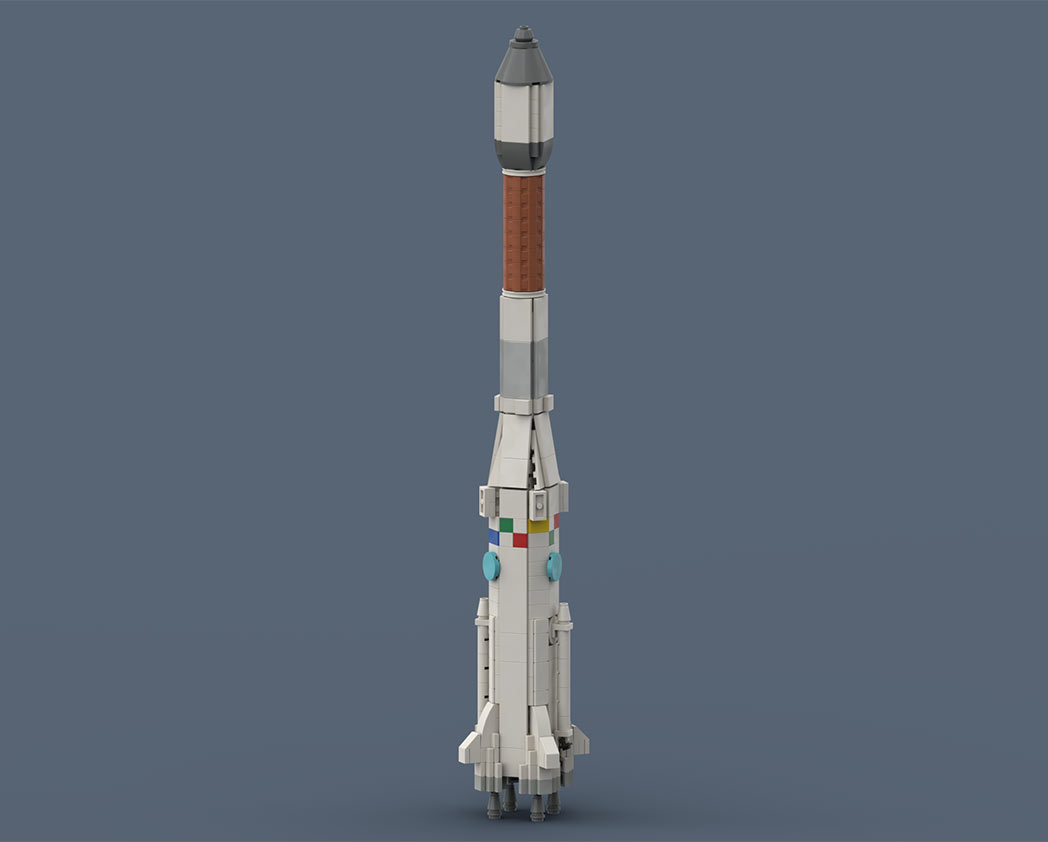
Ariane 3
Ariane 3
Classification: Medium Lift Launch VehicleCountry of origin: FranceFirst flight: 4 August 1984Last flight: 12 July 1989Launches: 11 (10 successful / 1 failure)Launch site: ELA-1, Guiana Space Centre
Florentin Möller (SkySaac)
March 2023
The Workhorse
Approved by ESA in January 1982 with a stated objective of increasing usable payload by 90%, Ariane 4 was the programme’s coming of age. Where the earlier Arianes had been capable, Ariane 4 was versatile — a modular system available in six configurations, from the bare Ariane 40 with no strap-on boosters to the Ariane 44L with four liquid strap-on boosters, covering a payload range from two to nearly five tonnes to GTO. Customers could select the configuration that matched their satellite’s mass and pay accordingly. The concept of the commercial launch catalogue — a range of options at published prices — was new to the industry, and it worked.
A purpose-built launch preparation area, ELA-2, was constructed at Kourou to service the Ariane 4, capable of supporting up to eight launches per year — a cadence near unprecedented for a large rocket outside the Soviet Union. Completed rockets were assembled in an 80-metre integration hall and transported to the pad by a dedicated railway, allowing faulty vehicles to be withdrawn and substituted relatively quickly.
The first Ariane 4 launched on 15 June 1988 and placed two satellites into orbit simultaneously. During its working life, Ariane 4 captured 50% of the market in launching commercial satellites. From 1988 to 2003 the rocket carried out 116 missions, 113 of which were successful — a reliability rate of 97.4%. Among its 113 successes was a streak of 74 consecutive successful flights — one of the longest unbroken run records in launch vehicle history.
Its one memorable failure, in February 1990, was caused by a handkerchief. A worker assembling a Viking engine had left a handkerchief in one of the motor’s coolant tubes as a reminder to inform his supervisor of an unplanned modification he had made. He fell ill before he could do so, was replaced by workers who didn’t notice the handkerchief, and in flight the blocked coolant tube caused the engine to overheat and fail. The rocket self-destructed nine kilometres above Kourou. A handkerchief. In a rocket. That had been carefully assembled and inspected by hundreds of engineers.
It is worth noting what Ariane 4’s commercial dominance actually represented. For the first time in history, a non-American, non-Soviet launch vehicle was winning commercial contracts in open competition — deploying telecommunications satellites for operators around the world who chose it on price, reliability, and schedule rather than political obligation. Over its operational lifespan, Ariane 4 successfully deployed 155 main payloads and 27 auxiliary payloads, serving 50 different operators. The commercial space launch industry, as it exists today, was largely shaped by the model Ariane 4 created and proved.
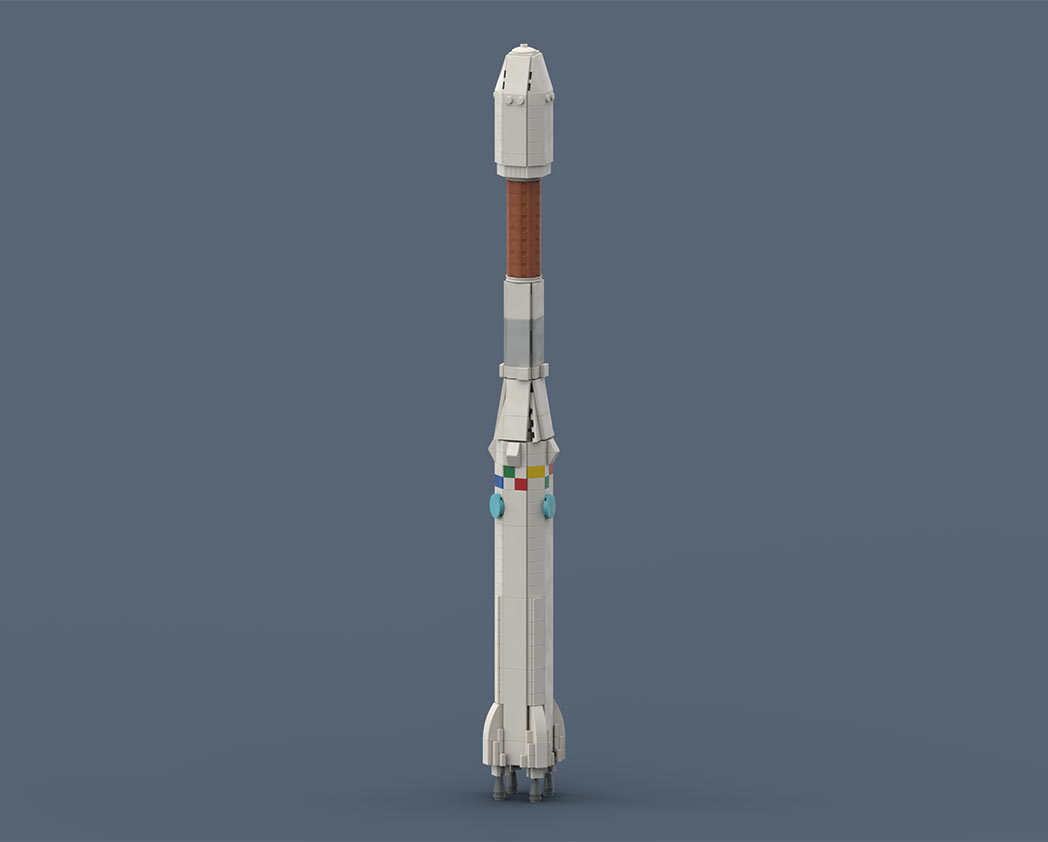
Ariane 40
Ariane 40
Classification: Medium Lift Launch VehicleCountry of origin: FranceFirst flight: 22 January 1990Last flight: 3 December 1999Launches: 7 (7 successful)Launch site: ELA-2, Guiana Space Centre
Florentin Möller (SkySaac)
June 2023
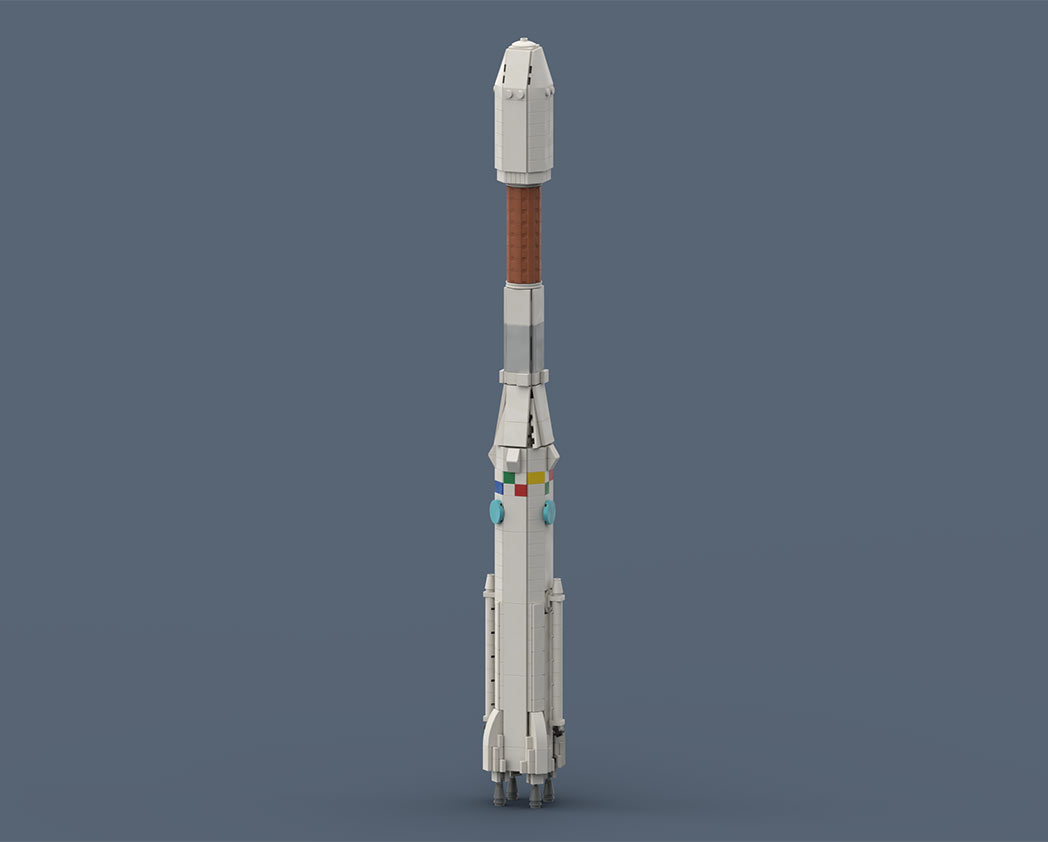
Ariane 42P
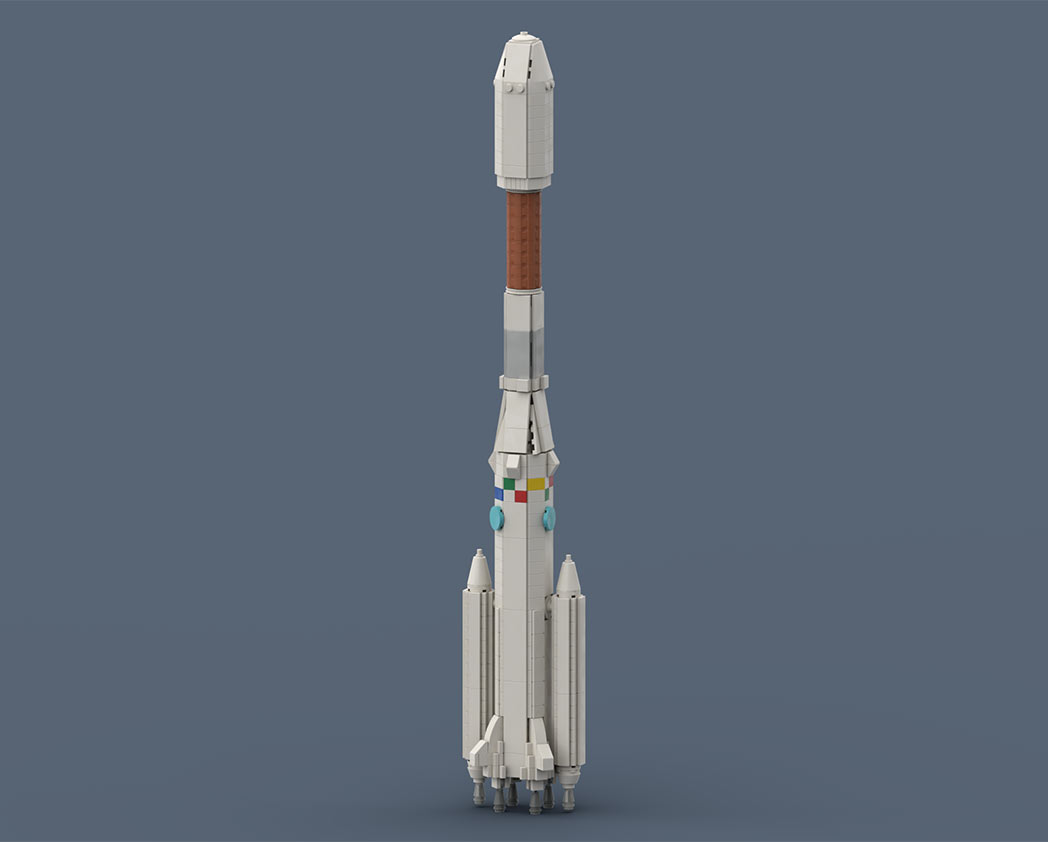
Ariane 42L
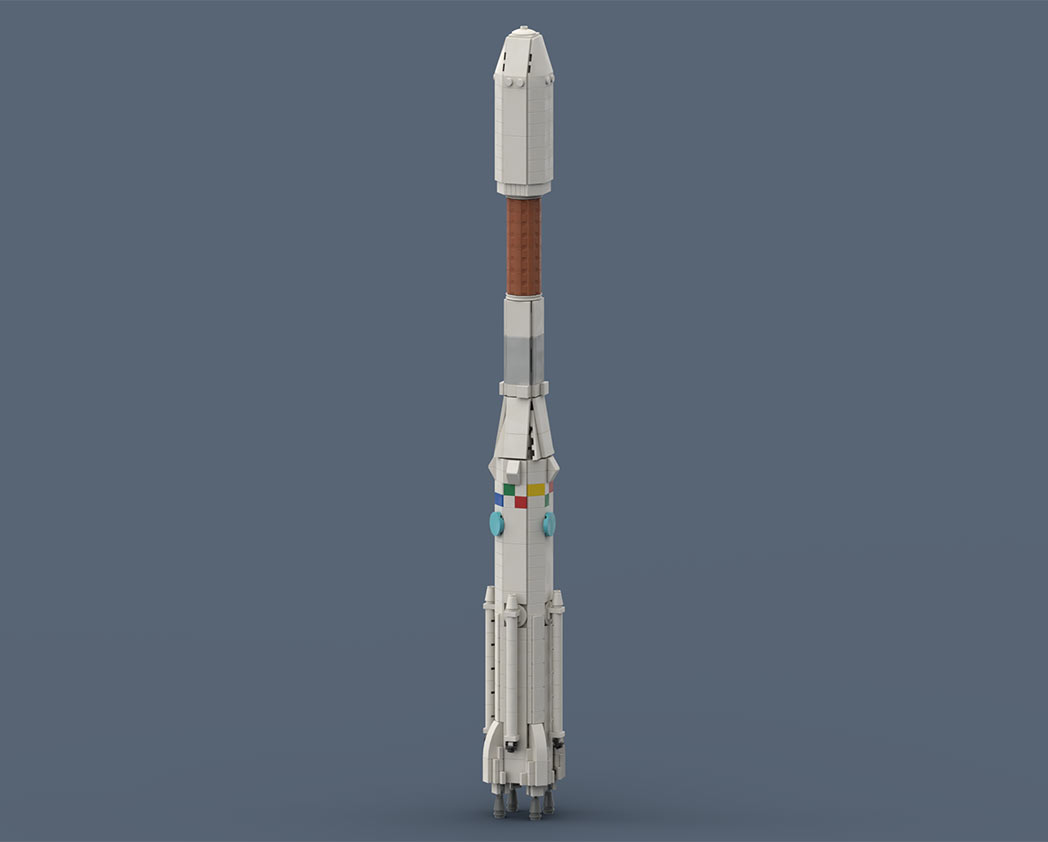
Ariane 44P
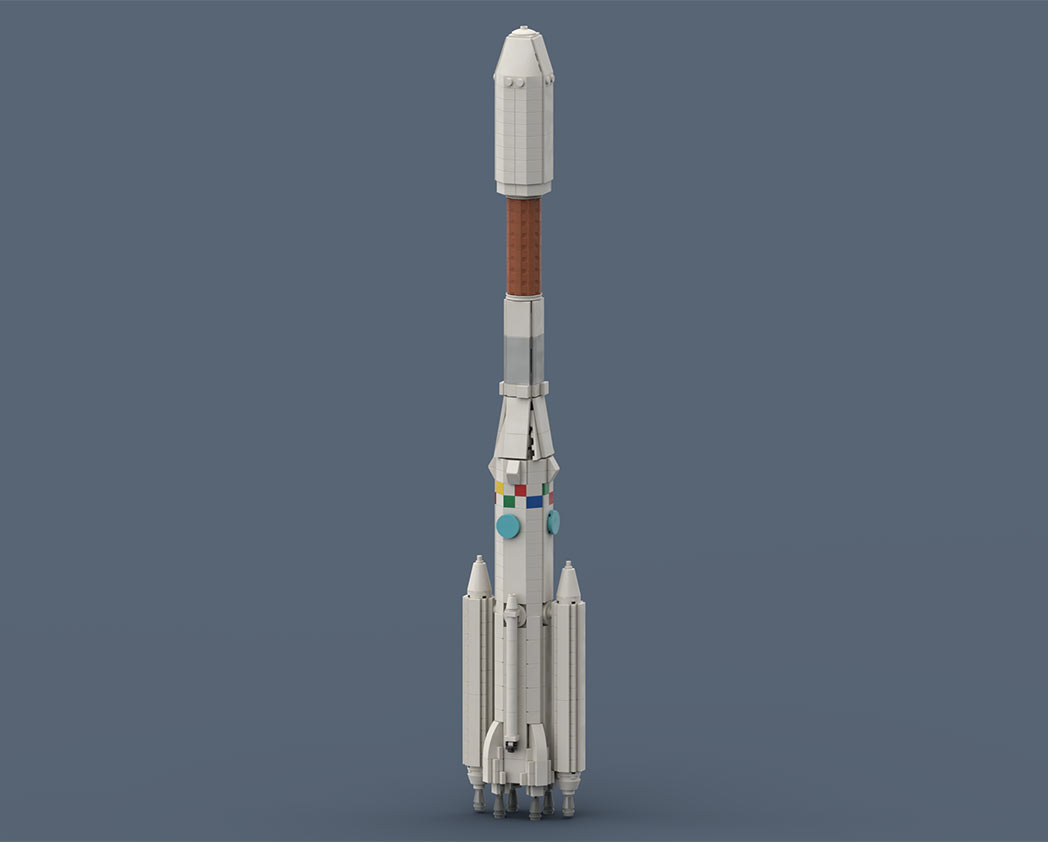
Ariane 44LP
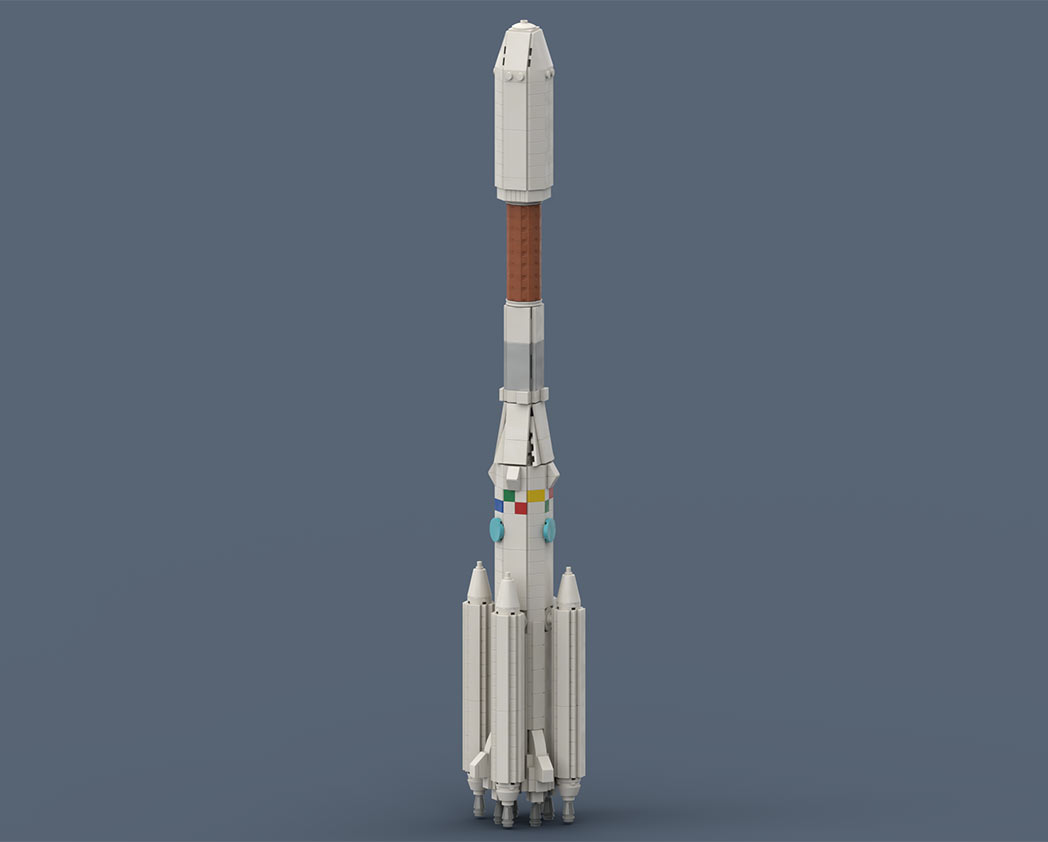
Ariane 44L
Ariane 5: The Long Road to Reliability
Even before Ariane 4’s first flight, ESA had approved development of its successor. Ariane 5 was conceived in January 1985 with a fundamentally different architecture — a single large cryogenic core stage burning liquid hydrogen and liquid oxygen in a Vulcain engine, flanked by two solid rocket boosters, and topped by a storable-propellant upper stage. The design was sized from the outset for heavy payloads, and its original purpose was to launch the proposed Hermes crewed spaceplane. When Hermes was cancelled, Ariane 5 became a strictly commercial vehicle. ESA spent ten years and $7 billion developing it.
On 4 June 1996, the maiden flight ended in failure. Approximately 37 seconds after liftoff, at an altitude of 3,700 metres, the launcher veered off its flight path, broke up, and exploded. The cause was a software error of remarkable specificity: the inertial reference system software had been reused directly from Ariane 4 without adequate testing against Ariane 5’s actual flight trajectory. The faster horizontal velocity of the new rocket caused a 64-bit floating point number to overflow a 16-bit signed integer, halting both the primary and backup guidance computers simultaneously. The active unit then transmitted its diagnostic error data — a string of meaningless numbers — to the flight computer, which interpreted them as attitude readings and commanded full nozzle deflection. The four Cluster scientific satellites aboard, worth $370 million, were destroyed. It remains one of the most expensive software bugs in history. Four replacement Cluster II satellites were subsequently built and launched successfully on Soyuz rockets in 2000.
The second test flight in October 1997 was a partial failure — a roll control problem caused the Vulcain engine to shut down early, leaving the test payloads in a lower orbit than planned. The third flight in October 1998 finally qualified the vehicle, and commercial service began in December 1999. Further setbacks followed: a partial failure in July 2001 delivered two satellites to only half their intended orbital altitude, and the inaugural flight of the upgraded Ariane 5 ECA variant in December 2002 ended in self-destruction three minutes after liftoff when a coolant pipe leak caused the Vulcain 2 nozzle to overheat.
Then the rocket found its footing. Between April 2003 and December 2017, Ariane 5 flew 82 consecutive successful missions, a streak that established it as one of the most reliable heavy-lift rockets ever built. The mature Ariane 5 ECA variant, flying from 2005 onward with an upgraded Vulcain 2 engine and cryogenic upper stage, could deliver over 10 tonnes to geostationary transfer orbit — more than double the capacity of Ariane 4. Its signature commercial configuration flew two large telecommunications satellites stacked atop one another using an adapter system, maximising revenue per flight.
Its most consequential payload came on Christmas Day 2021. Ariane flight VA256 carried the James Webb Space Telescope — the largest and most complex space observatory ever launched — on a transfer trajectory to the Sun-Earth L2 Lagrange point 1.5 million kilometres from Earth. Webb was too large to fit in the fairing in its operational configuration and required 344 individual folds to fit inside the rocket. The precision of the Ariane 5 launch was credited with saving enough onboard fuel that Webb may be able to maintain its orbit for around 20 years, rather than the 10 years it was designed for. NASA described the launch as flawless. It was the rocket’s finest hour, and nearly its last: Ariane 5 flew for the final time on 6 July 2023, completing 117 launches across 27 years before handing over to its successor.