

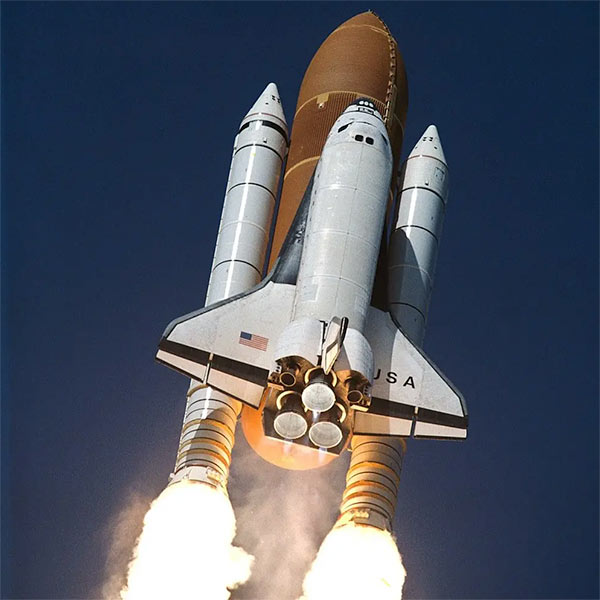
In January 1972, President Richard Nixon approved a new spacecraft programme and NASA went before Congress with a promise. The Space Transportation System — the Space Shuttle — would make access to orbit routine, affordable, and frequent. It would fly up to fifty times a year, carrying satellites, scientific laboratories, and eventually tourists, for a cost of around $10 million per flight. It would be the DC-3 of space: unglamorous, ubiquitous, economically transformative. After Apollo’s heroic one-off missions, America would now commute to orbit.
By the time the programme retired in 2011, after 135 missions across thirty years, the cost per flight had risen to $409 million. The vehicle had never once reached the promised flight rate, averaging four and a half launches per year across its entire operational life. Fourteen astronauts had died. And the Shuttle had done things that no other vehicle in history could have done — launched Hubble, repaired Hubble, deployed Galileo, assembled the International Space Station piece by piece across dozens of missions — things that justified the programme entirely, on their own terms, regardless of every broken promise.
The Space Shuttle was simultaneously one of the greatest spacecraft ever built and one of the most instructive cautionary tales in the history of engineering management. Understanding it requires holding both truths at once.
The Compromised Design
The Shuttle that Nixon approved was not the Shuttle that engineers wanted to build. The original concept, developed in the late 1960s, was for a fully reusable two-stage vehicle: a large winged booster that would carry a smaller winged orbiter to altitude, separate, return to its launch site and land on a runway, while the orbiter continued to orbit. Both stages would be refurbished and flown again, like aircraft. The economics were compelling if the flight rate was high enough — and in 1969, after Apollo, the flight rate seemed like it would certainly be high enough.
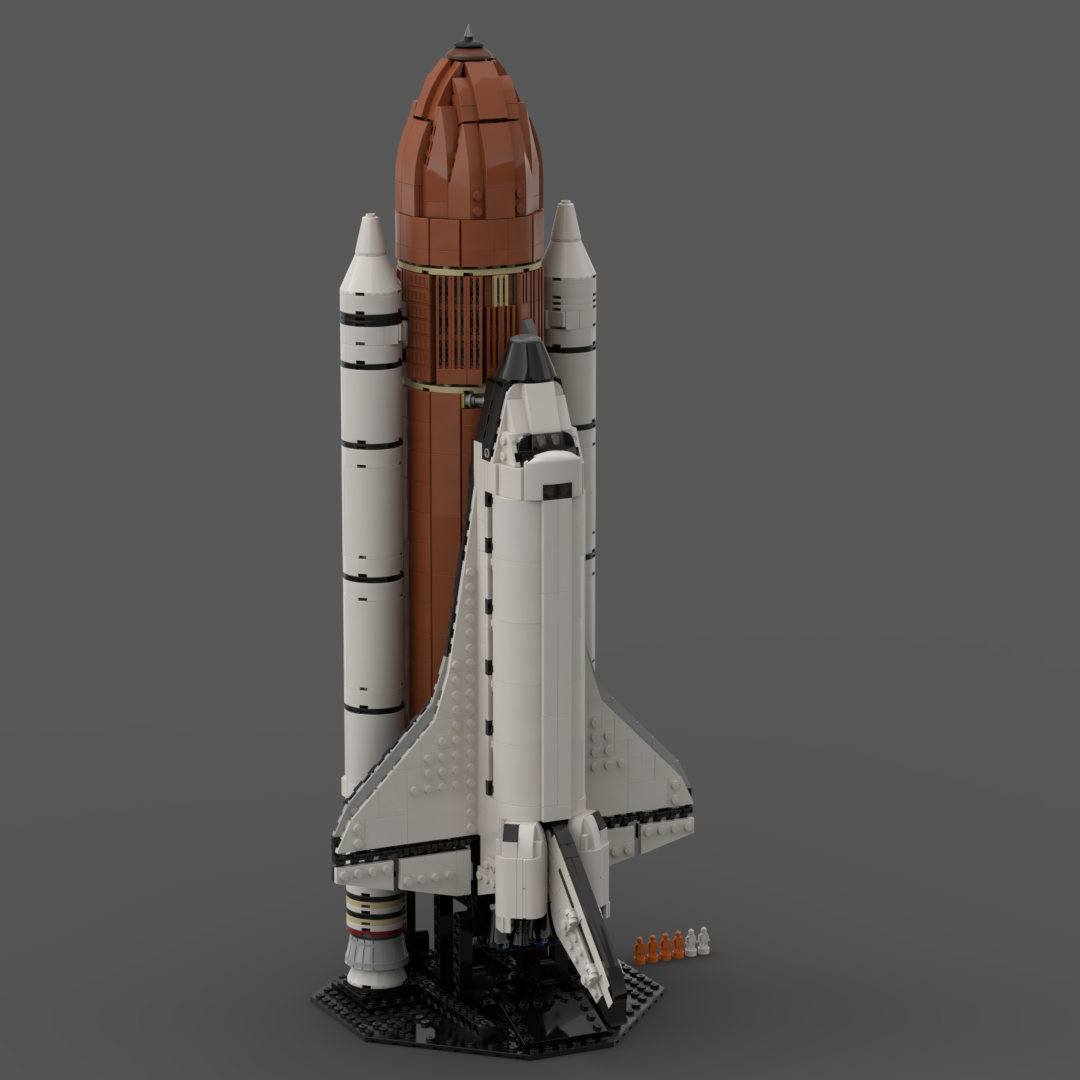
The Office of Management and Budget said no. Development costs for a fully reusable system were too high. NASA needed to trim. The fully reusable booster was replaced by two solid rocket boosters that would be recovered from the ocean and refurbished — cheaper to develop, but more expensive to operate at scale, and impossible to shut down once ignited. The orbiter’s propellant tanks were moved outside the vehicle into a large expendable external tank that would be discarded on every flight — cheaper upfront, but throwing away a major structural component every mission. The result was a vehicle that was partially reusable, moderately capable, and dependent on a flight rate it could never achieve to make its economics work.
The solid rocket boosters were particularly contentious. Engineers at Marshall Space Flight Center were deeply uneasy about solid rockets for crewed missions — they could not be throttled, could not be shut down, and offered essentially no abort capability during their burn. The Office of Management and Budget insisted on them regardless, because their development cost was lower. The contract for the solid rocket boosters went to Morton Thiokol in Utah — partly, it was later understood, because Utah’s congressional delegation had been helpful with the Shuttle budget, and spreading contracts across multiple states was how you built political support for expensive programmes. The decision was entirely pragmatic. It was also the decision that killed the Challenger crew.
Jonathan McDowell, an astrophysicist at the Harvard-Smithsonian Center for Astrophysics, later identified the programme’s foundational error: NASA had promised the vehicle was “operational.” Calling it operational meant it was treated like an airliner, with the assumption that each flight was routine and the risks were managed. The Saturn V had never been called operational — it was understood to be an experimental system requiring constant vigilance. The Shuttle should have been too. The decision to call it operational encouraged precisely the institutional complacency that would eventually prove fatal.
Building the Machine
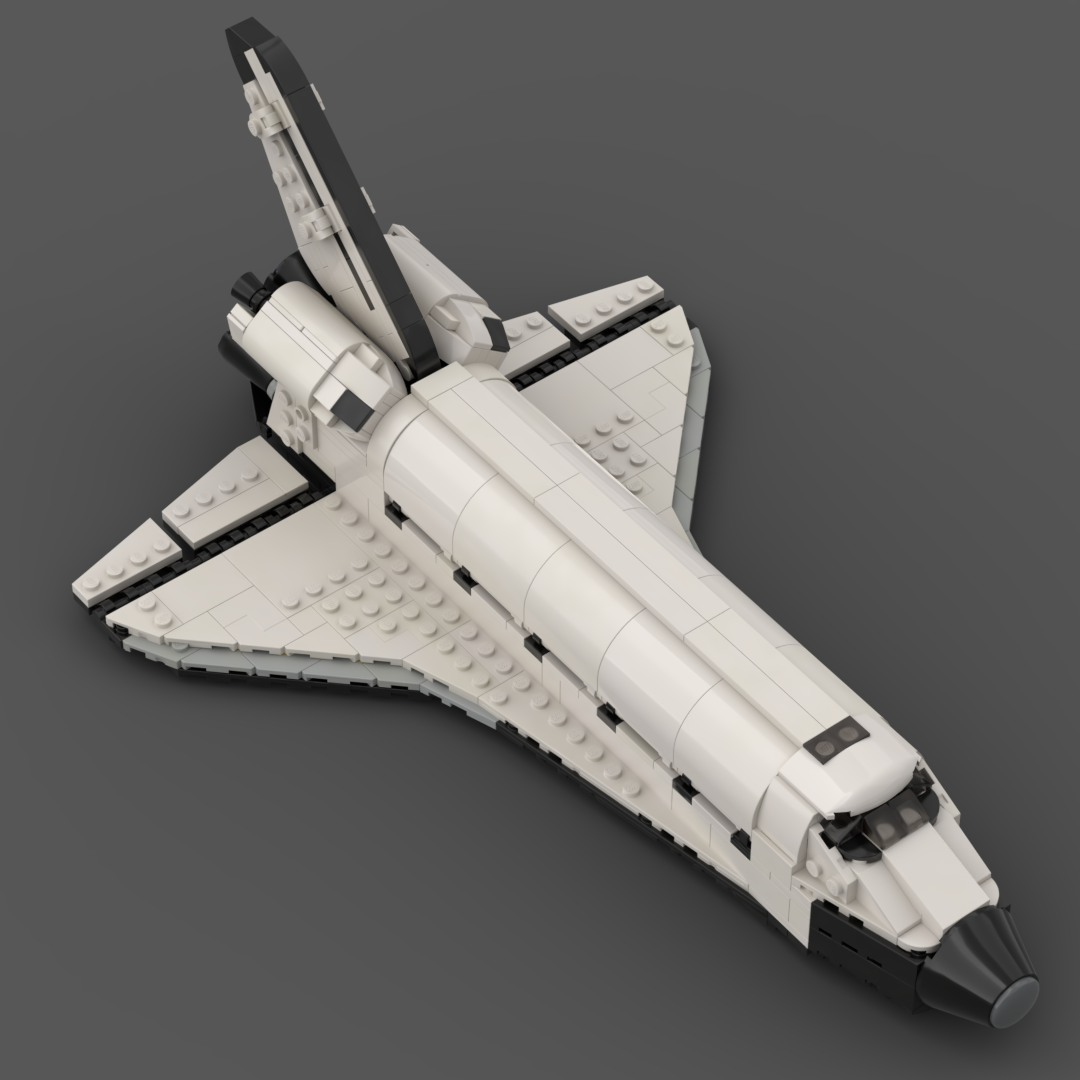
The vehicle that emerged from this process was nevertheless a remarkable engineering achievement. The Space Shuttle Main Engines — three per orbiter, mounted at the tail — were the most sophisticated rocket engines ever built, burning liquid hydrogen and liquid oxygen at a chamber pressure of 3,000 psi and throttling between 65% and 109% of rated thrust. They were designed to be removed, inspected, and reused — an ambition that proved far more labour-intensive than anyone had projected. The thermal protection system covered the orbiter’s entire underside in over 24,000 tiles of silica fibre, each one individually manufactured, individually numbered, and individually inspected before every flight. No two tiles were identical. The tiles had to be attached one by one, by hand. An orbiter required weeks of tile work between flights.
The orbiter itself was a triumph of multi-role design. Its payload bay — 18 metres long, 4.6 metres wide — could carry satellites for deployment, Spacelab science modules for orbital research, or ISS components. A robotic arm, the Canadian-built Canadarm, could retrieve and deploy payloads with surgical precision. The flight deck carried two pilots forward and a mission station aft, with mid-deck seating for up to five additional crew. Up to eight people could fly — more than any previous spacecraft — in a pressurised shirt-sleeve environment that made extended orbital operations possible in ways that Mercury, Gemini, and Apollo had not.
The five orbiters — Columbia, Challenger, Discovery, Atlantis, and Endeavour — each had slightly different configurations as the design evolved. Columbia, the oldest and heaviest, was the test vehicle that first flew in April 1981. Enterprise, a sixth airframe, was built purely for atmospheric approach and landing tests and never flew in space.
Space Shuttle (Orbiter)
Space Shuttle (Orbiter)
STS-1 and the Operational Years
On 12 April 1981 — the twentieth anniversary of Gagarin’s flight — Columbia lifted off from Kennedy Space Center carrying commander John Young, who had already walked on the Moon, and pilot Robert Crippen, making his first spaceflight. It was, by any historical comparison, a reckless thing to attempt: the first crewed flight of a spacecraft that had never flown unmanned, with a thermal protection system that had never been tested at orbital reentry speeds with people aboard. Young and Crippen had ejection seats — useful only at low altitude and low speed, which meant they offered essentially no protection during the ascent or reentry phases where the real risks lay. They flew anyway. The orbiter came home two days later with several tiles missing from its lower surface. The tiles that remained were sufficient. Columbia landed on the dry lakebed at Edwards Air Force Base to a reception that was part jubilation and part relief.
The early years of Shuttle operations established a rhythm. Commercial satellite deployments filled the manifest alongside military payloads and scientific missions. The Shuttle flew with a cadence that, while far below the projected rate, was genuinely impressive by the standards of any crewed spacecraft programme — nine launches in 1985 alone, the highest rate ever achieved. The Air Force built a second launch site at Vandenberg Air Force Base in California for polar-orbit missions. Corporations bought seats for payload specialists. A Senator flew. A congressman flew. The programme was marketing itself as routine, as promised.
On STS-41B in February 1984, Mission Specialist Bruce McCandless made the first untethered spacewalk in history, flying freely in space propelled by a nitrogen-powered Manned Manoeuvring Unit — a one-person spacecraft essentially — up to 97 metres from the orbiter. The photographs of McCandless floating alone against the black of space with Earth far below became some of the most iconic images of the programme. Shortly after, he and colleague Robert Stewart demonstrated the MMU’s practical purpose by capturing a drifting Palapa-B2 satellite that had been stranded in a useless orbit — the first satellite retrieval in history. Two missions later, astronauts retrieved and returned the malfunctioning Solar Maximum Mission satellite for repair, demonstrating that the Shuttle could serve as a space maintenance vehicle in ways no previous spacecraft had been able to.
The Shuttle was, unquestionably, doing things nobody else could do. What it was not doing was doing them cheaply. Every one of the 24,000 thermal protection tiles had to be inspected before each flight. The main engines had to be removed, inspected, and either reinstalled or replaced. Software for each mission had to be individually written, tested, and certified. The Shuttle, it turned out, was not a DC-3. It was closer to a Formula 1 car — extraordinary performance, eye-watering maintenance, and catastrophic consequences when something went wrong.
Space Shuttle
Mobile Launcher Platform
Mobile Launcher Platform
The Night Before Challenger
By January 1986, NASA was running hard. The 1985 peak flight rate had encouraged optimism about finally approaching the projected schedules. The manifest for 1986 included fifteen launches. The Teacher in Space programme — selecting an ordinary American citizen to fly aboard the Shuttle and broadcast lessons from orbit — was generating the kind of public engagement the programme had been struggling to maintain. Christa McAuliffe, a high school teacher from New Hampshire, had been selected from over 11,000 applicants. She was scheduled to fly on mission STS-51-L aboard Challenger.
The night before the 28 January launch, the temperature at Kennedy Space Center dropped to -8 degrees Celsius — far colder than any previous Shuttle launch. Engineers at Morton Thiokol, the solid rocket booster contractor, were alarmed. Roger Boisjoly, one of Thiokol’s senior engineers, had been raising concerns about the O-rings that sealed the joints in the solid rocket booster segments for over a year. The O-rings were made of rubber. Cold made rubber hard and less pliable. A less pliable O-ring might not seal properly. If hot combustion gas leaked past an O-ring, it would burn through the joint and into the external tank. Boisjoly had put his concerns in a memo six months earlier, warning of a potential catastrophe.
On the night of 27 January, Thiokol engineers held an emergency teleconference with NASA managers, arguing against launch. One engineer told his managers: “It is my honest and real fear that if we launch at those temperatures, we are going to lose that ship and the seven people on board.” The data was ambiguous — O-ring damage had been observed on previous launches without catastrophic consequences, making it difficult to draw a clear correlation — but the direction of the evidence was clear. Thiokol managers, under pressure from NASA managers who expressed frustration at the late objection, overruled their own engineers. One NASA manager later said that Thiokol had been asked to take off their engineering hat and put on their management hat.
At 11:38 am on 28 January 1986, Challenger launched into clear Florida skies. At 73 seconds, a plume of flame appeared from the right solid rocket booster’s aft field joint — the O-ring had failed to seal in the cold. The flame burned through the joint, then through the external tank. The external tank failed structurally. Aerodynamic forces tore the orbiter apart. Challenger was gone.
The crew cabin remained intact through the initial break-up. It fell for two minutes and forty-five seconds before hitting the ocean. Three of the four recovered Personal Egress Air Packs had been manually activated — indicating that at least some of the crew had survived the initial disintegration. The ocean impact was not survivable. Dick Scobee, Michael Smith, Judith Resnik, Ellison Onizuka, Ronald McNair, Gregory Jarvis, and Christa McAuliffe were recovered from the Atlantic three weeks later.
President Reagan, who had been scheduled to deliver the State of the Union address that evening, postponed it. Instead he addressed the nation in a short speech written by Peggy Noonan that ended with lines from a poem by John Gillespie Magee: they had “slipped the surly bonds of earth” to “touch the face of God.” The programme was grounded for thirty-two months.
The Rogers Commission that investigated the disaster found not only the technical cause — the O-ring — but the institutional cause: a management culture that had normalised risk, suppressed dissent, and allowed schedule pressure to override engineering judgement. Richard Feynman, the Nobel laureate physicist who served on the commission, performed a demonstration at a public hearing by dipping an O-ring in a glass of ice water and showing that it lost its resilience at low temperatures. His appendix to the commission report concluded with a sentence that should be engraved somewhere visible at every engineering institution in the world: “For a successful technology, reality must take precedence over public relations, for Nature cannot be fooled.”
Return to Flight and the Golden Years
Discovery returned the Shuttle to flight on 29 September 1988 with an all-veteran crew and a four-day mission that felt, to everyone watching, like a held breath slowly released. The programme had been redesigned in significant ways — the solid rocket booster joints were rebuilt with a third O-ring and a heater to prevent cold-temperature stiffening, hundreds of other changes were implemented, and a new crew escape system was added that could be used during a gliding descent if the orbiter was stable and near parachute altitude. It was not a comprehensive abort capability. It was better than what had existed before.
What followed was the Shuttle’s most productive era. In April 1990, Discovery deployed the Hubble Space Telescope into a 610-kilometre orbit — the highest altitude any Shuttle ever reached. The deployment almost immediately revealed a catastrophe: Hubble’s 2.4-metre primary mirror had been ground to the wrong prescription. A spherical aberration of just 2.2 micrometres — less than one-fiftieth the width of a human hair — meant that the most expensive scientific instrument ever built was producing blurry images. The error came from a faulty calibration tool used during mirror polishing. It was, in the words of one NASA official, the most expensive typo in history.
Three years later, in December 1993, Endeavour flew STS-61 — the Hubble servicing mission that stands as perhaps the most technically demanding spacewalk programme ever conducted. Seven astronauts. Five spacewalks in five consecutive days. A set of corrective optics — essentially, contact lenses for a telescope — that had to be installed with millimetre precision while floating in space wearing thick gloves. Story Musgrave, Kathy Thornton, Tom Akers, Jeff Hoffman, and Claude Nicollier took turns working on the telescope in pairs. Musgrave, at 58, performed his fifth spacewalk. When Hubble’s corrected images began coming down, the reaction from astronomers was close to religious. The blurry smear had become the sharpest eye humanity had ever turned on the universe.
The same month Hubble was deployed, in May 1989, Atlantis had launched the Magellan spacecraft toward Venus — the first planetary probe launched from the Shuttle, carried aloft in the payload bay and released in orbit before firing its own engine toward the inner solar system. In October 1989, Galileo followed, destined for Jupiter after a complex gravity-assist trajectory via Venus and Earth. Both missions represented the Shuttle at its most capable — a launch platform for spacecraft too heavy and complex for any expendable rocket, delivered to the precise orbit required with crews on hand to verify deployment and troubleshoot problems.
In May 1992, Endeavour flew STS-49 to retrieve and reboost the Intelsat VI communications satellite that had been stranded in a useless orbit. The satellite’s capture required three consecutive spacewalks, each attempt failing because the rotating satellite couldn’t be grasped by one or two astronauts with conventional tools. On the third attempt, flight director Jay Greene made an unprecedented decision: he authorised a three-person spacewalk, with Pierre Thuot, Richard Hieb, and Thomas Akers forming a human chain around the satellite’s circumference and grabbing it simultaneously on a count of three. It worked. Three people outside in space at the same time had never been done before. It has not been done since.
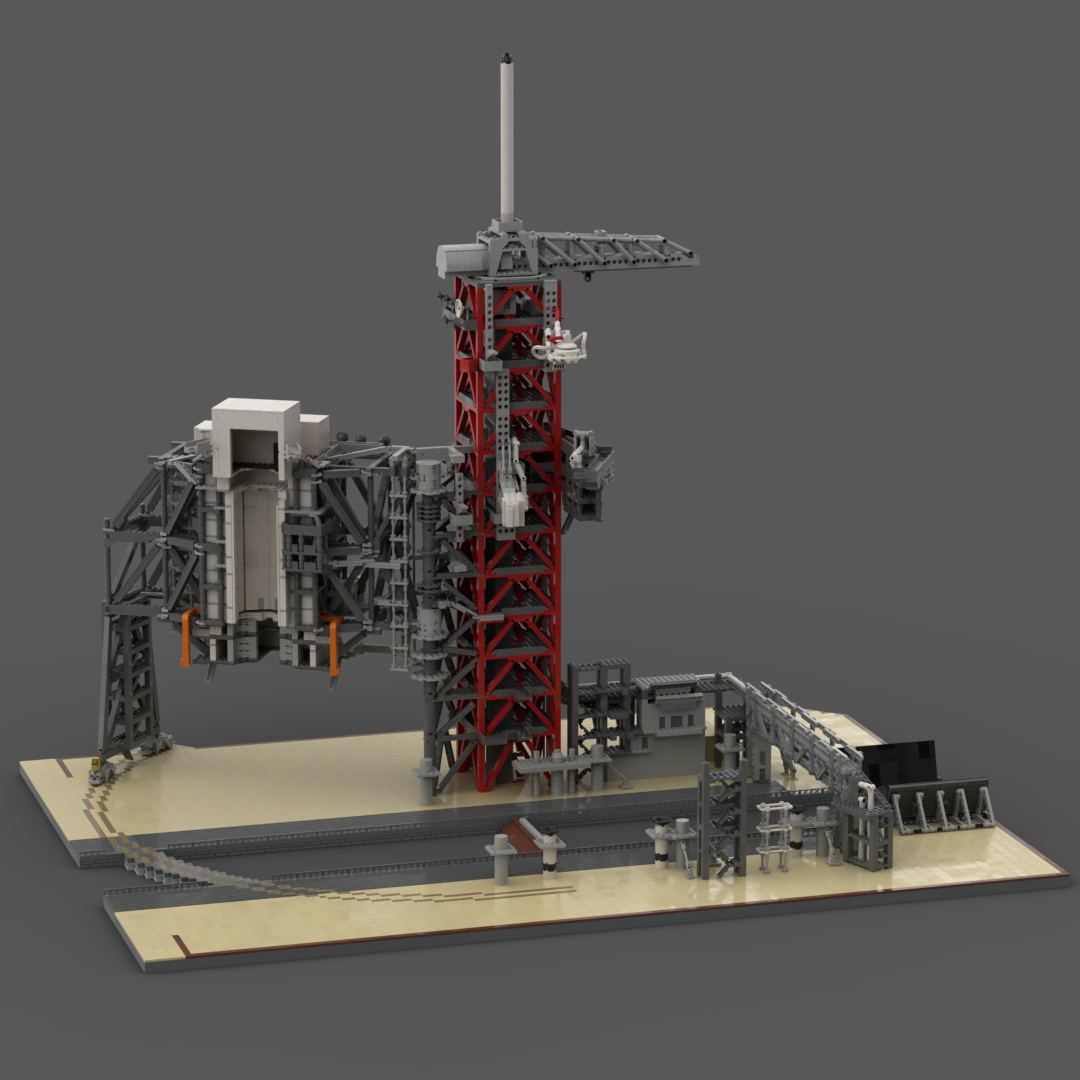
Launch Complex 39a – Shuttle Era
Launch Complex 39a – Shuttle Era
Columbia
On 16 January 2003, Columbia lifted off from Kennedy Space Center on mission STS-107 — a sixteen-day science mission carrying a crew of seven including Ilan Ramon, Israel’s first astronaut. Eighty-two seconds after launch, a piece of insulating foam broke free from the external tank’s left bipod ramp and struck the leading edge of Columbia’s left wing at a relative velocity of around 800 kilometres per hour. The foam weighed less than a kilogram. It punched a hole in the reinforced carbon-carbon panels protecting the wing’s leading edge.
The strike was identified from launch footage the following day. Engineers in the Debris Assessment Team began running computer models to assess the damage. The models were inadequate — they had never been validated for an impact of this size, and they underestimated the damage they were modelling. Senior mission manager Linda Ham was briefed that the damage was not a safety-of-flight concern. Engineers who disagreed were not given adequate opportunity to present their case. Three separate requests for Department of Defense spy satellite imagery of Columbia’s damaged wing were declined or not pursued — imagery that might, had it been obtained, have confirmed the extent of the damage and triggered contingency planning for a rescue mission or extended stay at the ISS.
Flight director LeRoy Cain later acknowledged that even if the damage had been identified, options were extremely limited. Atlantis could potentially have been prepared and launched on a rescue mission — Appendix D-13 of the subsequent investigation report laid out a scenario where Columbia’s crew adopted low-power mode to extend consumables while Atlantis was readied, with a crew transfer in orbit using spacewalks as the only docking option since Columbia’s docking mechanism was incompatible with the ISS. It would have been extraordinarily difficult. It might have been possible. Nobody attempted to find out.
On 1 February 2003, Columbia began its entry over the Pacific. At 8:59 am, superheated atmospheric gas began penetrating the breach in the left wing. Sensors in the wing began failing in sequence — hydraulic lines, structural temperature monitors, tyre pressure sensors. At 9:00 am, flight controllers in Houston watched the telemetry from Columbia simply stop. Mission Control Flight Director Leroy Cain quietly told his team to lock their consoles and save their data. He knew what it meant.
Columbia disintegrated over Texas and Louisiana, scattering debris across 37,000 square kilometres. All seven crew members — Rick Husband, William McCool, Michael Anderson, David Brown, Kalpana Chawla, Laurel Clark, and Ilan Ramon — were killed.
The Columbia Accident Investigation Board’s report, released in August 2003, was one of the most damning assessments of institutional failure in the history of American spaceflight. The board found not just the immediate cause — the foam — but a pattern of organisational behaviour that had been making the disaster increasingly inevitable for years. Foam had been shedding from the external tank since the second Shuttle flight in 1983. Every time it had occurred without catastrophic consequence, managers had reclassified the deviation from design requirements as acceptable. The CAIB called this process the “normalisation of deviance” — a gradual drift in which behaviours outside design tolerances became normal simply because they had not yet been catastrophic. It was, the board noted explicitly, precisely the same institutional failure that had produced Challenger seventeen years earlier. NASA had not learned the lesson. It had repeated the mistake.
“Cultural traits and organizational practices detrimental to safety were allowed to develop,” the board wrote. The report found that NASA’s structure placed one person — the Shuttle Programme Manager — simultaneously responsible for safety, schedule, and cost, three goals that are fundamentally in conflict and cannot be optimised together. The board concluded that the organisational structure was sufficiently flawed that a compromise of safety was likely no matter who occupied the key roles.
The programme was grounded for twenty-nine months.
The Final Chapter
When Discovery returned to flight in July 2005 on STS-114, it carried a fifty-foot inspection boom attached to the robotic arm, used within twenty-four hours of launch to photograph the entire orbiter surface for damage. Every subsequent mission inspected itself in orbit. Every crew flying to the ISS had a safe haven available — if an orbiter was too badly damaged to reenter, the crew could shelter aboard the station while a rescue orbiter was prepared. NASA had, finally, built the operational safety infrastructure the programme had always required.
The remaining years were dominated almost entirely by ISS assembly. Module after module was carried up in the payload bay — the American laboratory Destiny, the connecting nodes, the truss segments, the enormous solar arrays, the Japanese Kibo laboratory, the European Columbus module. The Shuttle’s unique capability — a large pressurised payload bay, a robotic arm, and astronauts who could work outside for hours — was precisely what assembling the station required. No other vehicle could have done it. By the time STS-133 delivered the final permanent module in February 2011, 37 Shuttle missions had contributed to ISS construction.
In May 2009, Atlantis flew STS-125 — the fifth and final Hubble servicing mission, reinstated after Columbia had led to its cancellation on safety grounds, then re-approved when NASA administrator Michael Griffin judged that the improved safety procedures made it acceptable. The crew installed new instruments, replaced gyroscopes, repaired systems never designed to be repaired in space. Hubble, which had launched blurry in 1990 and been fixed by hand in 1993, was left in the best condition of its operational life. It is still operating as of this writing.
On 21 July 2011, Atlantis landed at Kennedy Space Center after STS-135, the programme’s 135th and final mission. Commander Chris Ferguson shut down the main engines. “The space shuttle’s always going to be a reflection of what a great nation can do when it dares to be bold and commits to follow through,” he said over the radio. “We’re home, Houston.”
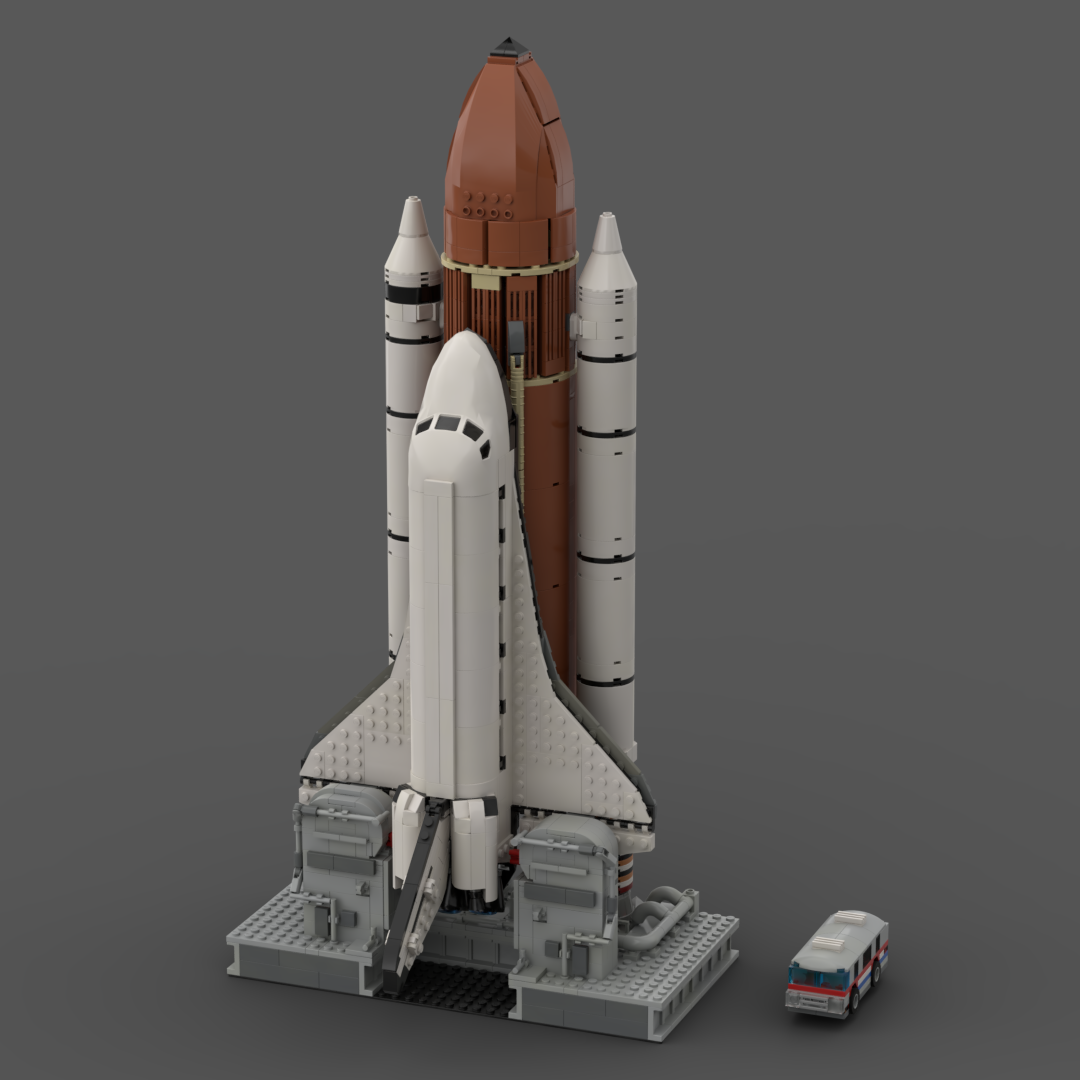
Space Shuttle

Astrovan
The Reckoning
The numbers invite argument. The Shuttle cost $209 billion across its operational lifetime — around $1.5 billion per flight, or $409 million per flight if only incremental costs are counted. It killed 4% of everyone who flew on it, a fatality rate that would have ended any commercial aviation programme immediately. It never came close to its promised launch rate or its promised economics. It maintained America in a low Earth orbit capability for thirty years while simultaneously preventing the development of any alternative, since all resources flowed to the Shuttle and a shuttle-only launch policy directed all payloads to a vehicle that couldn’t handle them all safely.
And yet. Hubble has returned more scientific value than almost any other instrument humanity has ever built. Galileo transformed our understanding of Jupiter and its moons, discovering evidence of a liquid ocean beneath Europa’s ice that changed the entire calculus of the search for life in the solar system. Magellan mapped 98% of Venus’s surface with synthetic aperture radar and returned the most complete picture ever made of another planet’s terrain. The ISS, for all its own controversies, has been continuously inhabited since November 2000, a testament to what sustained human presence in space can achieve. Spacelab flew twenty-eight missions of microgravity research. The Canadarm gave humanity its first practical tool for working in space.
The CAIB report concluded that the Shuttle should be characterised as experimental rather than operational — not as a criticism of what it was, but as an accurate description of what it had always been. An experimental vehicle, maintained with appropriate vigilance and humility, flown at a rate its design and infrastructure could sustain, would have been something different. It might have killed fewer people. It might have been honestly assessed and replaced sooner. It might have been, in the end, a better programme.
What it actually was, was irreplaceable — for good and ill simultaneously. The Shuttle was the only vehicle that could have done what it did. The question the programme leaves behind is whether what it did was worth what it cost, in money and in lives. Historians are still arguing. The astronauts who flew it, almost to a person, say yes.
The last thing Atlantis’s crew saw as they passed over the landing strip on approach was the Vehicle Assembly Building, where every Shuttle had been stacked before flight, lit by the pre-dawn darkness of a Florida July morning. One of the biggest structures in the world, built for the Saturn V, repurposed for the Shuttle, waiting again for whatever came next.