

The rockets that made headlines were the ones that carried astronauts. But for every Mercury capsule riding an Atlas into orbit, or every Gemini crew launching on a Titan, there were dozens of other launches — weather satellites, navigation systems, reconnaissance platforms, planetary probes — that climbed into space aboard rockets nobody made films about. These were the workhorses: vehicles that flew constantly, evolved continuously, and quietly built the infrastructure of the modern world above our heads.
Three families carried most of that load. Delta, derived from the Thor missile, served NASA’s medium-lift needs across six decades of nearly continuous flight. Atlas, the missile that launched John Glenn and very nearly collapsed under its own weight without pressurisation, became the foundation of American planetary exploration. Titan, the Air Force’s heavyweight, carried everything from Gemini astronauts to billion-dollar spy satellites to Voyager’s golden record. Together, they launched over a thousand missions, failed rarely enough to be trusted with the irreplaceable, and evolved so continuously that the rockets that retired in the 2000s bore almost no physical resemblance to the missiles they had started as.
Delta: The Thor That Refused to Retire
We last saw Delta when it was still called Thor — a medium-range ballistic missile standing 20 metres tall on RAF bases in Britain, pointed at Moscow. When it was retired from military service in 1963, nobody expected it to have much of a future. What it actually had was sixty more years.
The name change happened quietly. The fourth upper stage configuration of the Thor was named Thor-Delta, reflecting Delta as the fourth letter of the Greek alphabet. Since the vehicle was designed primarily as a civilian satellite launcher, the military name Thor was eventually eliminated so the rocket could be distinguished from its military relatives. From this point, the family split: military variants continued flying from Vandenberg Air Force Base under the Thor name, while civilian versions from Cape Canaveral became simply Delta.
The original Delta, first flown in May 1960, was a three-stage vehicle pairing a Thor first stage with upper stages derived from the troubled Vanguard programme — the same stages that had failed so publicly at the end of 1957. On a Thor first stage they worked considerably better. In the early 1960s, Thor-Delta and its successors Delta A, B, and C launched TIROS weather satellites, Explorer scientific satellites, the Echo 1 passive communications balloon, and the Telstar, Relay, and Syncom communications satellites. Syncom 3, launched in August 1964 on a Delta D, became the world’s first geostationary communications satellite — positioned above the equator at an altitude where it appeared stationary from the ground — and broadcast the 1964 Tokyo Olympics to American audiences. The Delta had, within four years of its first flight, fundamentally changed global communications.
The Delta D introduced a feature that would become a Delta trademark: strap-on solid rocket boosters. Three Castor 1 solid motors were added to augment the first stage engine at liftoff, ignited at launch and jettisoned in flight. The strap-on configuration gave the Delta the extra thrust needed to place operational Syncom satellites into geostationary transfer orbit. The principle was simple and effective — cluster additional thrust around the base of the rocket for the first minutes of flight, then shed the dead weight — and every subsequent Delta generation would use some variant of it.
The alphabetical naming gave way to a numerical system as the variants proliferated. The 100-series, 300-series, 900-series, 1000-series — each introduced new first stage stretches, new engine upgrades, or new booster configurations. By the early 1970s, Delta was carrying up to nine Castor solid boosters strapped to its first stage, six igniting at liftoff and three igniting in the air after the first set had burned out and separated. From 1969 through 1978, Thor-Delta was NASA’s most used launcher, with 84 launch attempts — more than any other vehicle in the agency’s fleet.
There was, however, a dark footnote to this era. The Delta was a significant contributor to orbital debris, as a variant used in the 1970s was prone to in-orbit explosions. Eight Delta second stages launched between 1973 and 1981 were involved in fragmentation events, caused by propellant left after shutdown. The thermal environment of orbit caused that residual propellant to expand and ignite years or even decades later, each explosion seeding the orbital environment with hundreds of debris fragments. It was an early and costly lesson in what would become one of the defining challenges of spaceflight: once you put something in orbit, it stays there.
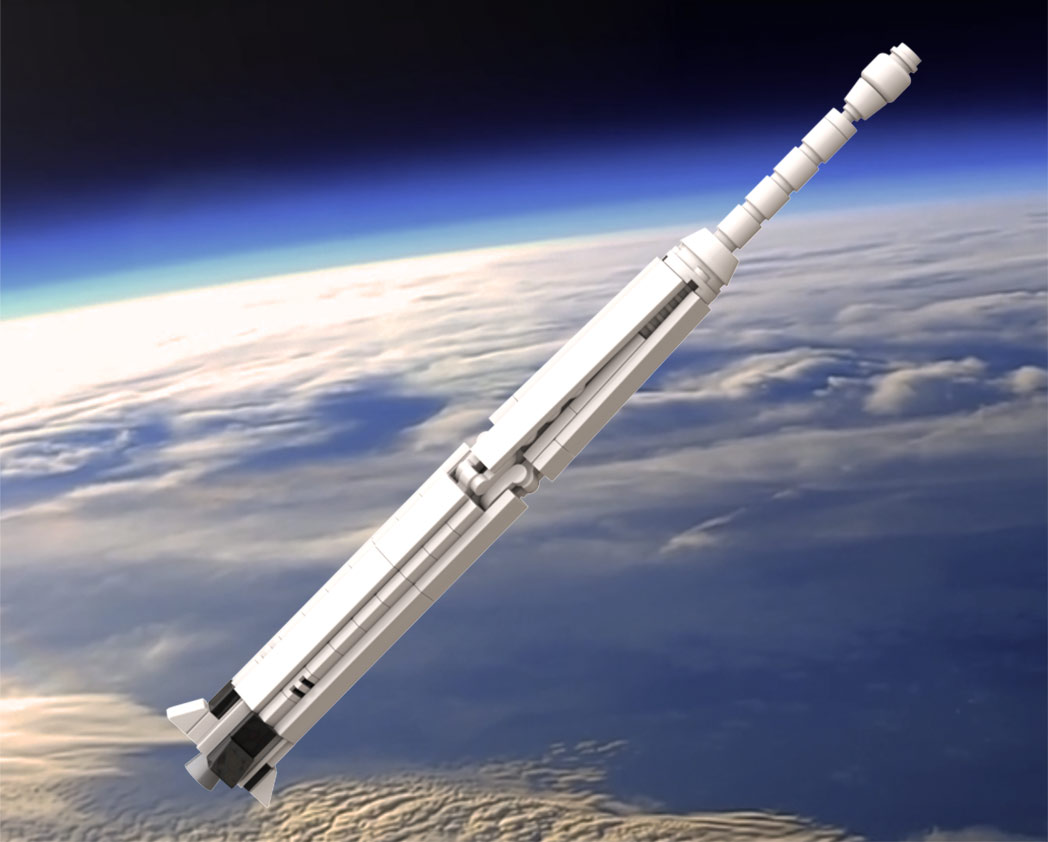
Thor Delta
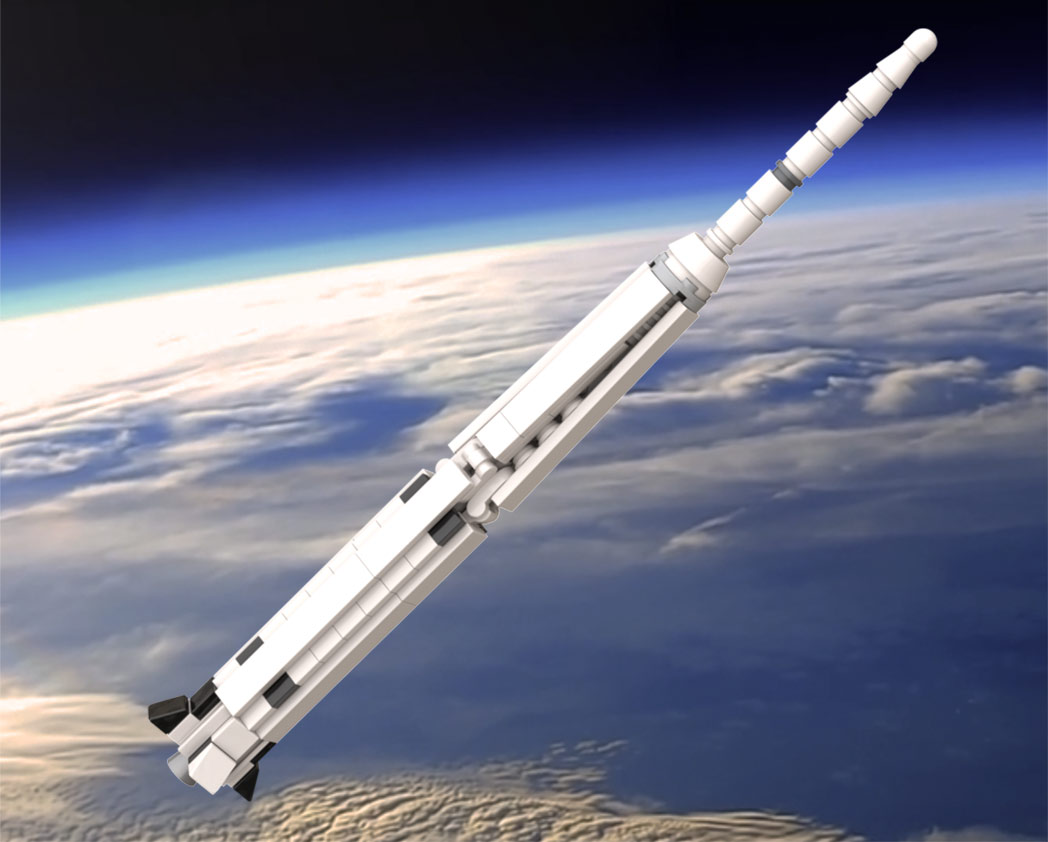
Thor Delta A
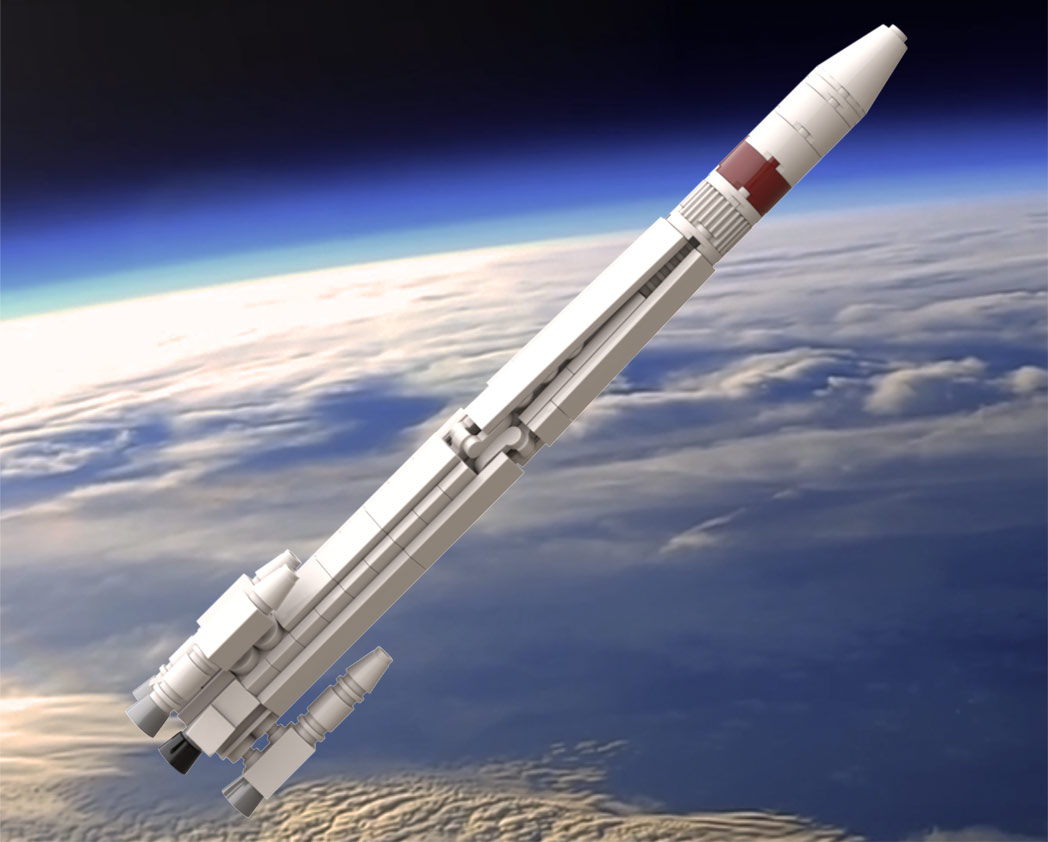
Thor Delta G
Delta II: The Comeback Vehicle
The Challenger disaster in January 1986 grounded the Shuttle and threw American launch planning into chaos. NASA had, in the early 1980s, been directing commercial and government payloads onto Shuttle manifests — a policy that had effectively killed the expendable launch vehicle industry as a commercial enterprise. Challenger demonstrated the catastrophic fragility of relying on a single vehicle. President Reagan reversed course in 1986, directing that commercial payloads return to expendable rockets.
The Air Force needed a replacement for its aging Delta fleet, and McDonnell Douglas responded with the Delta II — a substantially upgraded vehicle built around an extra-extended Long Tank Thor first stage, now powered by the Rocketdyne RS-27 engine producing over 200,000 pounds of thrust. The Delta 6000-series introduced the Extra Extended Long Tank first stage with Castor 4A solid boosters, while the 7000-series introduced the RS-27A engine and the lighter, more powerful GEM-40 Graphite-Epoxy Motor boosters from Hercules. Composite casings for the solid boosters saved significant mass compared to the steel-cased motors they replaced, and the RS-27A’s modified combustion chamber improved efficiency at altitude.
Delta II first flew in 1989 and proceeded to build one of the most impressive reliability records in American launch history. During its career, Delta II flew 24 GPS Block II satellites, several dozen NASA payloads, and 60 Iridium communications satellites. Its scientific payload list reads like a tour of the solar system: Mars Pathfinder, Mars Global Surveyor, Spirit and Opportunity, Phoenix, Dawn, Kepler, MESSENGER, Deep Impact, Stardust, GRAIL. The Mars Exploration Rovers Spirit and Opportunity, which were designed to operate for 90 days and lasted years and decades respectively, both launched on Delta IIs in the summer of 2003.
Among its variants, the Delta II demonstrated exceptional reliability, achieving a 98.7% success rate across 155 launches. Its final mission, launching the ICESat-2 glacial measurement satellite in September 2018, completed a streak of 100 consecutive successful flights. A vehicle derived from a 1950s ballistic missile was still setting reliability records in the 21st century.
Delta III, introduced in 1998, was the awkward middle child of the family — designed to bridge the gap between Delta II and a future heavy-lift vehicle, it flew three times and succeeded once. Its failures came from a new cryogenic upper stage whose control software struggled with the vehicle’s different mass characteristics. It was quietly shelved, but the cryogenic upper stage technology and the new 4-metre payload fairing it had developed fed directly into what came next.
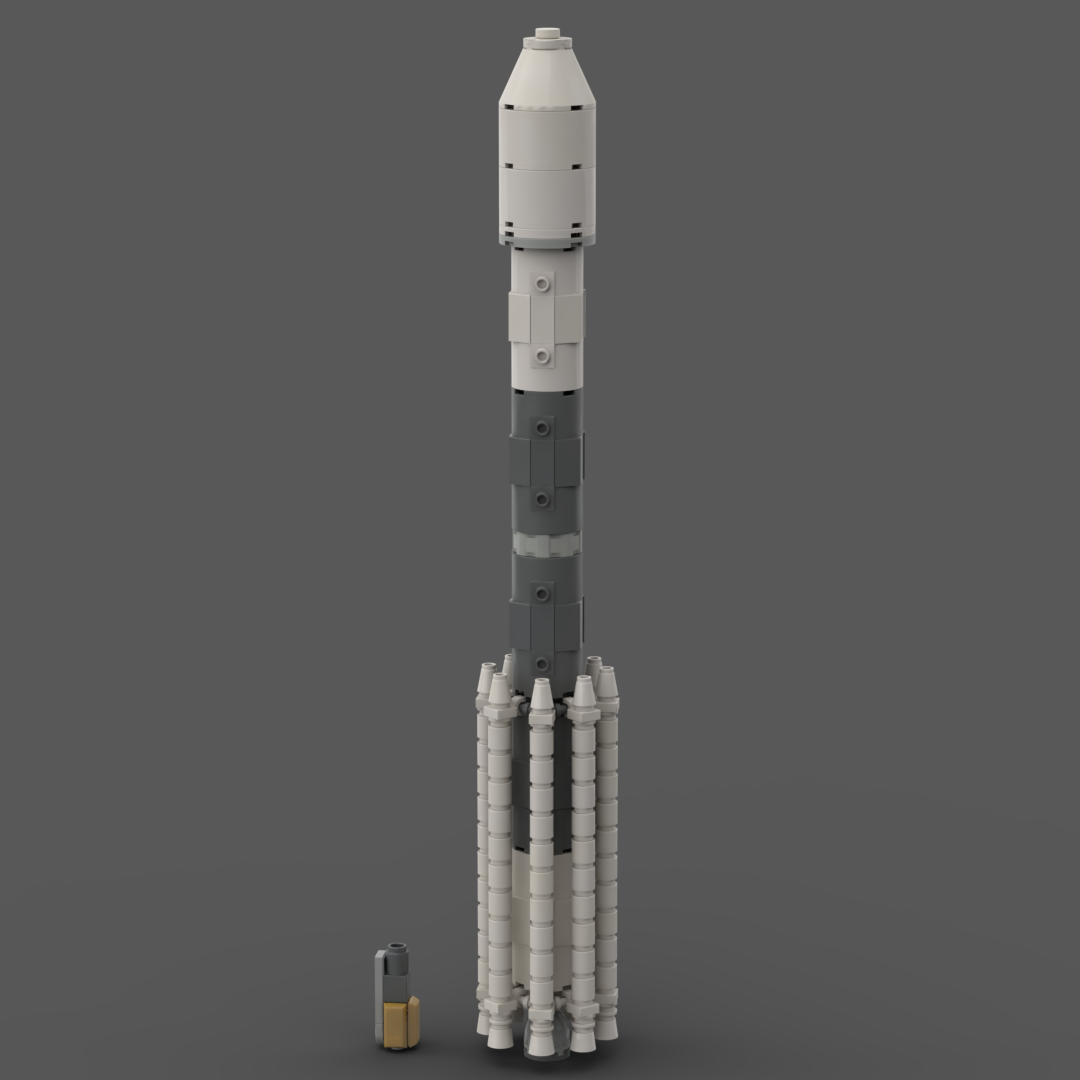
Delta II 7920H
Delta II 7920H
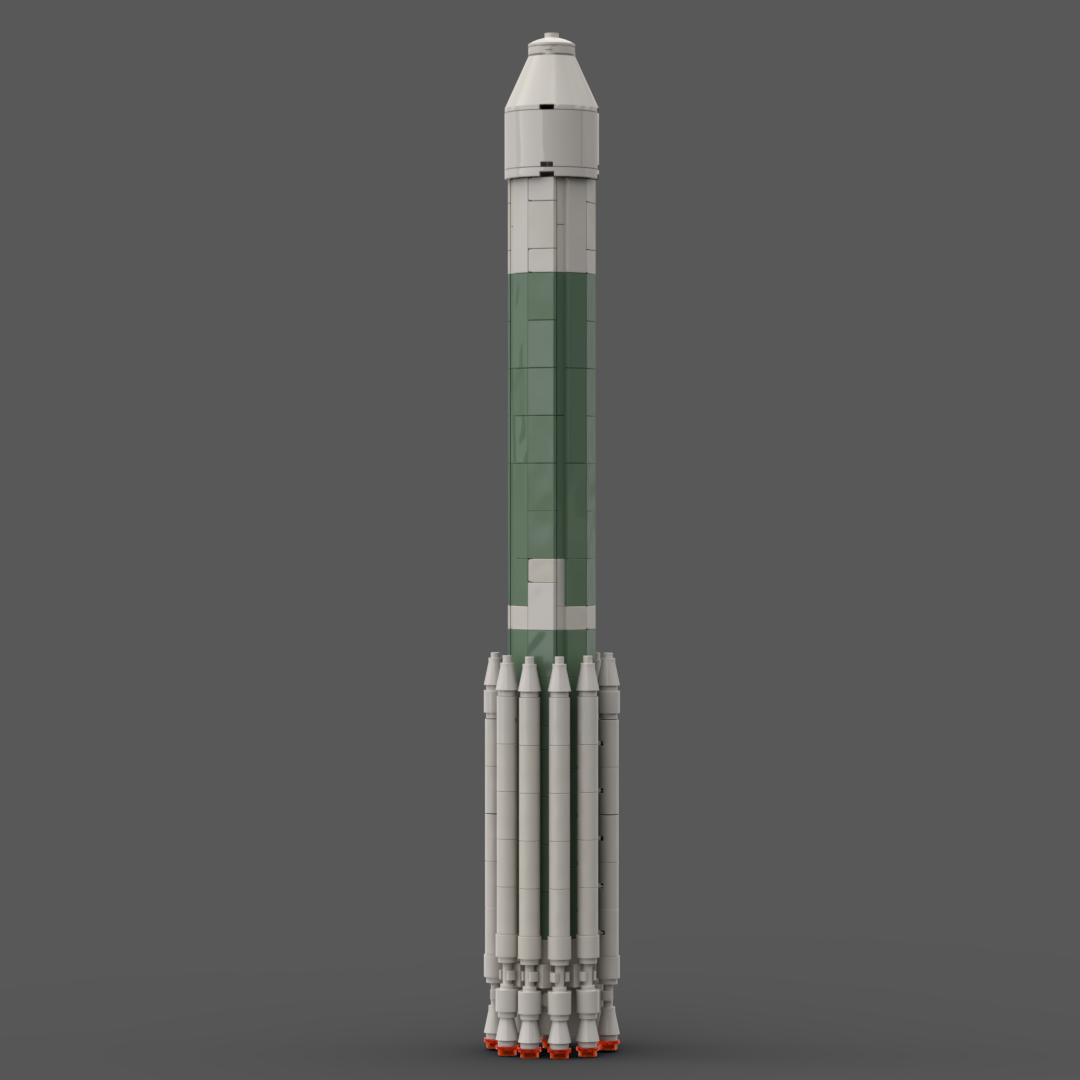
Delta II 7925
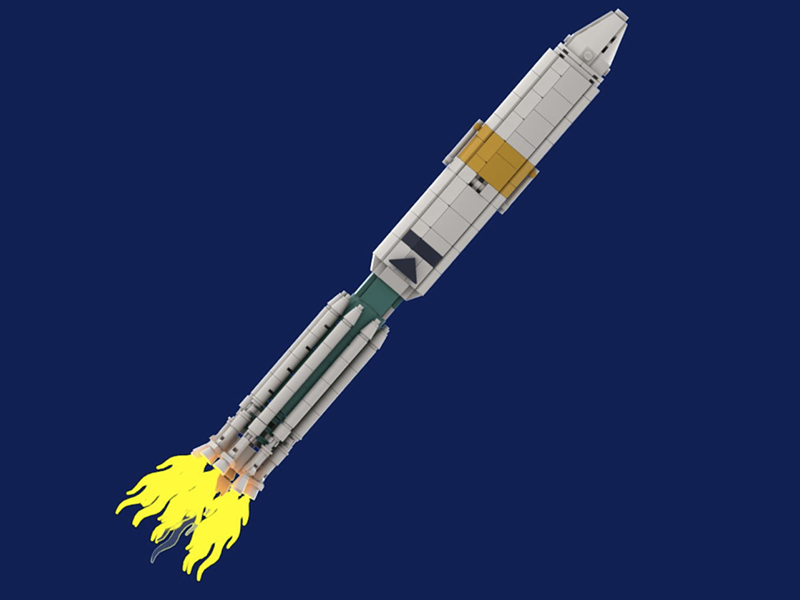
Delta III
Delta IV: Clean Sheet
By the late 1990s, the Thor heritage that had underpinned every Delta since 1960 had been stretched about as far as it could go. The Air Force’s Evolved Expendable Launch Vehicle programme called for a genuinely new rocket, and Boeing — which had acquired McDonnell Douglas in 1997 — responded with the Delta IV.
The Delta IV family was built around a Common Booster Core powered by the Pratt & Whitney Rocketdyne RS-68 engine — the first new large liquid rocket engine developed in the United States since the Space Shuttle Main Engine in the 1970s. Where the SSME was a masterpiece of high-performance engineering that burned liquid hydrogen and liquid oxygen at extraordinary efficiency, the RS-68 made a different trade: it sacrificed some specific impulse for dramatically simplified manufacturing, using a turbopump assembly with far fewer parts and easier production tolerances. The result was an engine that produced 650,000 pounds of thrust — more than three F-1 engines — at a fraction of the manufacturing cost of the SSME.
The Delta IV flew in five configurations. The Medium used a single Common Booster Core. The Medium+ variants added two or four solid rocket boosters. And the Delta IV Heavy strapped three Common Booster Cores together side by side — an arrangement that, at ignition, produced a distinctive effect: the hydrogen-rich exhaust from the RS-68 engines briefly ignited the hydrogen vapour surrounding the vehicle in a flash of fire before settling into normal operation, giving Heavy launches an immediately recognisable fireball at liftoff that alarmed first-time viewers and delighted engineers who understood what they were seeing.
The Delta IV series maintained a perfect 100% success rate over 45 launches. It launched national security payloads, military communications satellites, GPS satellites, and — in its final years — the Orion spacecraft on its first uncrewed test flight in 2014. The last Delta IV Heavy lifted off on 9 April 2024, ending sixty-four years of continuous Delta family operations. A missile designed to strike Moscow had, in its final evolution, been carrying America’s future Moon rocket to orbit.
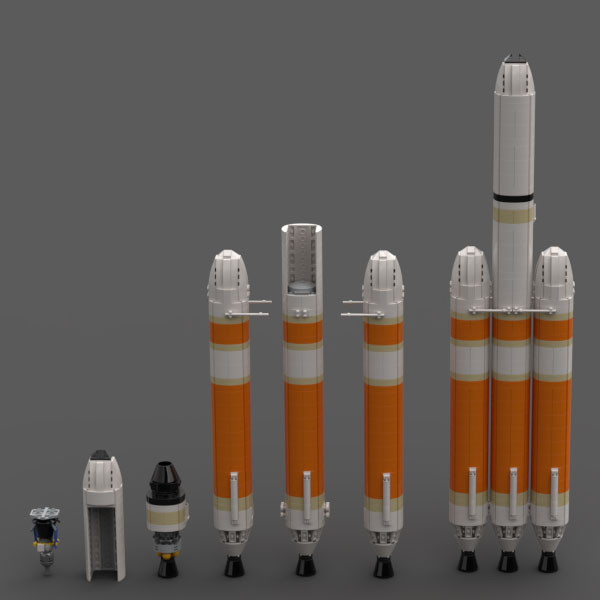
Delta IV Heavy
Delta IV Heavy
Atlas: The Balloon That Flew
Atlas is one of the strangest designs in rocket history, and it very nearly wasn’t a design at all — it was a philosophy. Where conventional rockets used heavy structural frames to support their propellant tanks, Atlas used the tanks themselves as the structure, kept rigid by internal pressurisation. The Atlas-Centaur was the first rocket to use liquid hydrogen as fuel. But before that landmark, the fundamental Atlas design was radical enough on its own.
The Atlas D, the first version deployed, became operational in 1959 as one of the first U.S. ICBMs. The missiles saw only brief ICBM service, and the last squadron was taken off operational alert in 1965. As a weapon, Atlas was vulnerable — it had to be fuelled before launch, which took time, and it sat exposed on the surface rather than hardened underground. The Minuteman solid-fuel missile made it obsolete almost immediately.
As a space launcher, Atlas was something else entirely. The same balloon tank structure that made it unsuitable as a weapon — you couldn’t leave liquid oxygen sitting in a pressurised tank on high alert indefinitely — made it remarkably efficient as a launch vehicle. Less structural mass meant more payload. From 1962 to 1963, Atlas boosters launched the first four U.S. astronauts to orbit the Earth in the Mercury programme. John Glenn rode an Atlas D into orbit in February 1962 in a vehicle that, unpressurised, would have collapsed under its own weight on the pad. He knew this. He flew anyway.
Atlas-Agena and the Exploration Years
The Atlas’s upper stage pairings transformed it from a satellite launcher into an explorer. The Agena upper stage — a restartable, manoeuvrable platform that could serve as both a kick stage and, in some missions, the spacecraft itself — gave Atlas the reach to go places no single-stage vehicle could manage.
Atlas-Agena launched all nine Ranger lunar probes, the Mariner 2 and 5 Venus flyby spacecraft, the Mariner 3 and 4 Mars probes, and all five Lunar Orbiter missions. Mariner 2, in August 1962, became the first spacecraft to successfully fly by another planet — confirming Venus’s crushing surface temperature and dense atmosphere. Mariner 4, in July 1965, returned the first close-up photographs of Mars. The Lunar Orbiters, between 1966 and 1967, systematically mapped 99% of the lunar surface, providing the imagery that made Apollo landing site selection possible. All of them rode Atlas-Agenas.
Each of the Agena target vehicles used for Gemini rendezvous practice missions was also launched on an Atlas rocket — the same vehicle that had carried Mercury astronauts to orbit was now launching the docking targets that Gemini crews chased through space.
Centaur: The Upper Stage That Almost Wasn’t
The Atlas-Centaur combination took the vehicle to another level — literally. Centaur, powered by Pratt & Whitney RL-10 engines burning liquid hydrogen and liquid oxygen, was the first high-energy upper stage in the American arsenal. It was the first rocket stage to use liquid hydrogen as fuel— a cryogenic propellant so cold it liquefies at minus 253 degrees Celsius, just 20 degrees above absolute zero, requiring insulation technology that didn’t exist when the programme started.
The development was agonising. The first Atlas-Centaur launch attempt in May 1962 ended when the rocket exploded on the pad in a fireball of liquid hydrogen. Subsequent failures prompted congressional investigations. Wernher von Braun recommended cancelling Centaur entirely in favour of a Saturn-Agena combination. In November 1962, President Kennedy himself suggested cancellation — and was talked out of it by engineers who argued that liquid hydrogen experience was essential for Apollo. Congressional investigations called the overall management of the Centaur program “weak.”
It worked eventually, and when it worked it was extraordinary. The Pioneer 10 and Pioneer 11 spacecraft used a Star-37E solid final stage contributing 8,000 mph to their velocities, pairing Atlas-Centaur with an additional kick stage to achieve escape velocity from the solar system. NASA launched the Surveyor lunar landers on Atlas-Centaur, delivering them softly to the lunar surface in preparation for Apollo. Atlas was used as an expendable launch system for the Mariner probes used to explore Mercury, Venus, and Mars from 1962 to 1973.
The Modern Atlas Family
The “classic” Atlas evolved through the 1970s, 1980s, and 1990s in a series of increasingly capable configurations. The SLV-3 standardised the launch vehicle design for both military and civilian use. The Atlas G and H stretched the tanks for greater capacity. Atlas I, first flown in 1990, added an updated guidance system. Atlas II, introduced in 1991, flew sixty-three launches between 1991 and 2004 — all sixty-three of which were successes. The Atlas IIA added commercial capability with improved Centaur engines; the Atlas IIAS further added four Castor 4A solid rocket boosters.
Then came Atlas III — and a decision that would have seemed inconceivable during the Cold War.
The first stage of the Atlas III discontinued the use of three engines and the unique 1.5-stage configuration in favour of a single Russian-built Energomash RD-180 engine, while retaining the stage’s balloon tank construction. The RD-180 was a Russian engine, derived from the RD-170 that powered the Soviet Energia rocket — the same rocket that had carried Buran. A decade after the Soviet Union’s collapse, American rockets were flying on Russian engines. The RD-180 was more powerful and more efficient than anything Lockheed Martin could produce domestically at competitive cost, and the post-Cold War political climate made the purchase possible. It was entirely pragmatic. It was also, in retrospect, a dependency that would become uncomfortable as geopolitical relations deteriorated decades later.
Atlas V, introduced in 2002, retained the RD-180 on a new Common Core Booster — abandoning the balloon tank structure that had defined Atlas since 1957 in favour of a conventional rigid airframe. Available in configurations ranging from zero to five solid rocket boosters and with 4-metre or 5-metre payload fairings, Atlas V launched over 300 times from Cape Canaveral and Vandenberg combined across the Atlas family’s history. Space.com Its payload list includes New Horizons — the fastest spacecraft ever launched, which flew past Pluto in 2015 — and the Mars Science Laboratory that delivered the Curiosity rover to Gale Crater in 2012.
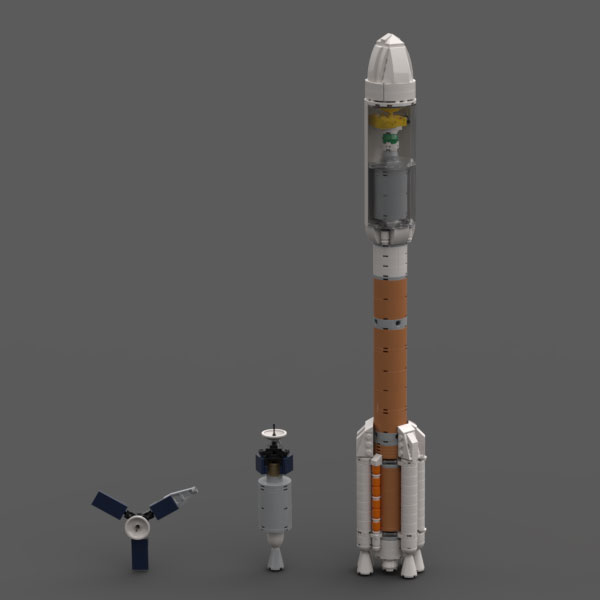
Atlas V 551
Atlas V 551
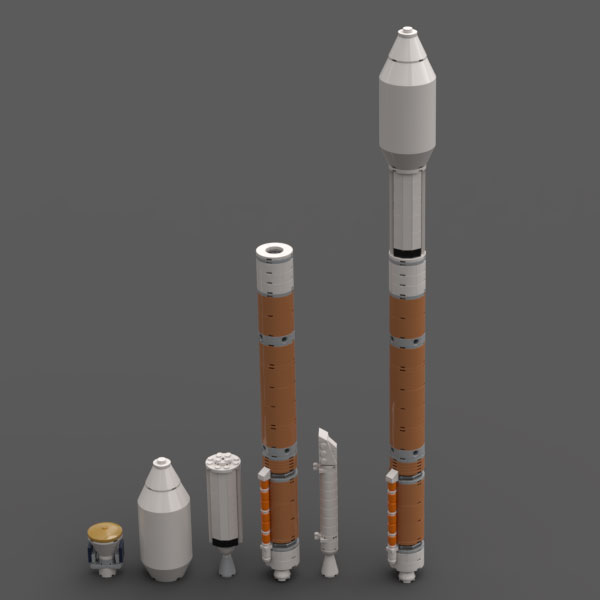
Atlas V 411
Atlas V 411
Titan: The Heavy
If Delta was the workhorse and Atlas was the explorer, Titan was the bruiser — the vehicle you called when the payload was large, classified, or both.
Titan I was designed as a backup in case Atlas failed. Two-stage, powered by RP-1 and liquid oxygen, operational from 1962 to 1965. It was already being replaced before most people knew it existed. Its guidance system — a UNIVAC ATHENA computer designed by Seymour Cray, later of Cray Research supercomputer fame, housed in a hardened underground bunker — made course corrections using radar data during the burn phase. The guidance system was more sophisticated than the rocket it guided, which says something about 1950s Air Force procurement priorities.
Titan II replaced it immediately. The crucial change was propellant: where Titan I used cryogenic liquid oxygen — which had to be loaded just before launch, making rapid response impossible — Titan II used storable hypergolic propellants, nitrogen tetroxide and Aerozine-50, that ignited on contact with each other without any ignition system and could be stored in the rocket indefinitely. A Titan II could sit in its silo for years and launch within 60 seconds of receiving the order. As an ICBM, that was everything.
As a crewed launch vehicle it was a different proposition entirely. Hypergolic propellants are acutely toxic — a leak on the pad was a genuine hazard to the launch crew — and the ride was rougher than Atlas. The “pogo” oscillation problem, where combustion instabilities caused the rocket to vibrate longitudinally at frequencies that could disorient or injure crew, required significant engineering effort to suppress. It was suppressed. “The Gemini Titan launch vehicle was really just gang busters. It developed beautifully; it worked beautifully,” said Martin Marietta historian Bill Harwood. Twelve Titan II GLVs were used for Project Gemini. Two flights were uncrewed and the remaining ten carried two-person crews. All of the launches were successful.
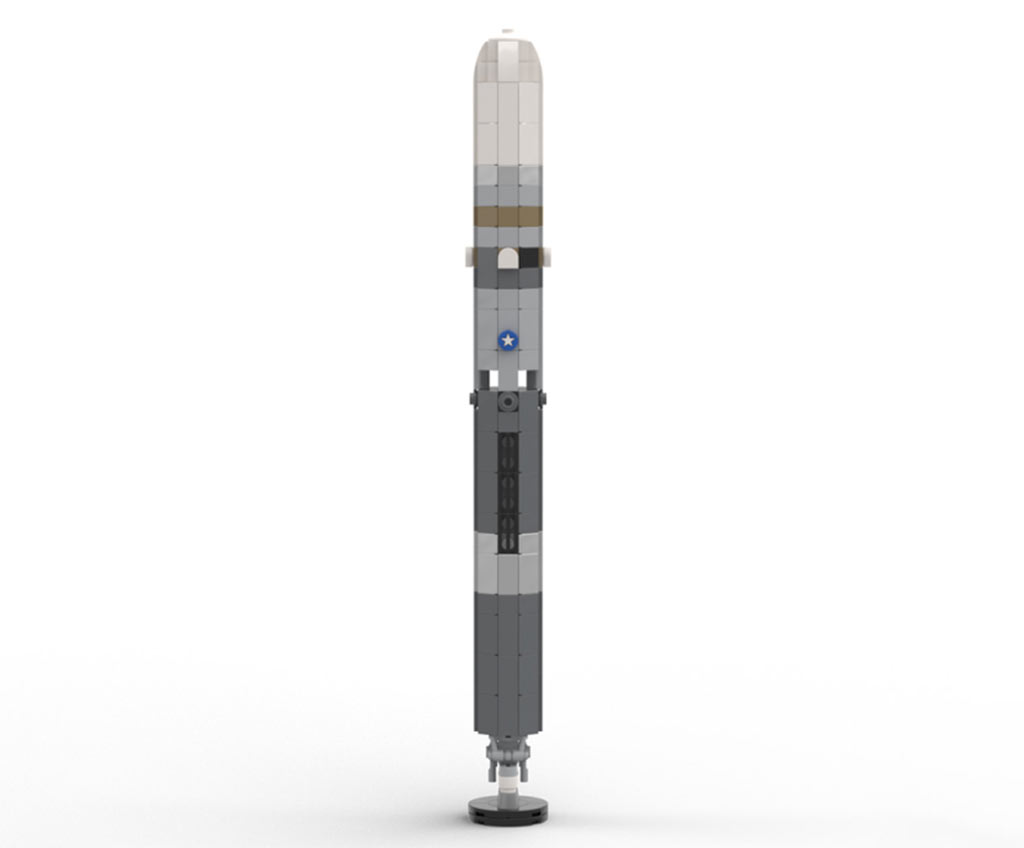
Titan II (23) G
Titan III: Adding Wings
After Gemini, the Air Force needed a much heavier launch capability for its growing constellation of military satellites. The answer was Titan III — a family of vehicles built around the Titan II core but equipped with massive solid rocket boosters strapped to each side.
The Titan IIIC, first flown in 1965, added two 120-inch diameter solid motors that each produced more thrust than the entire Titan II at liftoff. The solid-fuel boosters developed for the Titan IIIC represented a significant engineering advance over previous solid-fuelled rockets, due to their large size and their advanced thrust-vector control systems. The Transtage upper stage, which could restart its engine multiple times in orbit, could place payloads into precise geostationary orbits — essential for communications and early warning satellites that needed to hover over a fixed point on Earth’s surface.
The Titan IIID dropped the Transtage but kept the solid boosters, flying exclusively from Vandenberg to place the KH-9 and KH-11 reconnaissance satellites into polar orbits. These were the keystones of America’s overhead intelligence capability during the 1970s and 1980s — enormous platforms that returned film canisters recovered in mid-air over the Pacific, then later transmitted digital imagery directly to the ground. The missions were classified. The rockets were not, quite, but the payloads were never officially acknowledged.
Then came the Titan IIIE — and one of the greatest payloads any rocket ever carried.
The Titan IIIE, with a high-specific-impulse Centaur upper stage, was used to launch both of NASA’s Voyager space probes, both Viking missions to Mars, and the Helios solar probes. Viking 1 and 2 launched in 1975 and reached Mars the following year, delivering the first landers to the Martian surface. Voyager 1 and 2 launched in 1977, carrying their golden records toward the stars. Four missions, four Titan IIIEs, and arguably the four most scientifically significant launches in American history, all within three years.
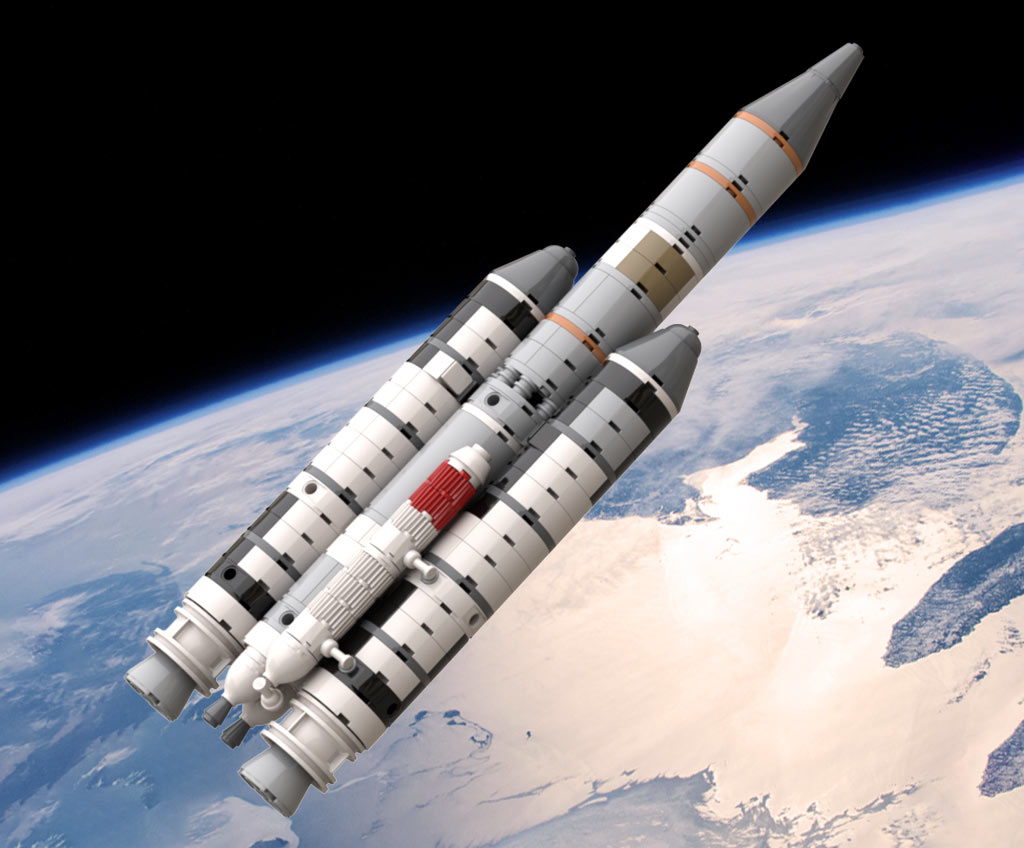
Titan IIIc
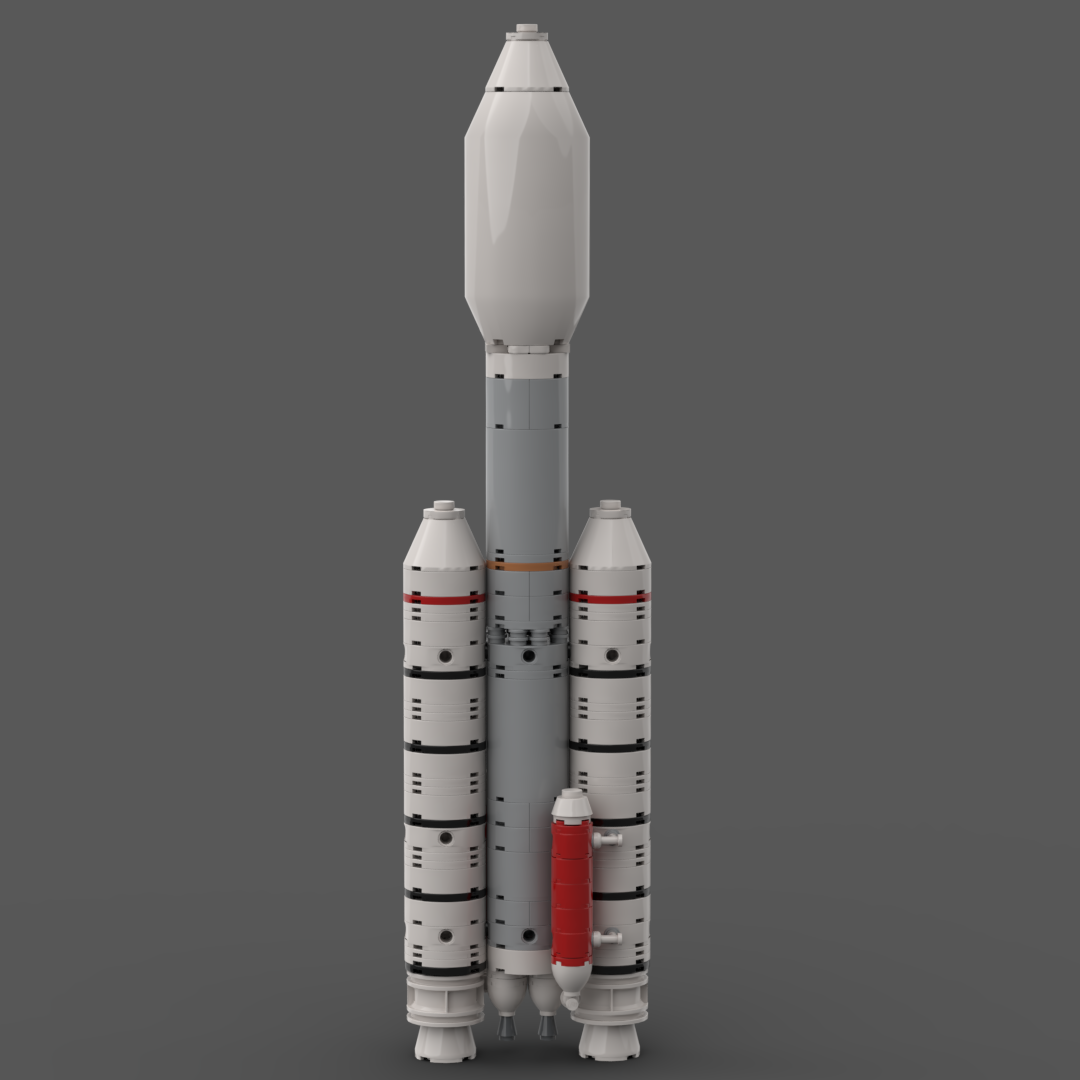
Titan IIIE
Titan IIIE
Titan IV: The End of the Line
Titan IV was conceived when it became clear that the Space Shuttle — which was supposed to carry large military payloads — couldn’t reliably do so. An alternative heavy-lift vehicle was needed, and Titan IV was it: a stretched Titan III with larger solid rocket boosters, capable of carrying up to 21,000 kilograms to low Earth orbit or, with a Centaur upper stage, delivering enormous payloads to geostationary orbit or beyond.
Titan IV was used almost exclusively to launch US military or Central Intelligence Agency payloads — primarily for the National Reconnaissance Office. What those payloads actually were remained classified, though the satellite dimensions implied by the Titan IV’s payload fairing dimensions suggested vehicles of extraordinary size and sophistication. The cost per launch was correspondingly extraordinary — estimates ranged from $250 to $400 million per flight. It was the most expensive expendable rocket in American history.
Its one unclassified scientific mission was, appropriately, one of the most ambitious planetary spacecraft ever built. In October 1997, a Titan IVB with a Centaur upper stage launched the Cassini-Huygens mission to Saturn — a 5,600-kilogram spacecraft so large that no other operational American rocket could have carried it. Cassini reached Saturn in 2004, orbited for 13 years, and delivered the Huygens probe to the surface of Titan — Saturn’s largest moon, and the only body in the solar system beyond Earth known to have stable surface liquids. It discovered hydrocarbon lakes, organic chemistry of extraordinary complexity, and a world that seemed, in some fundamental ways, like a frozen mirror of early Earth.
The last Titan IV flew on 19 October 2005, ending a programme that had begun with Titan I’s operational deployment in 1962. In total, 368 Titan rockets were launched across the family’s history. The rocket designed as a backup to Atlas had outlasted Atlas’s missile career by four decades, carried humans to orbit, sent spacecraft to every planet in the solar system, and built the intelligence architecture of the Cold War and beyond.
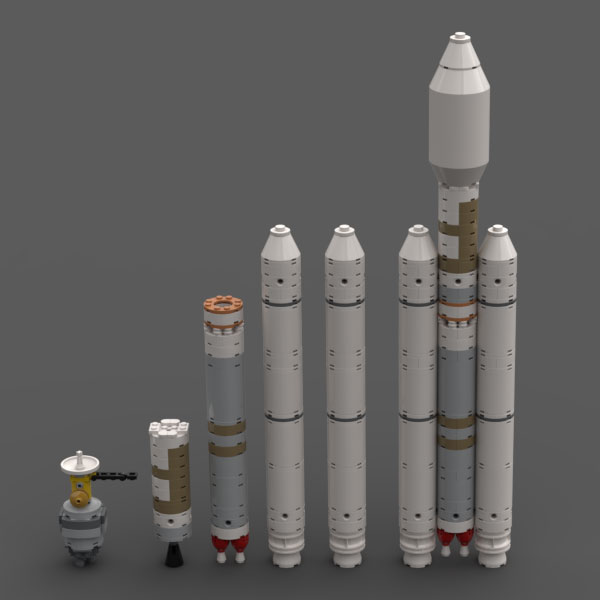
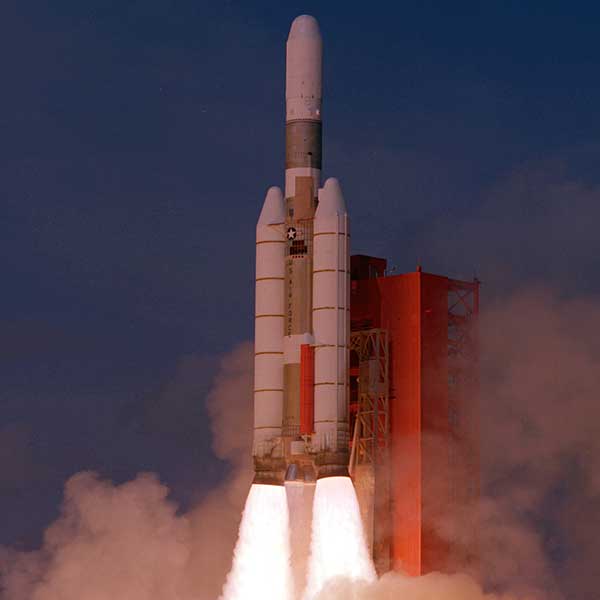
Titan IV
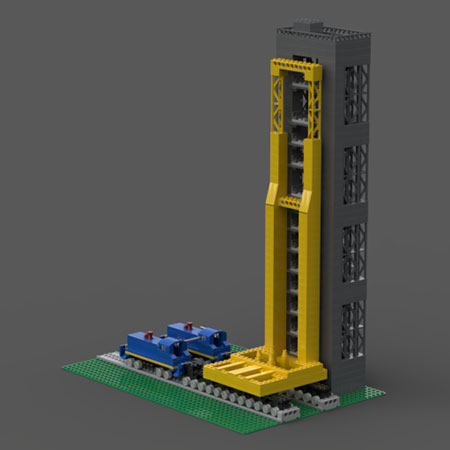
Launch Complex 41
Launch Complex 41
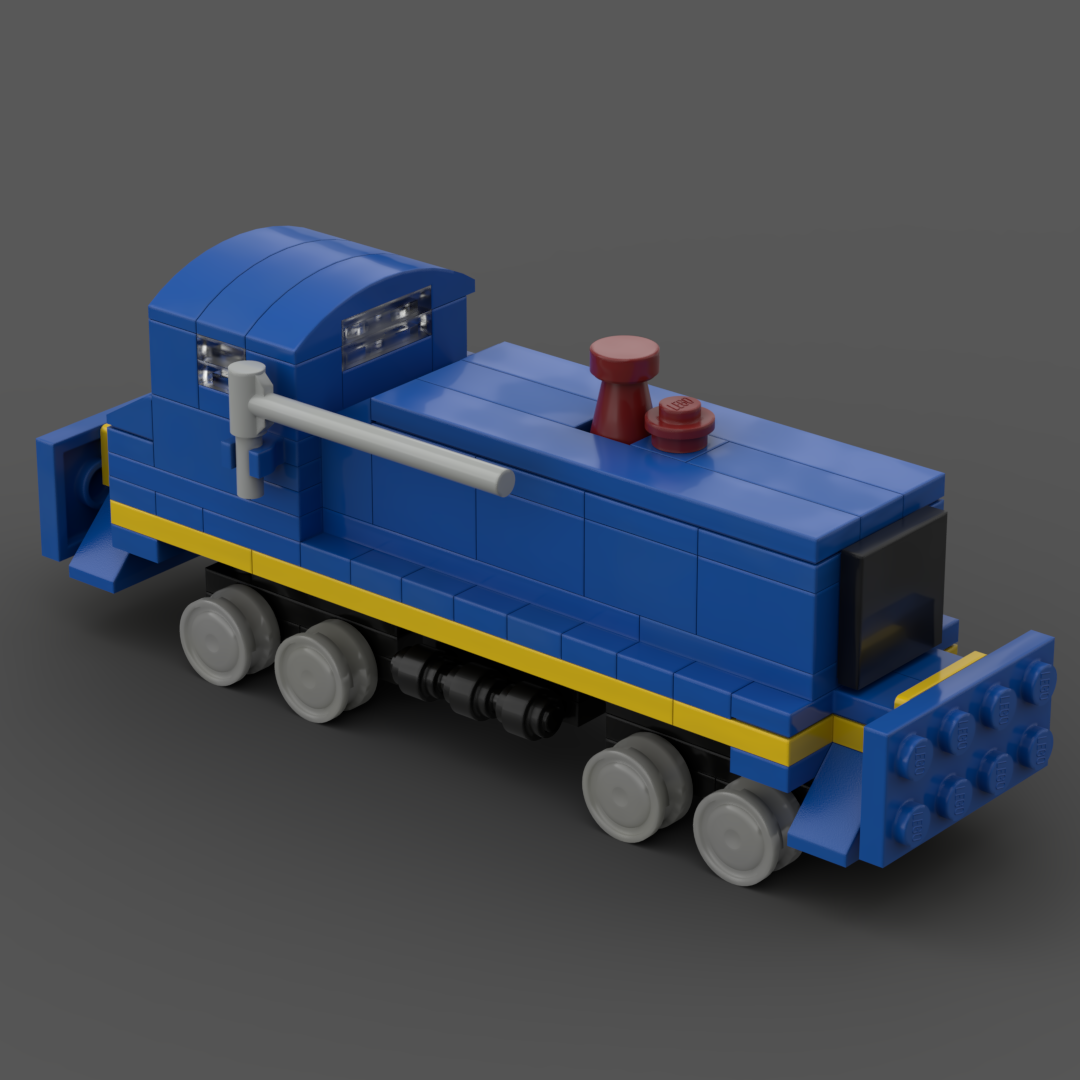
EMD SW8 Train
EMD SW8 Train
The Consolidation
By the mid-2000s, the American launch industry had consolidated dramatically. Delta IV and Atlas V — both products of the Air Force’s Evolved Expendable Launch Vehicle programme — were the survivors, and in 2006, Boeing’s Delta operations and Lockheed Martin’s Atlas operations were merged into a single joint venture: United Launch Alliance. America’s workhorse rocket families, which had spent half a century in commercial and institutional competition, were now under the same roof.
It was a recognition that the era of proliferating launcher families had ended. Three missile programmes had produced three rocket lineages that had between them launched over a thousand missions, built the global communications infrastructure, enabled planetary exploration from Venus to the edge of the solar system, and quietly maintained the overhead intelligence capability that had helped navigate the Cold War to a peaceful conclusion. The individual rockets were gone. What they had built remained — in every GPS signal, every weather forecast, every photograph of another planet’s surface.