

When Apollo 17’s command module splashed down in the Pacific Ocean. Eugene Cernan the last man to step off the lunar surface, said “We leave as we came, and God willing, as we shall return.” Nobody returned. The Apollo programme was over, its final three missions already cancelled. The television cameras packed up. The crowds went home. America had done the thing it set out to do in 1961 and was not entirely sure what came next.
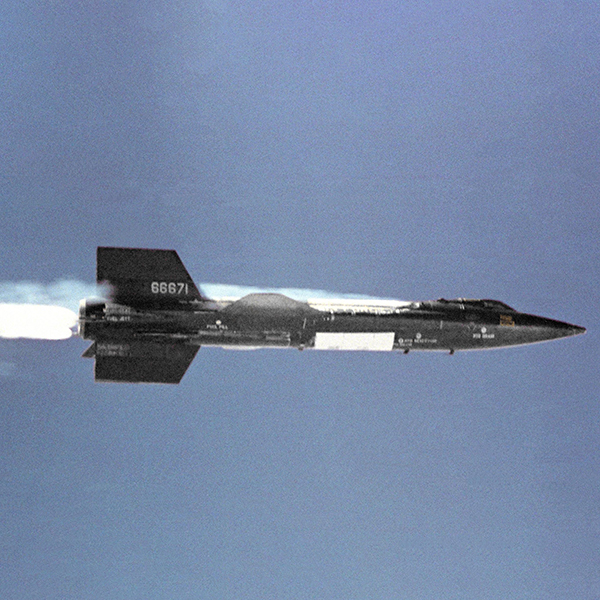
While Houston had been doing the most public thing in human history, a parallel programme had been running at the other end of California with almost no public profile, significant loss of life, and results that fed directly into everything NASA had achieved and everything it would do next. The pilots at Edwards had been going faster and higher than anyone in aircraft aimed at the edge of the atmosphere itself, probing the boundary between aviation and spaceflight with the same methodical and occasionally lethal discipline that had always characterised the flight research community. Neil Armstrong had been one of them. So had the man who set the speed record that still stands today. So had the man who died attempting to set the altitude record that Armstrong had set before him.
Twelve miles above the Mojave Desert, on the morning of 17 October 1947, a Bell XS-1 painted bright orange dropped from the belly of a B-29. The pilot inside the little rocket plane was a 24-year-old farm boy with two broken ribs, sustained two days earlier when he fell off a horse and hit a fence rail. He hadn’t told the flight surgeon about it because he was afraid of being grounded. The ribs made it impossible to seal the XS-1’s hatch with his right arm alone. He had smuggled a ten-inch length of broomstick onto the aircraft so he could lever it shut with his left hand.
At Mach 0.94 he felt the controls go mushy, the same compressibility effects that had killed Geoffrey de Havilland Jr the year before. He pushed through. At 43,000 feet, the Machmeter needle jumped off the scale. Charles Elwood Yeager had broken the sound barrier, and nobody outside the programme was allowed to know.
The achievement was classified for eight months. When it was finally announced, on 14 June 1948, the world understood that the first great barrier of the atmosphere had been crossed. What the world could not yet know was that the barrier Yeager had crossed was the first of several, each one requiring a different machine, a different kind of engineering, and a different kind of pilot.
The X-1: Probing the Unknown
The Bell X-1 was a brutally simple machine: a straight-wing bullet of aluminium, 9.4 metres long, powered by a four-chamber XLR-11 rocket engine burning ethyl alcohol and liquid oxygen, built with a wing so thin and strong it could theoretically withstand more aerodynamic force than any pilot could survive. The thinness was the point. Conventional wings thickened toward their leading edge to generate lift; that thickening, at transonic speeds, caused shockwaves that destabilised the aircraft. The X-1’s wing was almost flat, a profile borrowed from a .50-calibre bullet, the one projectile known to fly stably at supersonic velocities.
The X-1 programme, run jointly by the NACA, the Air Force, and Bell Aircraft, flew 157 times between 1946 and 1958. Yeager was not the only remarkable pilot who flew it. Chalmers “Slick” Goodlin, a Bell test pilot who had done much of the preliminary flying, had demanded a $150,000 bonus, roughly $2 million today, to attempt the sound barrier run, which the Air Force declined to pay. The Air Force then assigned the flight to military pilots who would be paid their regular salary. Yeager got the flight. Goodlin did not, and became one of aviation history’s great what-ifs.
The X-1A, which followed, was longer and had more propellant for longer engine burn, and nearly killed Yeager on 12 December 1953 when he pushed it to Mach 2.44, faster than any human had flown, and immediately lost control. The aircraft entered a violent tumbling spin from which no conventional recovery was possible, the aerodynamics being unlike anything the controls had been designed to handle. Yeager fell 51,000 feet in 51 seconds, gyrating and spinning, blacking out and recovering consciousness in alternation, before the aircraft accidentally stabilised at 25,000 feet and he was able to fly it home. His canopy had cracked. His helmet had cut his face. His debriefing report is a masterpiece of laconic understatement.
The X-1E, the last of the family, flew from 1955 to 1958, fitted with a knife-edge wing of only 3.5% thickness-to-chord ratio, even thinner than the original, and a new fuel system. It was the last of the straight X-1 line. By 1958 the programme had returned what it could return from the straight-wing transonic envelope. The next problem was an order of magnitude harder.
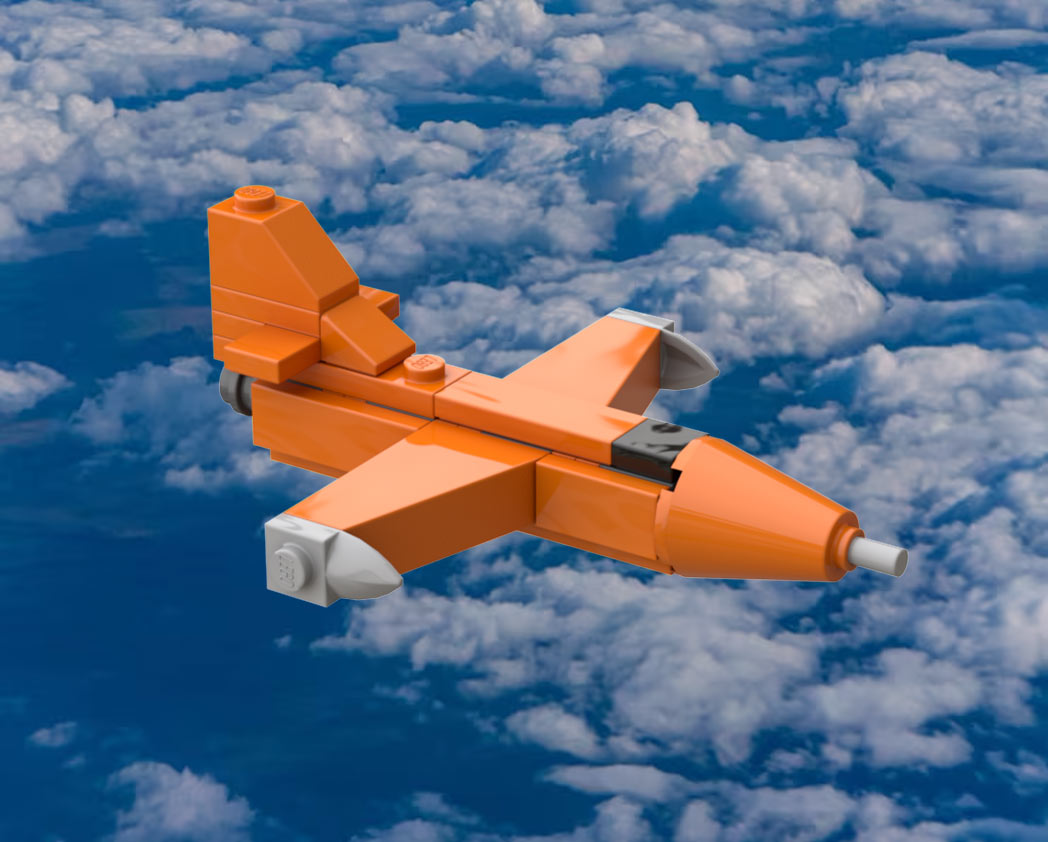
Bell X-1
Bell X-1
1st launch attempt:
Launch Site:
Orbital Type:
Country of Origin:
The X-15: Where Aviation Became Spaceflight
In 1954, the NACA issued a study requirement for a new research aircraft that would fly at Mach 7 and reach altitudes of several hundred thousand feet. The number was so far beyond anything that existed that engineers initially struggled to determine whether it was even achievable. The answer, worked out over several years of analysis by North American Aviation’s design team under Harrison Storms, was: yes, but the aircraft would have to be made of materials that did not yet exist in sufficient quantity, powered by an engine that had not yet been built, and flown with techniques that had never been attempted.
The X-15 that emerged from this process was 15 metres long, built primarily from Inconel-X, a nickel-chromium alloy developed specifically for the programme that retained its strength at temperatures that would have turned aluminium to soup, with a wedge-shaped tail designed for stability at hypersonic speeds rather than aerodynamic efficiency. Its Thiokol XLR-99 rocket engine burned anhydrous ammonia and liquid oxygen, producing 57,000 pounds of thrust, more power than all the engines of a B-52 combined, running for approximately 85 seconds before the fuel was gone. After that, the pilot was flying a very expensive unpowered glider at hypersonic speed toward a dry lakebed in the Mojave Desert, with one attempt to land and no second chances.
The aircraft was too heavy and too fast to take off from the ground, and the rocket engine would have burned its propellant before the aircraft cleared the runway regardless. Instead it flew slung beneath the right wing of a modified Boeing B-52 to launch altitude, typically around 45,000 feet, where it was dropped free and the pilot ignited the engine. The B-52 crews called their aircraft “The Balls 8”, officially 52-0008, and flew it for the entire X-15 programme. It made its final flight in 2004, by which point it was the oldest B-52 still flying, having outlasted the programme it served by 36 years.
Scott Crossfield, North American’s chief test pilot and an aeronautical engineer of exceptional ability, flew the first glide flight on 8 June 1959, dropped from the B-52 and landing unpowered on the lakebed below. The first powered flight followed in September. Crossfield flew 14 times in total, checking out the aircraft and the XLR-99 engine before handing the programme over to the Air Force and NACA pilots who would fly the research missions.
Eleven other pilots flew the X-15 after Crossfield. Three of them opened the flight envelope: Air Force Major Robert White, who was first to fly Mach 4, Mach 5, and Mach 6, and first to exceed 200,000 and then 300,000 feet; NASA’s Joe Walker, who set the programme’s altitude record of 354,200 feet, 67 miles above the Earth, on 22 August 1963; and Pete Knight, who set the speed record of Mach 6.7, 4,520 miles per hour, on 3 October 1967, a flight during which aerodynamic heating nearly melted the ablative coating off the aircraft’s nose and left the airframe visibly damaged. Knight’s record has never been broken. It remains, more than half a century later, the fastest a crewed, powered aircraft has ever flown.
Among the pilots was Neil Armstrong, who flew the X-15 seven times between 1960 and 1962 before transferring to the astronaut corps. Armstrong was described by his colleagues as the best engineering mind in the programme and a pilot who would occasionally let his intellectual curiosity override his piloting instincts. On his sixth flight, 20 April 1962, he became so absorbed in measuring the behaviour of the new adaptive flight control system during reentry that he allowed the aircraft’s nose to rise too high. The X-15 skipped off the top of the atmosphere like a flat stone off water, bouncing back out to 140,000 feet and overshooting its intended landing point by 40 miles.
Armstrong recovered, executed a high-altitude U-turn, a manoeuvre not in the flight plan, and just barely reached the Rogers Dry Lake runway with no altitude to spare. His boss, NASA Flight Research Center director Paul Bikle, was seriously considering firing him when the astronaut office in Houston offered Armstrong a place in the second group of NASA astronauts. Bikle, by his own later account, was relieved to have the problem resolved for him. Three years later Armstrong was commanding Gemini 8. Seven years later he was on the Moon.
Over the programme’s 199 flights, eight of the twelve pilots crossed 50 miles altitude, the US Armed Forces’ definition of the space boundary, on 13 separate occasions, technically qualifying as astronauts. The five Air Force pilots were awarded military astronaut wings at the time. The three NASA civilian pilots, Walker, Jack McKay, and Bill Dana, received no equivalent recognition in the 1960s, because NASA had no comparable civilian award. The FAA eventually awarded its first-ever commercial astronaut wings to Mike Melvill and Brian Binnie of SpaceShipOne in 2004, a decision that prompted NASA to retroactively award civilian astronaut wings to Dana, and posthumously to Walker and McKay, in 2005. Walker had been dead for 39 years.
The X-15’s only fatality came on 15 November 1967. Air Force Major Michael Adams, on his seventh flight, suffered a malfunction in the aircraft’s adaptive control system that put it into a hypersonic spin during reentry. Adams corrected the spin and recovered the aircraft, but the recovery left him flying inverted at Mach 5 at 60,000 feet, in a steep dive he could not arrest. The X-15-3 broke apart from aerodynamic forces at 60,000 feet over the Mojave Desert. Adams was 37. He was posthumously awarded Air Force astronaut wings: his final flight had reached 50.4 miles. A monument stands today at the cockpit’s impact point near Johannesburg, California. His name is on the Astronaut Memorial at Kennedy Space Center.
The last X-15 flight was on 24 October 1968. Bill Dana flew it, reaching Mach 5.38 and 255,000 feet. The programme ended on 31 December 1968. The following morning, a Saturn V was being prepared at Kennedy Space Center for the Apollo 8 mission, the first crewed flight to the Moon. The same physics the X-15 had explored at the edge of the atmosphere would be needed to bring those astronauts home again. Everything the programme had learned about hypersonic reentry, heat shields, reaction control thrusters, pressure suits, and pilot performance at the boundary of space was now embedded in the hardware and procedures of the programme that would take humanity 239,000 miles further.
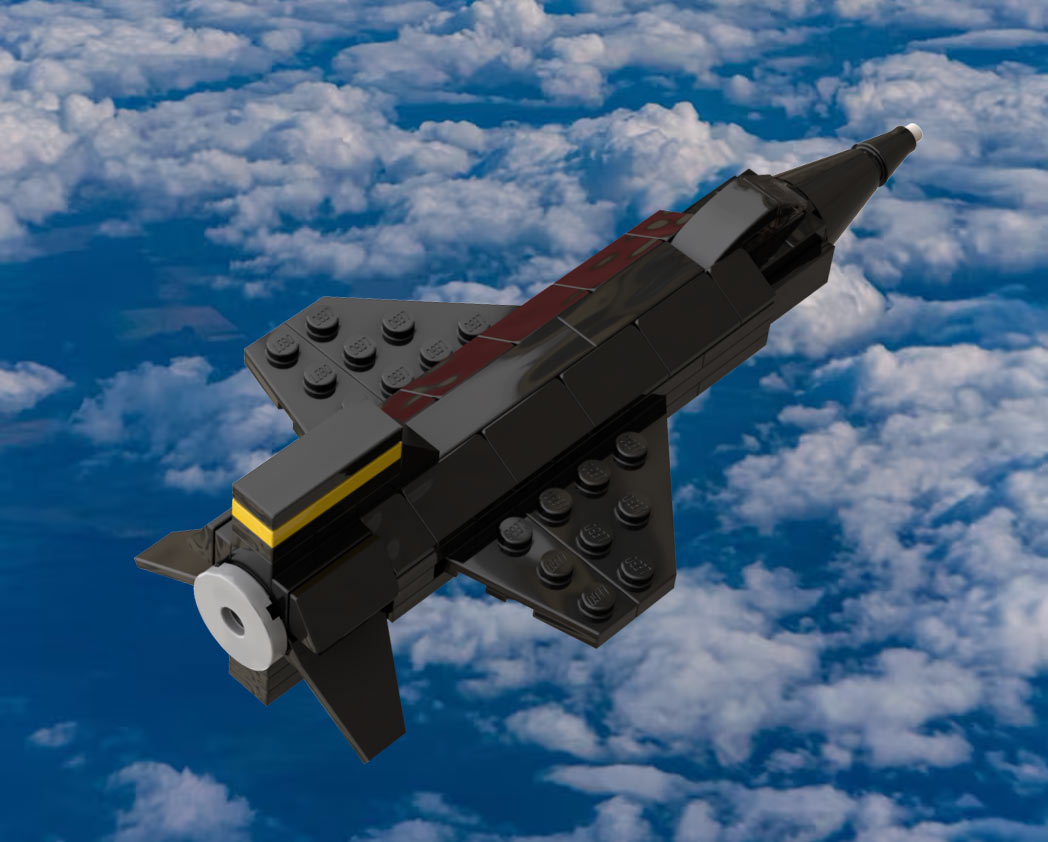
X-15
X-15
1st launch attempt: 15 November 1960
Launch Site: Atmospheric Launch
Orbital Type: Sub-Orbital
Country of Origin: United States
model by Grant Passmore (Eiffelman) Nico Daams (Tech_niek)
More details > View on Rebrickable > View on >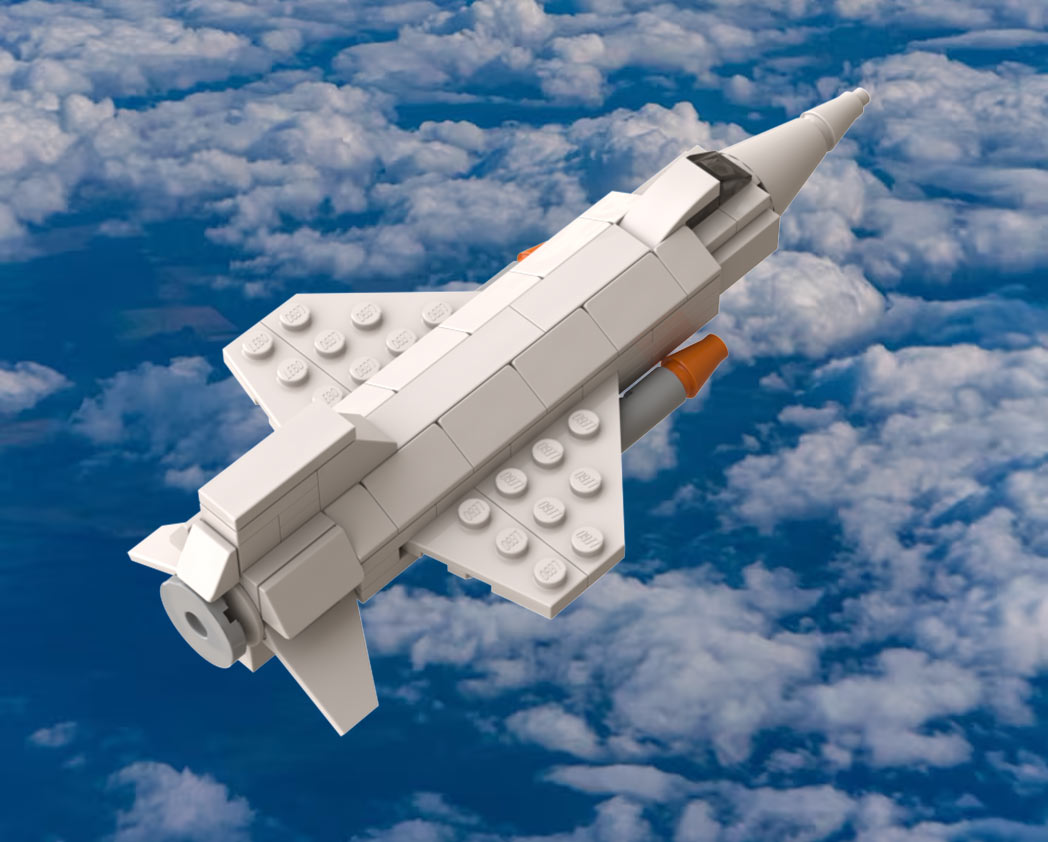
X-15a
X-15a
1st launch attempt:
Launch Site:
Orbital Type:
Country of Origin:
model by Grant Passmore (Eiffelman) Nico Daams (Tech_niek)
More details > View on Rebrickable > View on >The Blackbirds
The U-2 was Kelly Johnson’s first great reconnaissance aircraft, a subsonic aircraft with enormous wings, flying so high that the CIA initially believed it was beyond the ceiling of Soviet radar and missiles. They were wrong. Soviet radar tracked the aircraft on its first overflight in 1956. By 1960 they had the missiles. On 1 May 1960, Francis Gary Powers was shot down at 70,000 feet, creating an international incident that destroyed the Paris Summit and demonstrated beyond argument that the U-2’s operational life was over.
Johnson had seen this coming. As early as 1955 he had been working on a follow-on, an aircraft so fast that even if radar could track it, no missile could catch it. The design went through twelve iterations, designated Archangel 1 through Archangel 12, before becoming the A-12. The challenges were so severe that solving them required inventing new fields of engineering simultaneously. The aircraft flew faster than Mach 3 continuously, which meant aerodynamic heating raised the skin temperature to between 500 and 1,000 degrees Fahrenheit. Aluminium, which had built every major aircraft since the 1930s, turned to mush at those temperatures. The solution was titanium, stronger than aluminium at high temperatures, lighter than steel, and at the time almost entirely unavailable in the quantities required from American sources.
The CIA solved the supply problem by secretly purchasing Soviet titanium through a network of foreign intermediaries. The most capable reconnaissance aircraft in American history, built to spy on the Soviet Union, was constructed largely from material bought secretly from the Soviet Union. The irony was not lost on the engineers who knew about it, though very few did, the programme’s secrecy was so complete that even the machinists working on the aircraft didn’t know what they were building. Early titanium machining was so poorly understood that ordinary cadmium-plated tools left microscopic contamination that caused cracks. Ink from ordinary felt-tip pens, used to mark the titanium panels, caused stress corrosion at the marked lines. The engineers had to develop entirely new manufacturing techniques, new cutting tools, new lubricants, new quality standards, for a material that the industry had barely worked with before.
The fuel presented the same order of problem. Conventional jet fuel would vaporise at the operating temperatures. A new fuel called JP-7 was developed jointly by Ashland, Shell, Monsanto, and Pratt & Whitney, a high-flashpoint hydrocarbon so stable that you could put a burning match out in it at normal temperatures. At Mach 3 the fuel served as a heat sink, absorbing heat from the airframe before being burned; on the ground, the aircraft’s thermal cycles meant the titanium skin panels were machined slightly loose, with gaps between them, because at operating temperature the metal expanded to close the gaps perfectly. On the ground, the aircraft leaked JP-7 from every seam. Pools of it formed under each aircraft before flight. Ground crews treated this as normal. It was normal.
The aircraft that flew with all these compromises solved aboard was extraordinary. The A-12 first flew on 26 April 1962 at Groom Lake, Nevada, Area 51, a facility whose existence was so secret that the pilots who flew there were not permitted to tell their families where they worked, listing their employer on tax returns as the US government. By 1967 it was operational over North Vietnam and North Korea, flying at altitudes and speeds that made interception impossible. Over the South of Vietnam, North Vietnamese radar operators tracked it, computed its ground track, and calculated where it would be in four minutes. They fired anyway. The missiles arrived in the right location. The aircraft was already 40 miles away.
The A-12 was retired in 1968 when its CIA funding was cut in favour of the Air Force’s SR-71, a slightly larger two-seat derivative that carried more sensors and more fuel. President Lyndon Johnson announced the SR-71’s existence at a press conference in July 1964, referring to it as the SR-71, a transposition of the Air Force’s intended designation of RS-71. Nobody corrected the President. Lockheed was required to alter the designation on 33,000 drawings. The SR designation stood.
The SR-71 flew from 1966 to 1989, then briefly returned to service from 1995 to 1998, and finally operated with NASA until 1999. It was designed to fly faster than Mach 3 at altitudes above 85,000 feet, sixteen miles up, where the sky is dark blue and the curvature of the Earth is visible and the pressure suit the crew wore was functionally identical to a space suit, because the environment was functionally identical to space. The crew had to wear pressure suits similar to those worn by astronauts. In 32 years of operation across both the Air Force and NASA programmes, not a single SR-71 was ever shot down. The response to missile launches was standard procedure: accelerate. Over its operational career, more than 4,000 missiles were fired at Blackbirds. None connected.
The aircraft painted deep indigo blue, described in almost all sources as black, which it nearly was, that colour chosen because testing showed it radiated heat more efficiently than bare titanium, reducing thermal stresses on the airframe. It expanded six inches in length during a typical mission. Its tires, manufactured by BF Goodrich and inflated with nitrogen, cost $2,300 each and typically needed replacement every 20 flights. It landed at over 170 knots and deployed a drag parachute. It needed to refuel every 45 minutes at cruise speed, tankers were pre-positioned along its flight route, the SR-71 arriving at the rendezvous point from below at speed, slowing to the tanker’s speed only briefly before accelerating away again.
NASA operated two SR-71As from its Dryden Flight Research Center at Edwards from 1991 to 1999, using them as high-speed research platforms for aerodynamics, propulsion, and atmospheric studies. As of 2026, the Blackbird still holds both world records for speed and altitude for an airbreathing crewed aircraft. It has been retired for 27 years. Nothing built since has come close.
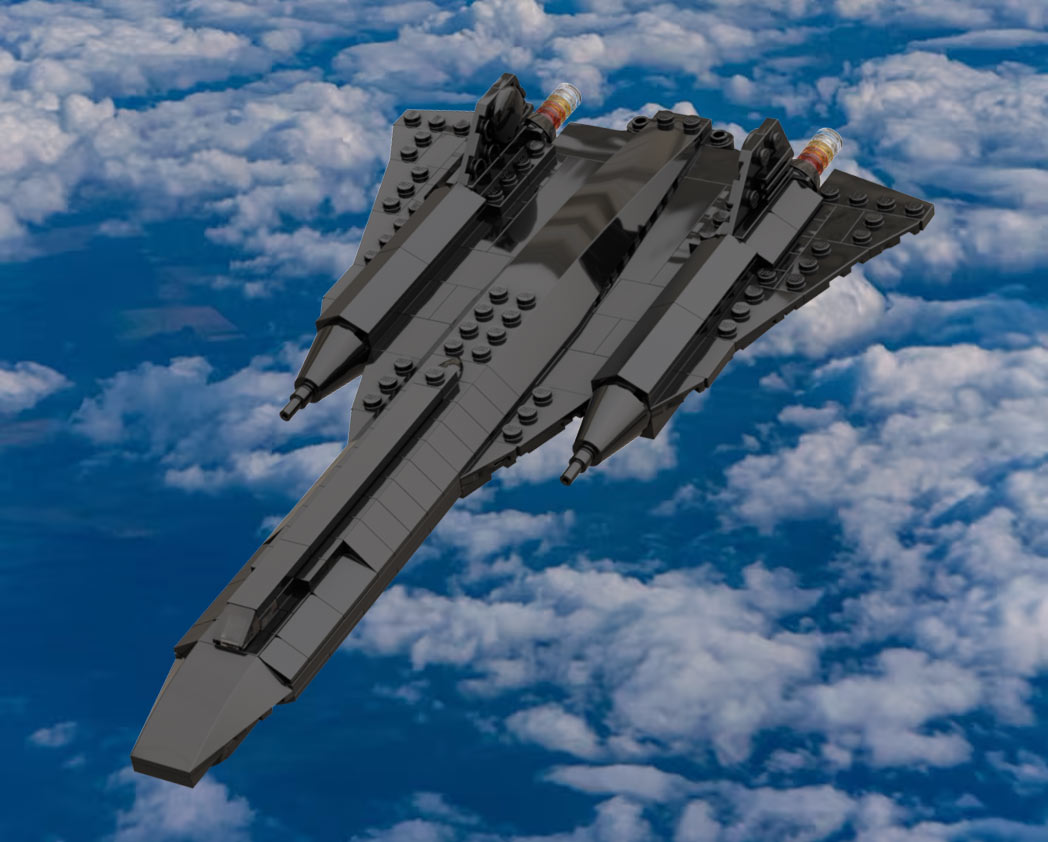
A-12 Archangel
A-12 Archangel
1st launch attempt:
Launch Site:
Orbital Type:
Country of Origin:
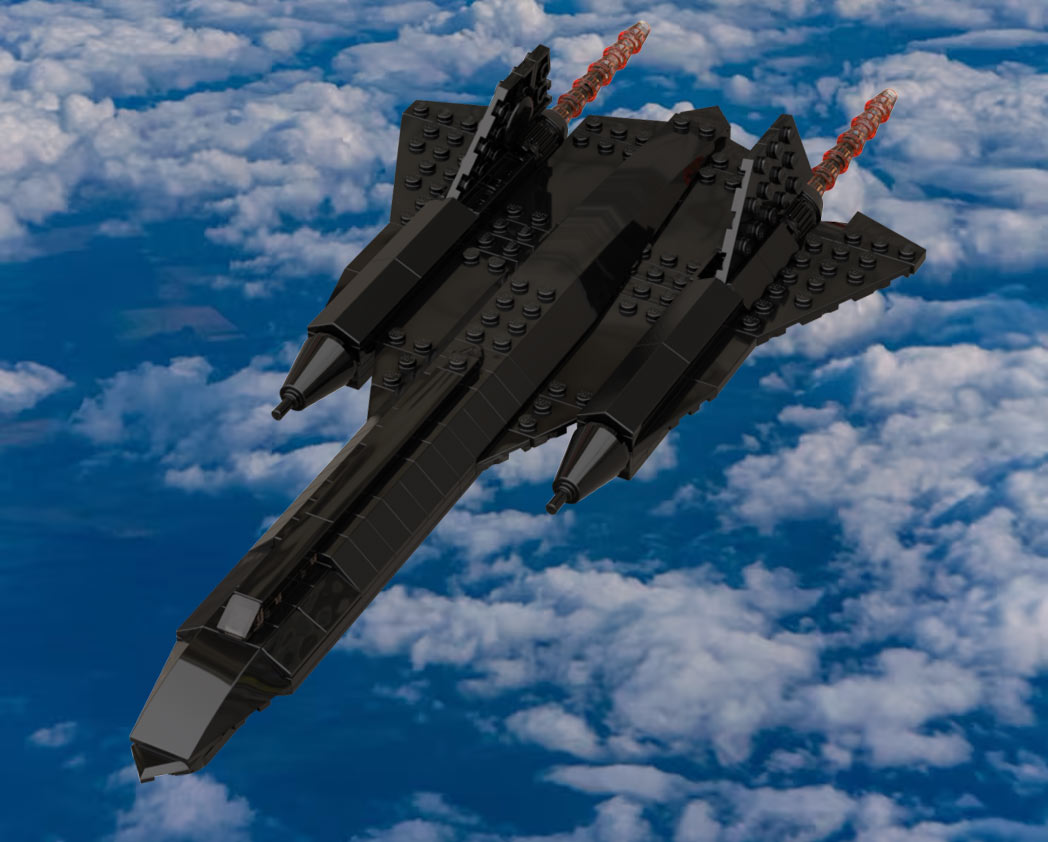
SR-71 Blackbird
SR-71 Blackbird
1st launch attempt:
Launch Site:
Orbital Type:
Country of Origin:
The Heir and the Ghost: Dyna-Soar and the X-37B
The X-15’s final flight landed in October 1968. Its successor should have been in the air years earlier. That it wasn’t, that the vehicle designed to take the X-plane programme from the edge of the atmosphere into orbit was cancelled with its hardware half-built and its pilots trained and waiting, is one of the more consequential decisions in American space history, and one whose full implications took sixty years to resolve.
The Boeing X-20 Dyna-Soar was a United States Air Force programme to develop a spaceplane that could be used for reconnaissance, bombing, space rescue, satellite maintenance, and sabotage of enemy satellites. The name compressed Dynamic Soaring into two syllables, a reference to the skip-glide trajectory first proposed by the German engineer Eugen Sänger in 1941, in a document whose full title was “A Rocket Drive for Long Range Bombers” and whose proposed mission was to take off from occupied Europe, skip across the top of the atmosphere like a flat stone on water, bomb New York, and continue to Japanese-held territory in the Pacific. Sänger’s Silverbird, was never built, but its aerodynamics were sound, and when Walter Dornberger arrived at Bell Aircraft after Operation Paperclip he brought the concept with him. It evolved through a series of proposals before the Air Force consolidated them all into a single programme. The USAF Air Research and Development Command issued a proposal for Dyna-Soar explicitly intending it to act as successor to the X-15 research program.
The vehicle Boeing designed was a delta-winged glider 10.77 metres long, weighing just under 5,000 kilograms, with no propulsion system of its own. It would ride a Titan III booster to orbit, perform its mission, reconnaissance, inspection of enemy satellites, or simply research, and glide home to land on a runway. The heat of reentry presented the same problem it always did, solved the same way: a structure built from René 41 nickel alloy, the same material the X-15 had pioneered, rated for the temperatures of orbital reentry rather than the merely extreme temperatures of hypersonic flight. The undercarriage, where the Space Shuttle would one day use rubber tyres, used retractable wire-brush skids made from the same René 41 alloy as the airframe, because rubber would have burned during reentry before the vehicle was anywhere near slow enough to land.
In April 1960, seven astronauts were secretly chosen for the Dyna-Soar program among them Neil Armstrong and Bill Dana, both simultaneously flying the X-15, both now assigned to its orbital successor. Armstrong left the programme in mid-1962 for NASA’s astronaut corps. Dana returned to the X-15, eventually becoming its final pilot. The remaining pilots trained for a vehicle whose mission kept shifting under them. McNamara wanted to know what Dyna-Soar was actually for. In January 1963, he directed the Air Force to undertake a study to determine whether Gemini or Dyna-Soar was the more feasible approach to a space-based weapon system.The study came back inconclusive. McNamara concluded the Air Force had been placing too much emphasis on controlled reentry without developing real objectives for what it would do once it got to orbit.
Cancellation in December 1963 came only eight months before drop tests from a B-52 and a first manned flight in 1966. McNamara killed a project in being, with drawing release nearly 100% complete, and the first spacecraft one month away from final assembly. Expenditures were under control and Boeing had already spent $253.5 million of its $530 million development budget. The programme had been running for six years. Its pilots had given up other assignments. Its engineers had solved problems, reentry heating, hypersonic stability, skip-glide trajectories, that no one had solved before them. The Manned Orbiting Laboratory programme was announced the very same day as the cancellation, a replacement that was itself cancelled seven years later without flying a crew, having spent $1.56 billion. The pilots who had been quietly waiting to fly Dyna-Soar used a pun that history has preserved: the Dyna-Soar had become a dinosaur.
The hardware that remained, a full-scale mock-up, some cut materials, a set of drawings that were 100% complete, went into storage. A model of the X-20 built and donated by Boeing to the National Air and Space Museum in 1990 is not on display. It is in storage. The actual vehicle exists as nothing more than a set of engineering drawings and the wire-brush landing skids that someone kept.
What McNamara had cancelled was not simply a research programme. He had cancelled a concept, the idea that military space operations required a piloted, manoeuvrable, reusable vehicle that could reach orbit, do something purposeful while it was there, and return controlled to a runway. The concept did not go away. It waited.
The X-37 was first known as the Future-X Pathfinder when NASA launched the effort in 1999 to study technologies that could lower the cost of access to space. It was a civilian programme, conceived in the aftermath of the Shuttle’s demonstrated limitations, intended to develop a small reusable orbital vehicle that could carry experiments to space and bring them back for examination, something the Shuttle could do but at ruinous cost, and something expendable rockets could not do at all. NASA transferred X-37 development to DARPA in 2004, at which point it became classified. What had been a civilian research programme became a military one, and what its purposes were became, and largely remain, unknown.
The Air Force announced it would develop its own X-37 vehicle, dubbed the X-37B, in November 2006. Boeing’s Phantom Works division built it, the same division that had, four decades earlier, built the X-20 mock-up that was now in storage at the Smithsonian. The X-37B is 8.8 metres long with a 4.6-metre wingspan, solar-powered on orbit, and designed to launch vertically on a standard rocket and land horizontally on a runway. Its payload bay is roughly the size of a pickup truck bed. Two vehicles were built.
The first X-37B launched on its first mission on 22 April 2010 atop an Atlas V from Cape Canaveral. It spent 224 days in orbit and landed at Vandenberg Air Force Base, conducting the first US autonomous orbital landing onto a runway, the first such landing since the Soviet Buran shuttle in 1988. The tyre on the left main gear blew on landing, causing minor damage. On its second mission the same vehicle spent 468 days in orbit. On its third, 674. Each mission longer than the last, each payload classified, the orbital parameters disclosed only after landing when amateur astronomers had typically already tracked it down.
Since its first flight in 2010, the X-37B has conducted seven missions, testing advanced propulsion systems, reusable spacecraft technologies, and military payloads over long-duration spaceflights. During the first six missions, the X-37B spent more than 3,774 days in orbit, more than ten years of cumulative orbital time across two small vehicles, each mission extending the record set by the last. OTV-6, which landed in November 2022, spent 908 days in orbit, more than two and a half years on a single mission. For comparison, the entire Space Shuttle programme accumulated 1,323 days across 135 missions over thirty years. Two X-37Bs, quietly and without ceremony, exceeded that total.
The most recent mission, OTV-7, operated in a highly elliptical orbit reaching nearly 39,000 kilometres, approaching geosynchronous altitude, far higher than any previous X-37B mission, and performed aerobraking manoeuvres to reduce orbital debris risk before landing in March 2025. It launched, not coincidentally in the view of some analysts, shortly after China deployed its own Shenlong orbital spaceplane in December 2023. The two vehicles, one American, one Chinese, both classified, both manoeuvrable in orbit, both landing on runways, operated simultaneously in Earth orbit for over a year. Neither government said much about what either of them was doing up there.
What the X-37B does in orbit is not publicly known and may never be. Space Force and Boeing describe it as chiefly a testing platform, a vehicle that allows researchers to see how payloads work in the space environment and then examine them afterward on the ground. Analysts with better access to the orbital parameters have suggested it inspects other satellites, tests sensor packages, experiments with propulsion technologies, or some combination of all three. The former Air Force Secretary once told an audience that it could perform “an orbit that looks like an egg”, an elliptical orbit whose apogee and perigee could be varied using onboard propulsion, making it difficult to predict where it would be at any given time. This is not a capability you develop if your primary interest is growing seeds in microgravity, though the X-37B has done that too.
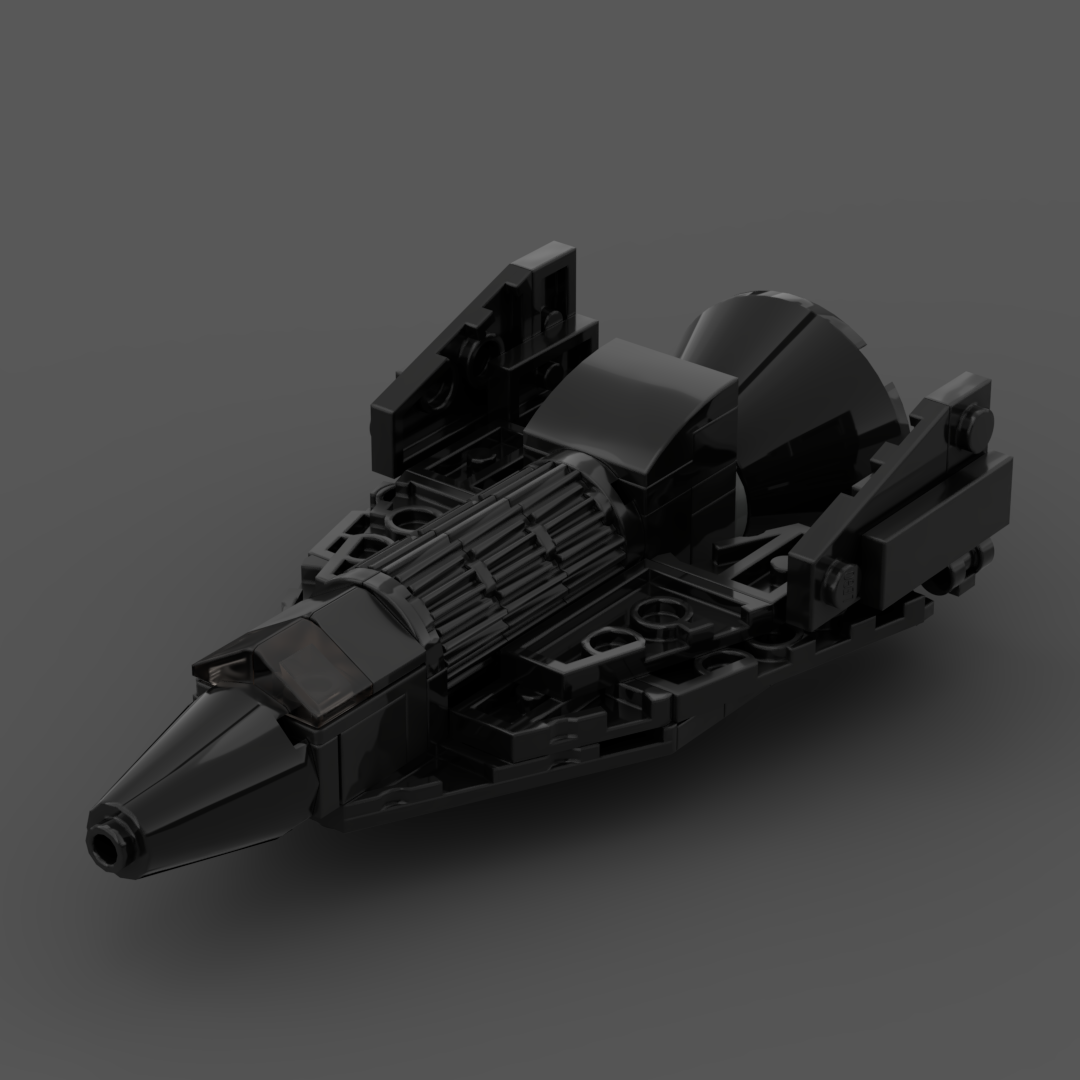
Dyna-Soar (X-20)
Dyna-Soar (X-20)
1st launch attempt:
Launch Site:
Orbital Type:
Country of Origin:
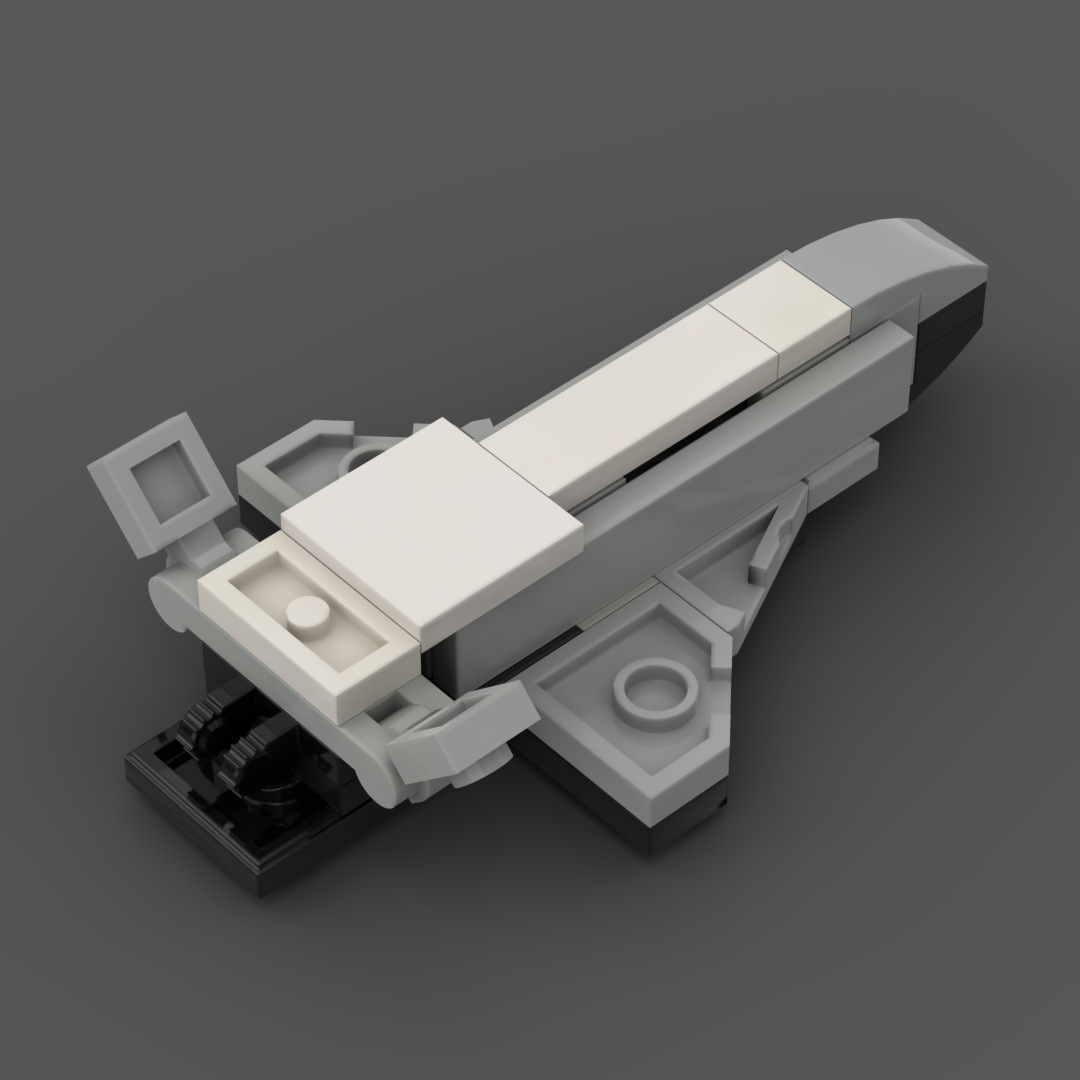
X-37b
X-37b
1st launch attempt:
Launch Site:
Orbital Type:
Country of Origin:
Dream Chaser: The Civilian Heir
While the Air Force was quietly flying its classified spaceplane on missions it declines to explain, the same concept was travelling a parallel civilian path toward a runway landing that its designers have been working toward, in one form or another, for the better part of six decades.
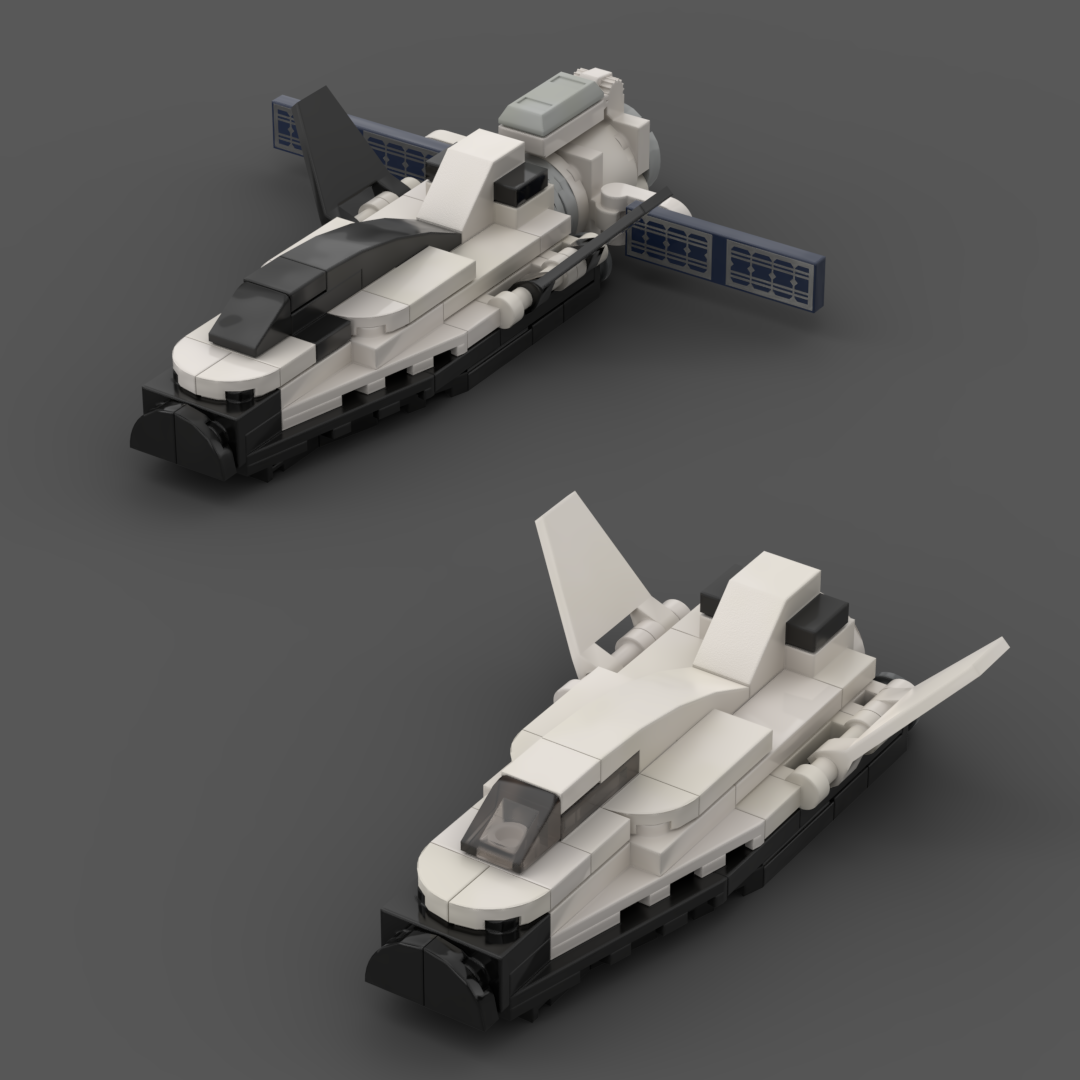
Dream Chaser’s shape did not come from a drawing board. It came from a chain of vehicles stretching back through the lifting body research programme at Edwards, in the 1960s and 1970s, proving that a wingless or near-wingless vehicle could generate enough lift from its own fuselage shape to fly a controlled reentry and land on a runway without power.
The lifting body programme was unglamorous even by Edwards standards, the vehicles looked, as one engineer put it, like someone had sat on a normal aircraft, but the data they generated was irreplaceable. The shape was refined into NASA’s HL-20 Personnel Launch System concept in the late 1980s, a lifting body crew vehicle designed to carry eight people to a space station and return them to a runway landing. The HL-20 never flew. Its shape, refined further and scaled for cargo rather than crew, became Dream Chaser.
Development began in 2004. Twenty years of iteration, testing, funding uncertainties, and a NASA Commercial Crew competition loss that was subsequently reversed on appeal followed before the vehicle reached its current state: a 9-metre lifting body with deployable winglets, designed to launch on a Vulcan Centaur, spend up to six months in orbit, and return cargo under a gentle 1.5g deceleration — far easier on sensitive scientific samples than the abrupt splashdown of a capsule recovery.
It can land on any runway in the world measuring at least 10,000 feet, is designed for up to 15 reuses, and on return leaves its cargo bay accessible within hours rather than the days a recovered ocean capsule requires. The first mission, a free-flyer demonstration carrying experiments for NASA and the United Nations, is targeting late 2026 following a contract modification that removed the requirement to dock with the ISS on its first flight.
Dream Chaser
Dream Chaser
1st launch attempt:
Launch Site:
Orbital Type:
Country of Origin:
The White Rocket: NASA’s T-38 Talon
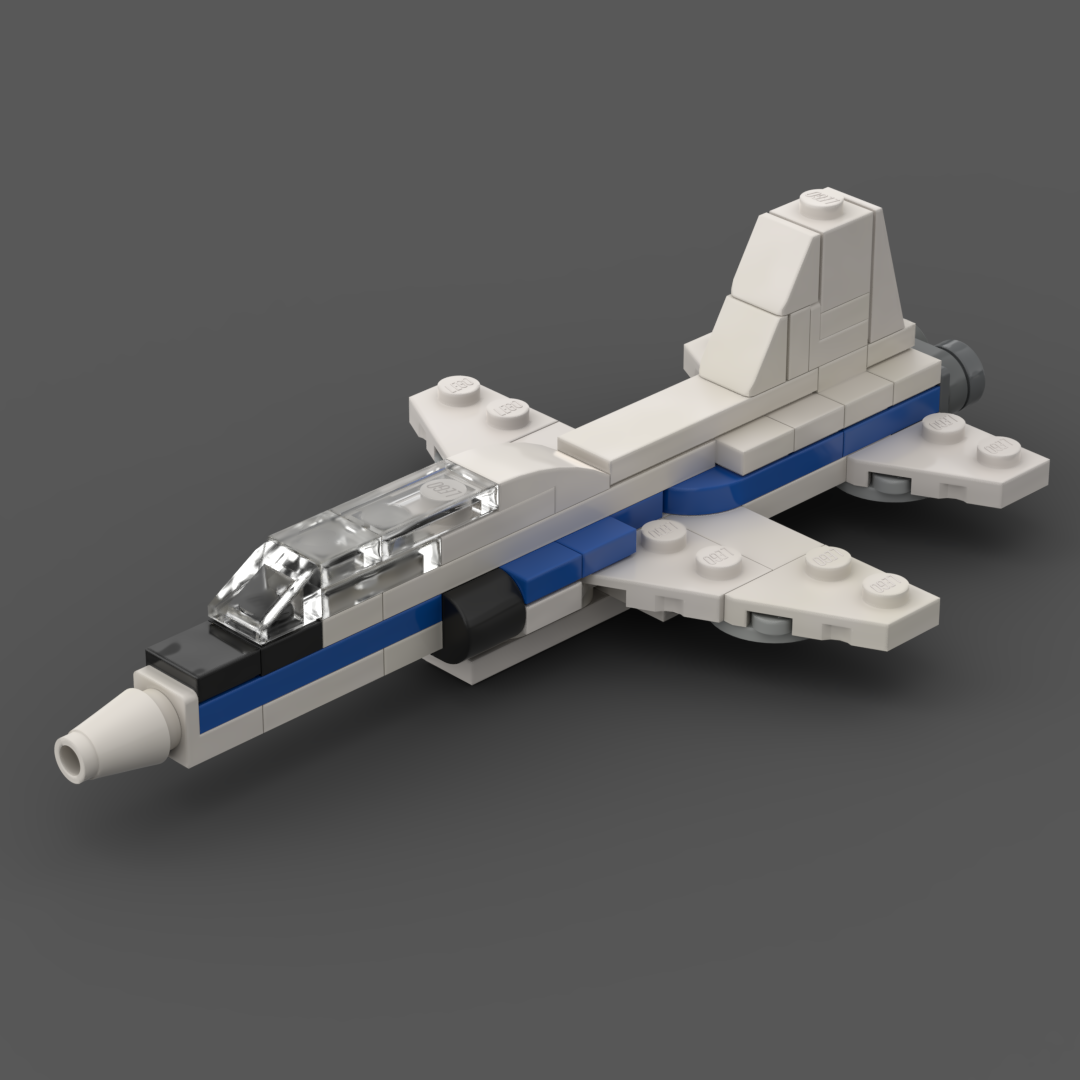
Not every aircraft pushed the boundary of the possible. Some of the most important ones simply kept the people who did pushing it sharp enough to survive. The Northrop T-38 Talon was the world’s first supersonic jet trainer designed in the mid-1950s when the Air Force needed something to replace the subsonic Lockheed T-33 and prepare pilots for the new generation of supersonic fighters entering service. Northrop submitted the aircraft to the Air Force’s trainer competition, won the contract, and flew the first prototype YT-38 on 10 April 1959. The first operational T-38 entered service on 17 March 1961 at Randolph Air Force Base in Texas. It was not glamorous. It was not experimental.
It was not trying to reach Mach 6.7 or cross the Kármán line. What it was, and what it remains, is one of the finest training aircraft ever built, and for sixty years it has been the machine that kept NASA’s astronaut corps alive and competent between spaceflights.
The T-38 can fly at Mach 1.3, has an altitude ceiling of over 55,000 feet, can pull seven Gs, take off in as little as 2,300 feet of runway, and climb to almost 30,000 feet in one minute. That climb to 30,000 feet in sixty seconds exerts over 5G on its crew— which is precisely why NASA wanted it. The physical stress of a supersonic climb in a T-38 is a reasonable approximation of the physical stress of launch. The rapid decision-making required in a vehicle that goes from stationary to supersonic in a minute, in a cockpit that forgives nothing, produces exactly the kind of instinctive situational awareness that keeps astronauts alive when something goes wrong 250 miles above the planet.
NASA has frequently used T-38s as test platforms, chase aircraft, and vehicles to allow NASA pilots to maintain their minimum flight requirements. During the Apollo through Space Shuttle era, astronauts frequently used T-38s for transportation between NASA locations, including flights to Kennedy Space Center in preparation for launches.The aircraft served a secondary logistical purpose that suited the programme perfectly: an astronaut who needed to travel from Houston to the Cape for a launch could do so in a T-38, arriving already current in a high-performance aircraft rather than stepping off a commercial flight and into a spacecraft. Shuttle commanders and pilots were required to complete at least 1,000 approaches and landings in the T-38 and other training aircraft before being qualified to fly as shuttle mission commander.
The T-38’s lift-to-drag ratio of around 9:1 made it an effective training tool for handling the Shuttle orbiter’s steep 4:1 to 5:1 ratio, which made many pilots feel as though they were flying a rock. A Shuttle on final approach had the glide characteristics of a particularly aerodynamic brick, no engines, one chance, no go-around. Pilots who had spent thousands of hours in a T-38 had developed the instincts for high sink-rate approaches that the Shuttle demanded. Modified T-38s were also flown as one way of showing pilots how to safely bring a space shuttle back to Earth, with extra-large airbrakes and lowered landing gear among the modifications certified for safety before NASA used the altered T-38 for training. During the early Shuttle landings, T-38s accompanied the orbiter so that the T-38 pilots could advise the Shuttle crew on the condition of their spacecraft if needed.
The aircraft’s human history at NASA is inseparable from the full sweep of the American crewed spaceflight programme. Every one of the Mercury Seven flew NASA T-38 tail number 901. Every astronaut who flew in the Gemini programme flew it. All 24 prime crew members across the nine Apollo lunar missions flew it. All twelve men who walked on the Moon flew it. One aircraft, one tail number, every human being who has stood on the surface of another world.
The T-38 also carries its share of the programme’s grief. Four NASA astronauts were killed in T-38 crashes during the Gemini era alone. Theodore Freeman died on 31 October 1964 when a snow goose was ingested by his engine on approach to Ellington Field and he was too low to eject successfully. Elliot See and Charles Bassett, the prime crew for Gemini 9, died on 28 February 1966 when See misjudged a landing approach in poor visibility at St. Louis, flew below the clouds too late, and struck the roof of the McDonnell Aircraft building where their own Gemini 9 capsule was being manufactured. Clifton Williams died on 5 October 1967 when an aileron jammed in flight. NASA continued using the aircraft despite these losses, because the programme’s leadership judged that the proficiency it built and maintained was worth the risk, and because the alternative, astronauts who were not current in high-performance aircraft, carried its own dangers. As astronaut Terry Virts put it simply: “We use these airplanes because they’re challenging.”
The T-38 became indispensable for maintaining pilot proficiency, teaching formation flying, instrument procedures, and rapid decision-making under pressure, supporting astronauts from the Mercury and Gemini eras through Apollo, the Space Shuttle programme, and the International Space Station, logging hundreds of thousands of flight hours. NASA maintained a fleet of 32 T-38s, housed primarily at Ellington Field in Houston. The aircraft that astronauts flew to the Cape before their Shuttle missions, that they used to stay sharp between ISS rotations, that generations of flight crew used to remind themselves what it felt like to be pushed back in a seat by acceleration, it was always the same basic machine. Northrop built 1,187 of them between 1961 and 1972 and then stopped. The Air Force has been flying the same airframes, upgraded and maintained, for over sixty years.
It is not the fastest aircraft. It is not the highest-flying. It has no records, no classified missions, no experimental designations. It is a trainer, a machine whose entire purpose is to prepare human beings for something more demanding than itself. In that role, quietly and without ceremony, it has been present at every significant moment in American human spaceflight for six decades. The astronauts who walked on the Moon flew it. The astronauts preparing to return to the Moon are flying it now.
T-38
T-38
1st launch attempt:
Launch Site:
Orbital Type:
Country of Origin: