

On the morning of 25 May 1961, President John F. Kennedy stood before a joint session of Congress and committed the United States to landing a man on the Moon before the end of the decade. The words have been quoted so often that their audacity has been somewhat sanded away by familiarity. America had put a human in space for fifteen minutes, three weeks earlier. The Saturn rocket that would eventually carry Apollo to the Moon existed only on paper. Nobody had yet spacewalked, rendezvoused, docked, or demonstrated that a human body could survive the eight days a lunar round trip would require. The mission mode, whether to fly direct to the surface, assemble a spacecraft in Earth orbit, or descend from lunar orbit in a separate vehicle, had not been decided. The engineering problems had not been identified, let alone solved.
Kennedy was not announcing a programme. He was announcing a destination and daring the engineers to build the road.
What followed over the next eight years was the largest peacetime engineering mobilisation in human history, 410,000 people at 20,000 companies, building hardware that had never existed, solving problems that had never been encountered, testing every component and system and interface until failure was no longer a surprise and reliability could be claimed with something approaching confidence. Before Neil Armstrong could step onto the lunar surface, a sequence of vehicles had to be designed, built, tested, and flown in a hierarchy of increasing ambition. The Saturn I. The Little Joe II. The Saturn IB. The Lunar Landing Research Vehicle. Each one a prerequisite for the next. Each one a story in its own right.
The Complexes: Where the Rockets Stood
Before any Saturn rocket could fly, somewhere had to be built to fire it from. The Cape Canaveral that von Braun’s team arrived at in the early 1960s was already a working missile range, Thor, Atlas, Titan pads scattered along the barrier island’s eastern shore, but nothing there had been built for a rocket the size of the Saturn family. Two new complexes were constructed specifically for the programme, one after the other, each one larger than anything that had preceded it.
Launch Complex 34 was built at a cost of approximately $6.2 million. Construction began in June 1959 and NASA accepted the site from the contractor on 10 January 1962. The complex consisted of a launch platform, umbilical tower, mobile service tower, fuelling facilities, and a blockhouse. Two steel flame deflectors were mounted on rails to allow placement beneath the launch platform. The service tower was likewise mounted on rails and was moved to a position 185 metres west of the pad before launch. At 95 metres high, it was the tallest structure at LC-34. The blockhouse, located 320 metres from the pad, was a domed reinforced concrete structure that could accommodate 130 people during a launch, engineers, controllers, instrumentation technicians, watching through periscopes, because the windowless walls offered no direct view. LC-34 saw its first launch on 27 October 1961.
LC-37’s blockhouse was similar to LC-34’s but half again as large. By far the most imposing of LC-37’s facilities was a 4,700-tonne, 92-metre-high service structure, containing four elevators, nine fixed platforms, and ten adjustable platforms that allowed access to all sides of the vehicle. The six semicircular enclosures could withstand 200-kilometre-per-hour winds. When completed in 1963, the self-propelled, rail-mounted structure was the largest wheeled vehicle in the world. The LC-37 complex consisted of two pads, designated A and B. LC-37A was never used. LC-37B launched the unmanned Saturn I Block II flights from 1964 to 1965 and was subsequently modified to launch Saturn IB flights from 1966 to 1968, including the first unmanned test of the Apollo Lunar Module in space.
The construction of these two complexes required solving problems that had no existing answers. Cape Canaveral’s high water table made underground facilities prohibitively expensive. The sheer size of the Saturn’s propellant connections, liquid oxygen piping, pneumatic lines, instrumentation circuits, electrical power cables, rendered conventional collapsible umbilical towers impractical. The design teams studied jointed towers, cable-suspended towers, and pivoting structures before settling on free-standing umbilical towers braced against the service structure for wind loads, with swing arms extending through cutouts in the platform to connect to the rocket.
At the 67-metre level of the LC-34 umbilical tower, a swing arm fitted with a white room provided access to the Command Module at the top of the stack, the last point of human contact with the vehicle before launch. Engineers who worked in the white room describe the view from that height, looking out across the Cape’s flat coastline to the Atlantic, as one of the few genuinely sublime experiences the programme regularly offered.
After the Apollo programme ended, both complexes were decommissioned. The umbilical tower and service structure at LC-34 were razed, leaving only the launch platform standing at the centre of the pad, as well as the two flame deflectors and the blockhouse. The original spherical liquid oxygen tank stood at the pad until 2008, when it was purchased by SpaceX and relocated to Space Launch Complex 40 for use in Falcon 9 operations, a piece of Apollo infrastructure quietly repurposed for the commercial era. LC-37B was reactivated in 2001 as the launch site for Boeing’s Delta IV rocket, its Saturn-era infrastructure replaced entirely. LC-34 was designated abandoned in place.

Launch Complex 34
Launch Complex 34
Location: Cape Canaveral, Florida, USAYears Operational: 8 (1961 - 1968)Rockets supported: Saturn 1, Saturn 1B (Apollo program)Status: Retired (abandoned in place)
David Welling (Luxordeathbed) Nico Daams (Tech_niek)
March 2020
The Cluster That Started Everything
In August 1958, Wernher von Braun’s Army Ballistic Missile Agency team at the Redstone Arsenal in Huntsville, Alabama, faced a specific problem: the United States needed a heavy-lift rocket, and it needed one quickly enough that a brand new engine design was not an option. The solution von Braun proposed was both pragmatic and slightly absurd. Take one Jupiter missile propellant tank as a central core. Attach eight Redstone-diameter propellant tanks around it. Connect all of it to eight H-1 engines burning liquid oxygen and kerosene, engines derived from the existing Thor and Jupiter powerplants, uprated but not redesigned from scratch. The result would produce 1.5 million pounds of thrust at liftoff. It would also look, to anyone who saw the cross-section, like a collection of missiles that had been bolted together, which was essentially what it was.
Von Braun called it “quick and dirty.” The engineering community, less charitably, called it the “cluster concept.” Kennedy, in September 1963, identified it as the point where US lift capability would finally surpass the Soviets, noting that the fifth Saturn I flight, SA-5, the first with a live upper stage, represented the moment America had been waiting for since Sputnik. The name Saturn had come from von Braun himself, who proposed it in October 1958 as a logical successor to the Jupiter series, the next planet outward in the solar system, and the Roman god’s most powerful position in the pantheon. The rocket was built to match the name.
The eight propellant tanks surrounding the central core were not identical to the Redstone tanks they derived from, they were modified, lightened, and adapted, but the engineering shortcut they represented was real. Conventional rocketry wisdom held that clustering multiple engines was an inherently risky approach, because the failure probability multiplied with each additional engine. The Saturn I’s eight H-1 engines meant eight opportunities for a single-engine failure to cascade into mission loss. What it also meant was 1.5 million pounds of thrust from hardware that existed, could be manufactured immediately, and could be tested using facilities already built.
The first Saturn I, designated SA-1, lifted off from Launch Complex 34 at Cape Canaveral on 27 October 1961, carrying a dummy second stage filled with 95 tons of water. The water ballast simulated the weight of a live upper stage and allowed the flight dynamics to be measured accurately without the risk of an upper-stage failure complicating the first stage data. The first stage performed flawlessly. SA-2 and SA-3 repeated the exercise, adding Project Highwater experiments, releasing liquid oxygen and water into the upper atmosphere to study their behaviour in a near-vacuum, creating artificial clouds visible from the ground and providing data on how the materials the rocket carried would disperse in the event of a high-altitude failure. SA-4 deliberately shut down one of its eight engines mid-flight to verify that the remaining seven could compensate, and they could, demonstrating the redundancy that von Braun’s team had built into the cluster from the beginning.
The first flight with a live second stage, SA-5 in January 1964, was the Saturn I’s coming-of-age moment. The S-IV upper stage, burning liquid hydrogen and liquid oxygen for the first time in a Saturn vehicle, placed a payload of nearly 10 tonnes into orbit, more than any American rocket had ever lifted. In the context of the ongoing competition with the Soviet Union, it was a genuine milestone. Kennedy received a briefing on the achievement ten days before his assassination.
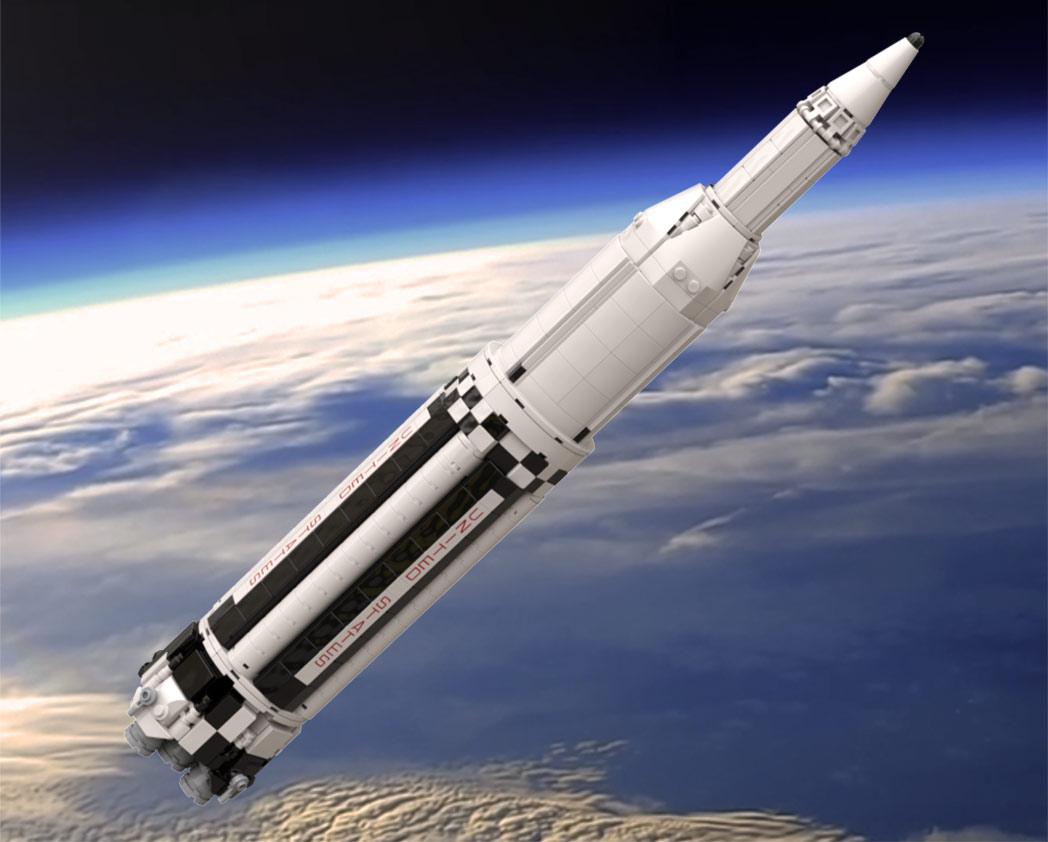
Saturn I (SA-1)
Saturn I (SA-1)
Launch date: 27 October 1961Launch site: LC-34, Cape Canaveral, FloridaPayload / mission: S-I first stage dynamics testOrbit / trajectory: SuborbitalCountry: United States
Saturn I (SA-2)
Saturn I (SA-2)
Launch date: 25 April 1962Launch site: LC-34, Cape Canaveral, FloridaPayload / mission: Project Highwater Orbit / trajectory: SuborbitalCountry: United States
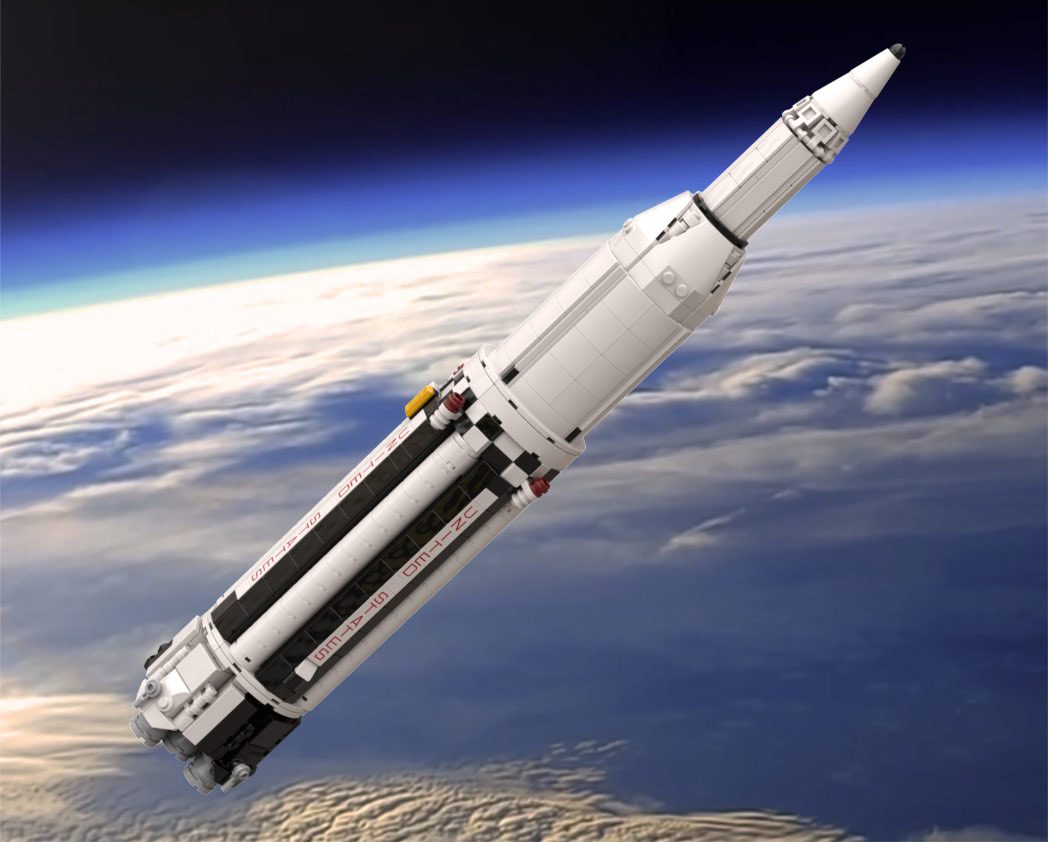
Saturn I (SA-3)
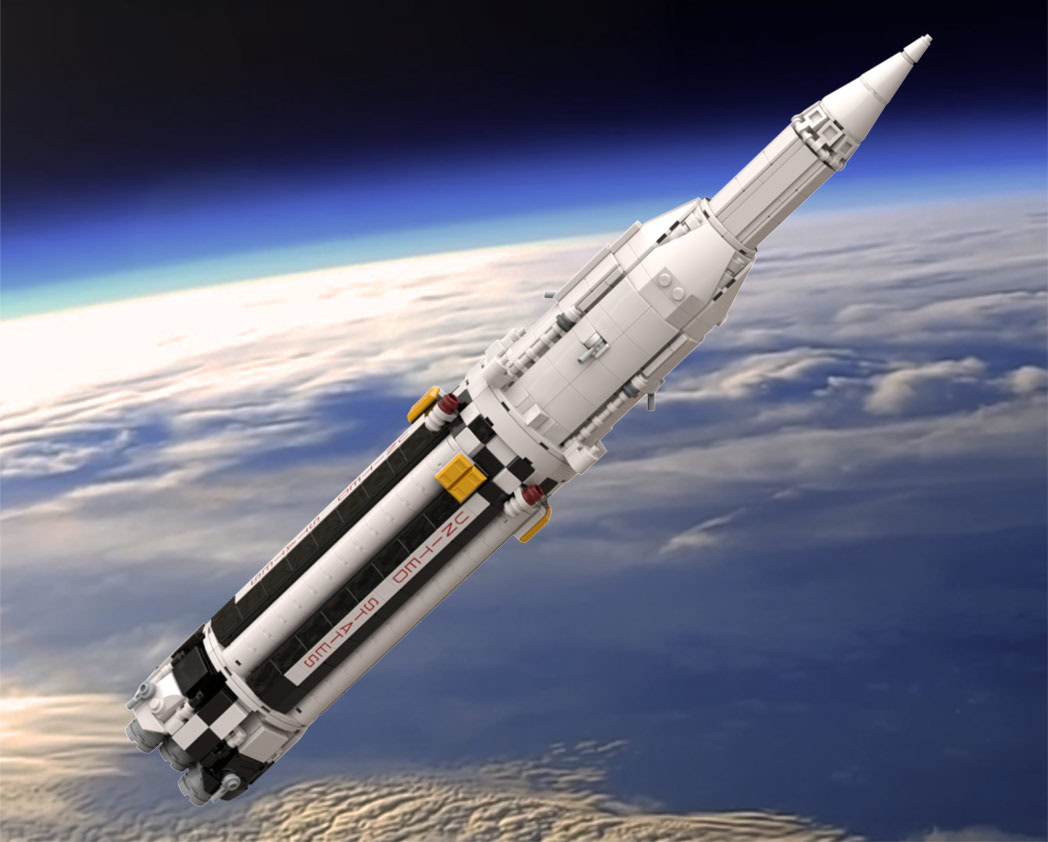
Saturn I (SA-4)

Saturn I (SA-5)
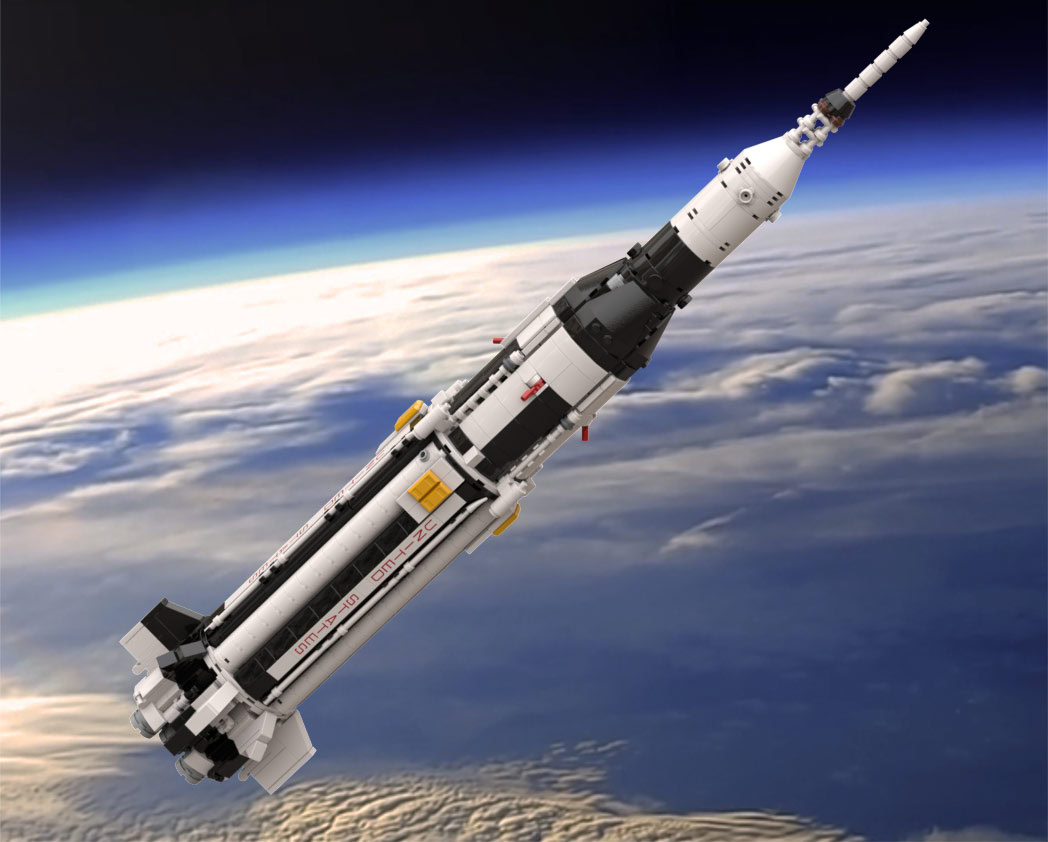
Saturn I (SA-6)
Saturn I (SA-7)
Pegasus: The Silent Wings
The final three Saturn I flights, SA-8, SA-9, and SA-10, all in 1965, carried something more than boilerplate Apollo hardware. Hidden inside dummy Command and Service Module fairings, each one contained a Pegasus satellite: a 1,450-kilogram instrument package that, once released in orbit, deployed two enormous aluminium-frame wings spanning 29 metres across, wider than a Boeing 737’s wingspan, extended from a satellite bus the size of a large wardrobe. A television camera mounted on the interior of the service module adapter provided pictures of the satellite deploying in space, capturing what one historian described as “the eerie silent wings of Pegasus I as they haltingly deployed.”
The wings were not for flying. Each wing consisted of seven hinged frames holding 104 sensor panels, giant electric capacitors, sandwiched between sheets of aluminium and Mylar, calibrated to detect when a micrometeoroid punctured them. The sensors measured the frequency, size, direction, and penetration of micrometeoroid impacts at the altitudes where Apollo would operate. The question they were answering was fundamental: how thick did the Apollo spacecraft’s skin need to be? Before Pegasus, the conservative answer, based on theoretical models and limited data, suggested significant additional shielding mass. Overestimate the threat and the spacecraft becomes too heavy to fly. Underestimate it and the crew flies into a shooting gallery.
By December 1965, the three Pegasus satellites had recorded 196 events combined, and NASA scientists had determined that the threat of micrometeoroids was much smaller than had been assumed. The data indicated that micrometeoroids were not as big a threat to the Apollo spacecraft as originally thought, resulting in a savings of about 450 kilograms in total spacecraft mass. Four hundred and fifty kilograms that did not need to be shielding could be fuel, or science equipment, or margin. In a programme where every kilogram of lunar surface payload required roughly 50 kilograms of Earth-launch vehicle, 450 kilograms was not a trivial number. The Saturn I programme’s unglamorous final three flights, flown with no crew and minimal press attention, paid for themselves many times over.
Pegasus 1 transmitted useful scientific data until August 1968 and remained in orbit until it reentered the atmosphere in September 1978 , thirteen years after its launch, long after the programme it served had ended. The Saturn I programme, during its seven-year lifetime, achieved ten straight successful launches and contributed immeasurably to American rocket technology. Von Braun’s quick-and-dirty cluster had an unblemished record.
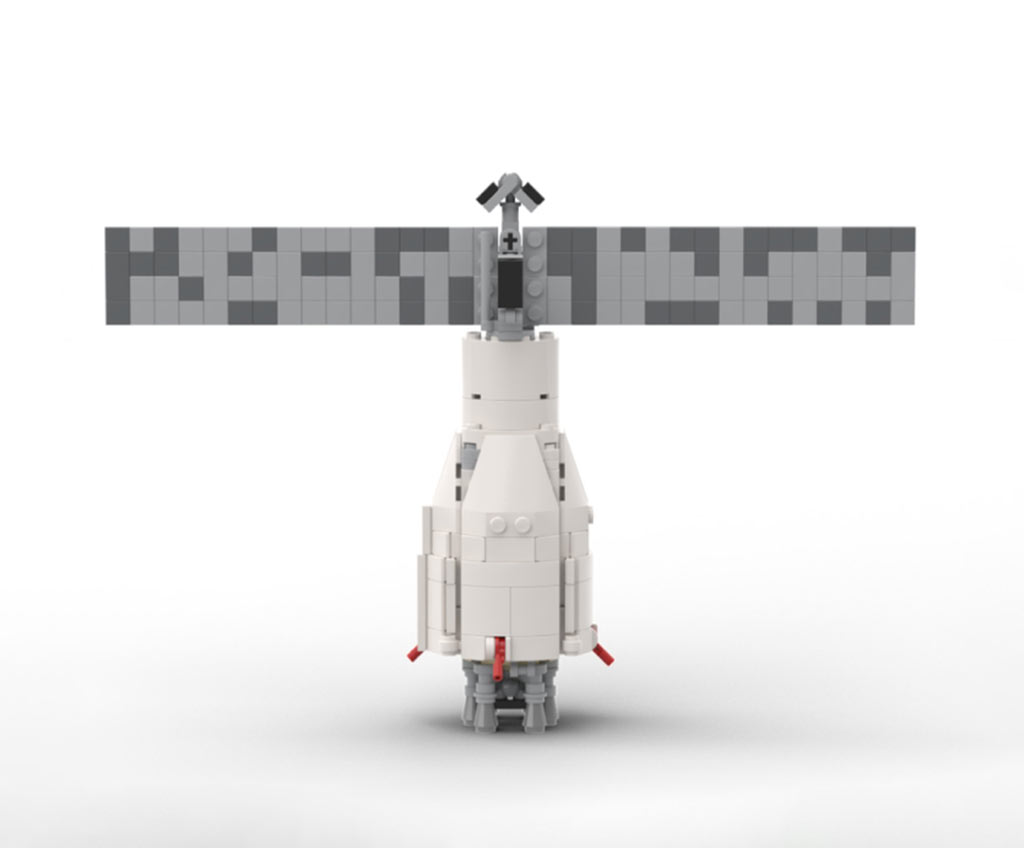
Pegasus 1/2/3
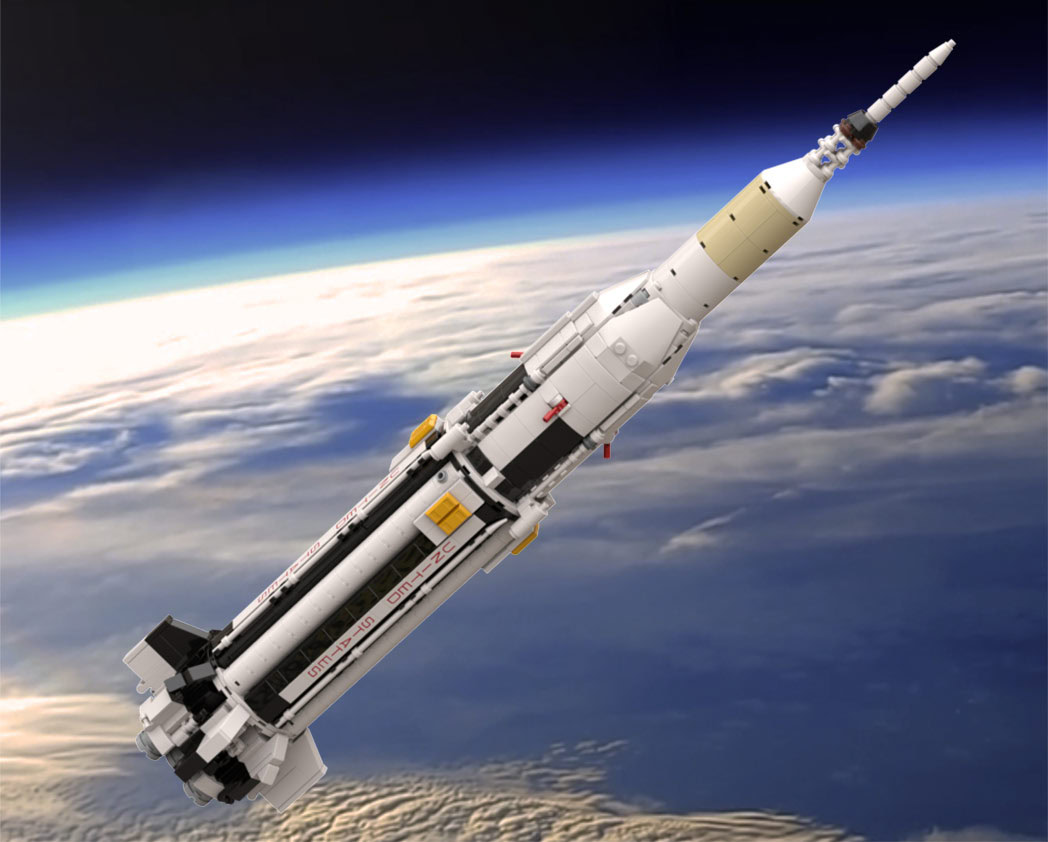
Saturn I (SA-8)
Saturn I (SA-8)
Launch date: 16 February 1965Launch site: Cape Canaveral, FloridaOrbit / trajectory: OrbitalCountry: United States
Saturn I (SA-9)
Saturn I (SA-10)
Saturn I (SA-10)
Little Joe II: The Escape That Never Had to Work
The launch escape system mounted above the Apollo Command Module was a solid-fuel escape tower designed to pull the crew away from a failing rocket in under a second, at any point from sitting on the pad to the high-velocity upper atmosphere. The forces involved were extreme, a 20g acceleration in the first second, pulling a 10,000-pound spacecraft clear of a Saturn V that might by that point be in the process of catastrophically exploding. The system had to work at maximum dynamic pressure, the point during ascent when aerodynamic forces on the vehicle peak, and under the full range of abort scenarios the mission profile might encounter.
Throwing an actual Saturn IB or Saturn V into a simulated abort was not economically or logistically viable. The solution was the Little Joe II, a solid-fuelled test vehicle built by General Dynamics/Convair, named for its predecessor in the Mercury programme, designed specifically to carry Apollo Command Modules to the altitudes and velocities required for escape system tests. It was bigger than Mercury’s Little Joe, more capable, and just as deliberately unpretentious.
Five tests were conducted between 1963 and 1966, each targeting a specific point in the flight envelope. A-001 in May 1964 tested the escape system at the maximum dynamic pressure point, the hardest moment to achieve separation, with air loads fighting the escape rocket. A-002 in December 1964 tested a high-altitude abort at 78,000 feet, the escape system pulling the capsule clear and its parachutes deploying correctly in the thin upper atmosphere. A-003 in June 1965 tested an abort at near-maximum altitude, 160,000 feet, where the escape system had to work in conditions approaching space. The Command Module canard fins deployed, reoriented the capsule, and the parachutes opened correctly. A-004 in January 1966 was the most demanding: a maximum-speed abort simulation at 80,000 feet, carried out with the escape system mounted on a production Command Module rather than a boilerplate, the first and only time the full production escape system was tested under the most stressful conditions it would face.
All five tests succeeded. Two pad abort tests, static tests conducted on the ground, verifying the escape system’s ability to pull the capsule clear at zero altitude and zero velocity, also succeeded. The Little Joe II programme produced an escape system in which NASA could place genuine confidence. It was never used in anger during Apollo. That is exactly what a good safety system looks like.

Little Joe II (QTV)
Little Joe II (QTV)

Little Joe II (A-001)
Little Joe II (A-001)

Little Joe II (A-002)
Little Joe II (A-002)

Little Joe II (A-003)
Little Joe II (A-003)

Little Joe II (A-004)
Little Joe II (A-004)
The Flying Bedstead: Learning to Land on the Moon
The problem was specific: the Lunar Module descended to the surface under rocket power, in a gravitational field one-sixth of Earth’s, with no atmosphere and therefore no aerodynamic control surfaces. Nothing in the existing pilot training repertoire, fighters, test aircraft, helicopters, simulated this adequately. Without wings or conventional aerodynamic control surfaces, there was no aerodynamic way to stabilise the vehicle. The solution required inventing an entirely new way to fly.
The answer was the Lunar Landing Research Vehicle, built by Bell Aerosystems and delivered to NASA’s Flight Research Center at Edwards Air Force Base in April 1964. The LLRV was an open aluminium-alloy truss framework on four legs, with an exposed cockpit cantilevered to one side, an electronics bay on the other, and a General Electric CF-700 turbofan engine mounted vertically on a gimbal in the centre. The engine was throttled to counteract exactly five-sixths of the vehicle’s weight, leaving one-sixth, the lunar gravity equivalent, for the pilot to manage with hydrogen peroxide thrusters. The effect, in theory, was that flying the LLRV felt like flying the Lunar Module would feel. In practice, it felt like something nobody had ever flown before, and nearly killed several of the pilots who flew them.
The LLRV was the first pure fly-by-wire aircraft to fly in Earth’s atmosphere, relying exclusively on an interface with three analogue computers to convert the pilot’s inputs into digital signals transmitted by wire. The technology it pioneered, using computers rather than mechanical linkages to translate pilot inputs into control surface movements, eventually produced the F-16 fighter and the Boeing 777 airliner. It was developed because someone needed to land a spacecraft on the Moon and had to start somewhere.
X-15 pilot Joe Walker made the LLRV’s first flight on 30 October 1964, which lasted 56 seconds. Walker made two more brief flights that day and the test programme expanded from there. The vehicles were transferred to Ellington Air Force Base in Houston in late 1966, where astronaut training began. Neil Armstrong made his first LLRV flight on 27 March 1967.
On 6 May 1968, Armstrong was 200 feet above the surface of the Ellington flight line, conducting a routine simulated lunar landing, when the vehicle’s attitude control thrusters failed. His controls started to degrade and the LLRV began rolling. He had approximately one second to decide. He ejected. Later analysis suggested that if he had ejected half a second later, his parachute would not have opened in time. His only injury was from biting his tongue. The LLRV crashed and burned on the Ellington concrete below him. Armstrong parachuted to the ground, landed unhurt, walked back to his office, and continued his working day. A colleague who came to check on him found him at his desk, completing paperwork. He said of the vehicle: “It was a contrary machine, and a risky machine, but a very useful one.”
LLRV one and LLTV two were destroyed in crashes, but the rocket ejection seat system safely recovered the pilot in all cases. Three of the five vehicles built were lost. The programme continued. Every prime and backup Apollo Moon landing commander completed training in the LLTV, and those who landed a Lunar Module on the Moon attributed their success to this training. Armstrong later said that Eagle flew very much like the LLTV he had flown more than thirty times, that the final trajectory he flew to the landing was very much like those he had flown in practice, and that this familiarity gave him confidence when the guidance computer started throwing alarms and he took manual control with seventeen seconds of fuel remaining. Bill Anders called the ungainly contraption “a much unsung hero of the Apollo Programme.”

Lunar Landing Training Vehicle (LLTV)
Lunar Landing Training Vehicle (LLTV)
The Saturn IB: Putting the Pieces Together
While the Saturn I was proving the cluster concept and the LLRV was teaching astronauts to land on an alien world, the Saturn IB was being built to do something neither of them could: fly the actual Apollo spacecraft in Earth orbit, with a crew, and prove the complete system before anyone risked it on the way to the Moon.
The Saturn IB used the same basic first stage cluster as the Saturn I but with eight uprated H-1 engines producing 200,000 pounds of thrust each, 1.6 million pounds total, replacing the Saturn I’s 1.5 million. More significant was the upper stage: the S-IVB, a single J-2 engine burning liquid hydrogen and liquid oxygen, the same stage that would serve as the third stage of the Saturn V. Flying the S-IVB on the Saturn IB gave NASA thousands of hours of operational experience with a stage that would eventually need to fire once in Earth orbit and once more on the way to the Moon, with three human lives dependent on it working correctly both times.
Three unmanned Saturn IB flights validated the Apollo Command and Service Module before any crew trusted their lives to it. AS-201 in February 1966 flew the CSM for the first time, testing the propulsion system and demonstrating the heat shield at high-energy reentry. AS-202 in August 1966 refined the heat shield testing at even higher reentry velocities, the speeds the capsule would experience returning from the Moon rather than from Earth orbit, producing temperatures the designers needed to verify their calculations against. AS-203, flown between those two in July 1966, carried no spacecraft at all: it was purely a test of how liquid hydrogen behaved in the S-IVB stage in microgravity, providing the data engineers needed to design the propellant management systems that would allow the stage to reliably restart in orbit. Three flights, three specific questions. Three answers obtained before anyone climbed inside. Then came Apollo 1, and the programme stopped.
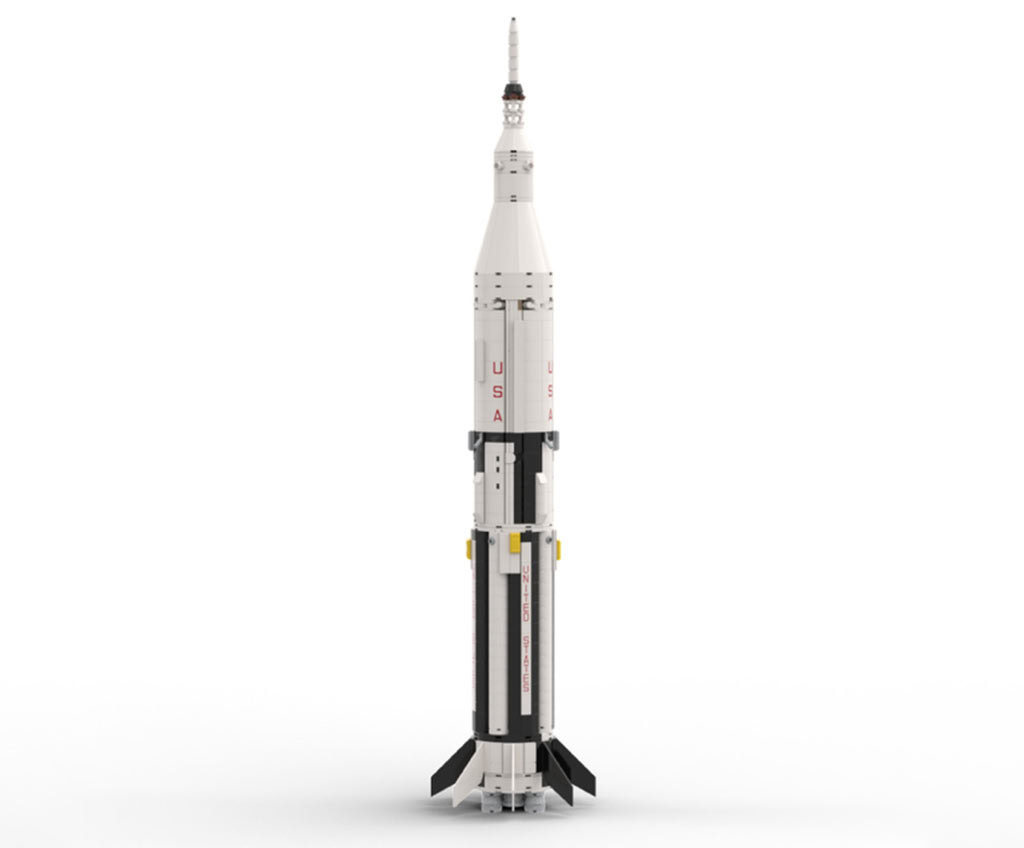
Saturn IB (AS-201)
Saturn IB (AS-201)
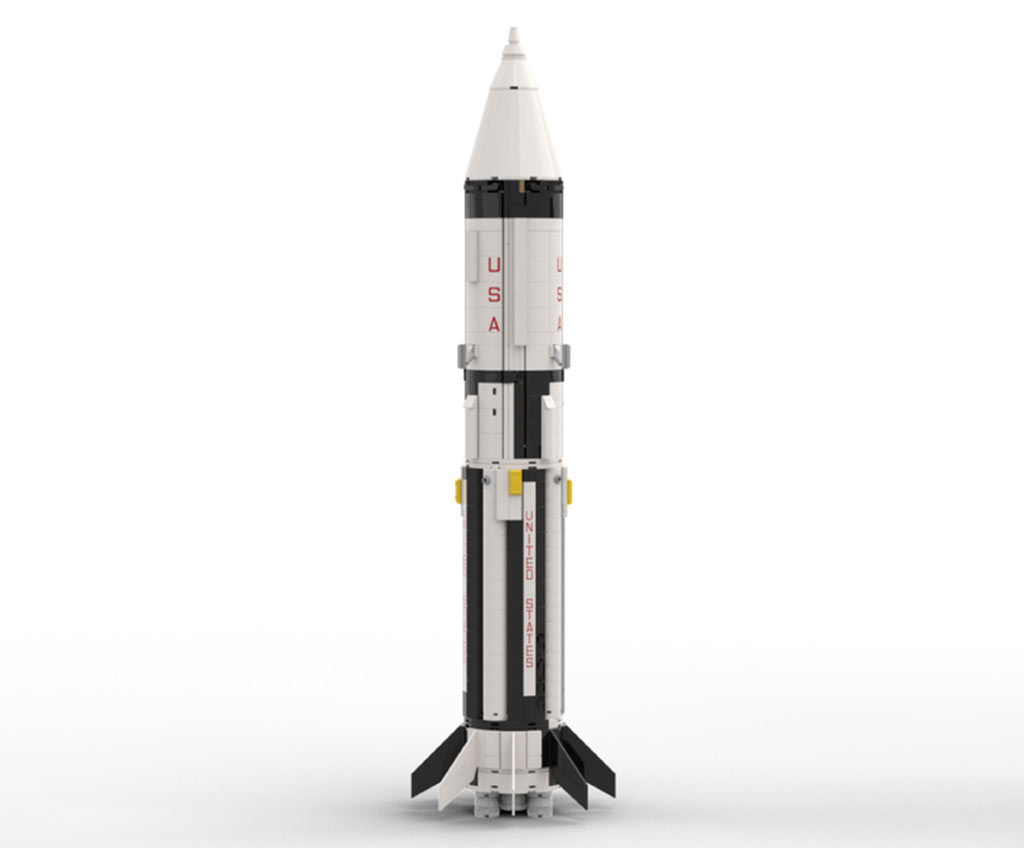
Saturn IB (AS-203)
Saturn IB (AS-203)
Apollo 1: The Fire at Complex 34
The programme that was building toward the Moon had been running too fast, accepting risks it had not properly quantified, and building a spacecraft that its own crew had misgivings about long before anyone was asked to fly it. Gus Grissom had hung a lemon on the Apollo simulator. He had voiced concerns about the quantity of flammable nylon and Velcro in the Command Module to Joseph Shea, the Apollo Spacecraft Program Office manager, in August 1966, five months before the fire.
The crew posed for an unofficial photograph, heads bowed and hands clasped in prayer, holding a model of the Command Module, a gag image that, viewed afterward, feels less like a joke and more like a premonition. Grissom, who had spent his career testing machines that wanted to kill him and had survived a capsule sinking in the Atlantic and almost drowning in the recovery, understood what a dangerous vehicle felt like. He said so. The programme moved on.
On 27 January 1967, with twenty-five days remaining before the scheduled first crewed Apollo launch, Grissom, Ed White, and Roger Chaffee climbed out of a NASA van into Florida sunshine and ascended the tower of Launch Complex 34. The test that day, a “plugs out” simulation, running through the full launch countdown on internal power with no propellants loaded and all pyrotechnics disabled, had been classified as non-hazardous. Emergency equipment was minimal. Medical staff were not present. The escape hatches, which opened inward against cabin pressure, required a minimum of ninety seconds under ideal conditions. The crew had never accomplished the emergency escape procedure in the minimum time.
From the beginning the test was plagued by problems. When Grissom connected to his oxygen supply he reported an odour like sour buttermilk in his suit. An hour and twenty-minute delay followed while technicians investigated. The smell dissipated and the pad crew sealed the hatch, replacing the cabin air with pure oxygen at 16.7 pounds per square inch. The pure oxygen atmosphere was standard procedure for ground tests, it had been used throughout Mercury and Gemini without incident, but at 16.7 psi it was significantly above the 5 psi the capsule would use in orbit, and at that pressure it transformed the cabin’s materials into something approaching kindling. Then the communications system began to fail. A fault in Grissom’s microphone meant it was always active, recording everything. He expressed his frustration through the open channel: “How are we going to get to the Moon if we can’t talk between two or three buildings?”
The countdown held repeatedly. The test was running long. At 6:31 pm, with the count at T-minus 10 minutes and controllers preparing to resume, a wire sparked inside the spacecraft. The exact source was never definitively determined, the investigation concluded it was most likely faulty wiring beneath Grissom’s seat. In the pure oxygen atmosphere, the spark needed only a fraction of a second. The fire spread through the cabin’s nylon netting and Velcro in seconds.
Four seconds after an unexplained rise in oxygen flow showed on ground instruments, an astronaut, probably Chaffee, announced almost casually over the intercom: “Fire, I smell fire.” Two seconds later White’s voice was more insistent: “Fire in the cockpit.” Then: “We have a bad fire! We’re burning up!” Then silence. The time from the first indication of fire to the loss of all crew communication was seventeen seconds.
Pad safety workers grabbed extinguishers and rushed to the capsule, but the dense smoke reduced visibility to nearly zero. Even rescuers wearing smoke masks were overcome by toxic fumes, and the tremendous heat burned through their gloves. Many tried to rescue the astronauts. The intense heat and smoke drove one after another back, but finally they succeeded. It was too late. The fire had quenched itself when atmospheric air rushed into the Command Module through the ruptured hull. It took more than five minutes to open the hatch. It took 90 minutes to extricate the bodies, which were fused to the nylon of the cabin interior.
NASA impounded everything at Launch Complex 34. Administrator Webb established a review board. Both chambers of Congress held inquiries. What emerged was a programme that had been moving too fast, accepting risks it hadn’t properly quantified, and using materials in a pressurised pure oxygen environment without adequately understanding what happened to them there. The fire’s ignition source was never determined, but the deaths were attributed to a wide range of lethal hazards in the early Apollo Command Module design and workmanship, including the highly pressurised pure oxygen pre-launch atmosphere, wiring and plumbing flaws, flammable materials in the cockpit and spacesuits, and a hatch which could not be quickly opened.
The redesign that followed was comprehensive and took twenty months. NASA developed Beta cloth, a Teflon-coated fibreglass fabric, to replace nylon throughout the cabin and spacesuits. Engineers replaced miles of wiring with higher-grade insulation and metal conduits. The hatch was redesigned to open outward in under ten seconds. The pure oxygen pre-launch atmosphere was replaced with a mixed nitrogen-oxygen mixture. After the fire, extinguishing equipment was installed at the top of the umbilical tower, and a slide wire was installed to provide astronauts a rapid escape route in the event of an emergency on the pad. Frank Borman, who served on the accident review board and became the liaison with North American Aviation, said the contractor made perhaps a thousand individual revisions. “I am convinced,” he said, “that the fire really helped in the long run.” It was an extraordinary thing to say about a disaster that killed three men. It was also true.
Gus Grissom and Roger Chaffee were buried with full military honours at Arlington National Cemetery. They rest side by side in Section 11, not far from the grave of First Lieutenant Thomas Selfridge, the first military officer to die in the crash of a powered aircraft, during a demonstration flight piloted by Orville Wright. Ed White is buried at West Point, where he graduated. The three men who were going to fly the first crewed Apollo mission, the commander who had flown Mercury and Gemini, the first American to walk in space, and the rookie who had a passion for flying and a high aptitude for science, are in three separate places, and none of them is the Moon.
Launch Complex 34 stands today as a memorial. The umbilical tower and service structure are gone. The flame deflectors remain. The blockhouse remains, sealed, its periscopes pointing at a pad that no longer has a rocket on it. At the centre of the launch platform, a plaque reads:
LAUNCH COMPLEX 34 Friday, 27 January 1967 1831 Hours Dedicated to the living memory of the crew of the Apollo 1
Ad astra per aspera A rough road leads to the stars
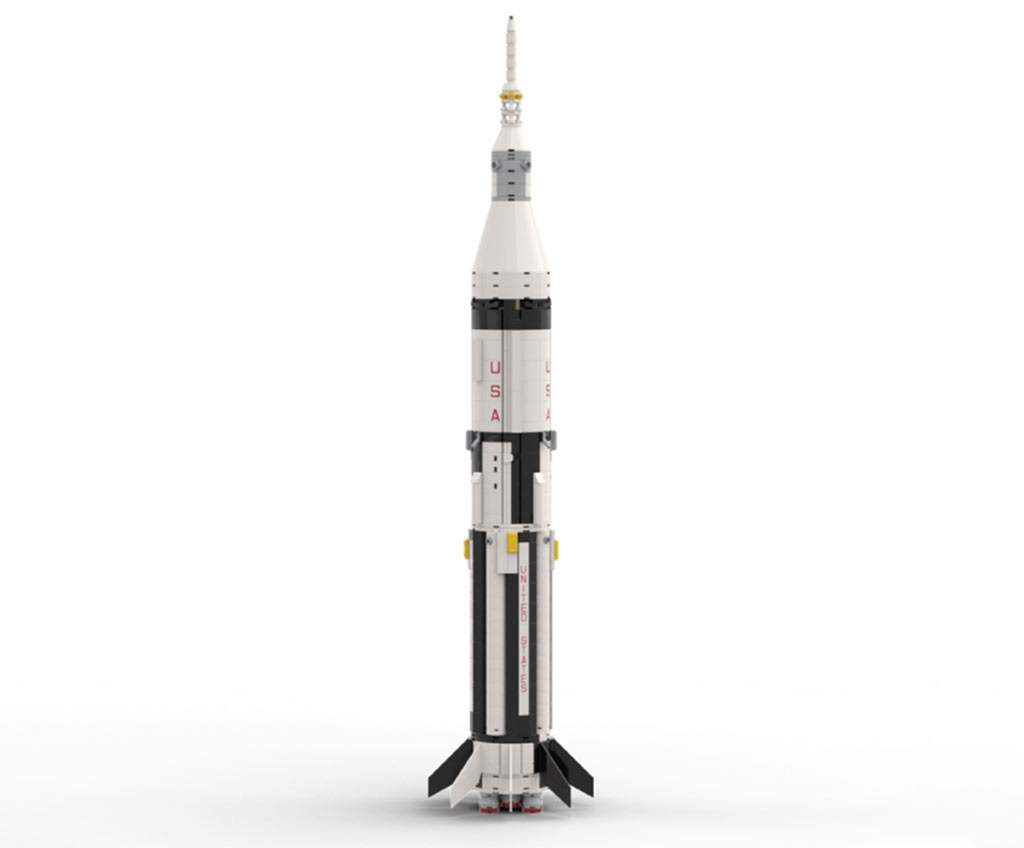
Saturn IB (Apollo 1)
Saturn IB (Apollo 1)
Apollo 7: 101 Percent Success, Zero Distinguished Service Medals
On 11 October 1968, Wally Schirra, Donn Eisele, and Walter Cunningham climbed into a redesigned Block II Command Module atop a Saturn IB at Launch Complex 34, the same pad where Grissom, White, and Chaffee had died twenty months earlier. Schirra had already announced his retirement from NASA. He had been badly shaken by the loss of his friend and neighbour Gus Grissom, and had spent the intervening months at the North American Aviation factory, reviewing every change to the spacecraft with a focus that his colleagues described as obsessive and that he described as necessary. He had very little patience left for anything that seemed to compromise safety or waste the crew’s time on tasks with no engineering value.
The mission’s purpose was to wring out the complete Apollo spacecraft in Earth orbit for eleven days, enough time to validate every system the lunar missions would depend on. The Saturn IB performed perfectly. The Service Module propulsion engine fired eight times in eight tests, all nominal. The crew conducted the first live television broadcast from an American spacecraft, which Schirra had opposed, correctly identifying it as a public relations objective rather than an engineering one, and which proved wildly popular with the viewing public regardless of his opinion. They filmed themselves holding hand-lettered signs: “Keep those cards and letters coming in, folks.” The mission was, in NASA’s own summary, 101 percent successful.
About fifteen hours into the flight, Schirra developed a severe head cold. In zero gravity, mucus accumulates in the nasal passages and does not drain. There is no relief. “It quickly turned our cozy little spacecraft into a used Kleenex container,” Cunningham later said. The cold spread, at least partially, to the rest of the crew. Three men with head colds, confined to a capsule the size of a large wardrobe, conducting eleven days of demanding engineering tests, with Mission Control sending a continuous stream of requests, updates, and procedural instructions, did not produce an atmosphere of patient cooperation.
The exchanges between the crew and the ground grew progressively more strained. On the ninth day, Schirra burst out at Mission Control when asked to repeat a Revision Control System test: “I wish you would find out the idiot’s name who thought up this test.” The final confrontation came over helmets. Every previous crewed reentry required astronauts to wear their helmets as protection against potential cabin depressurisation. The Apollo helmets had no visor opening.
A crew member with a severe nasal congestion who needed to clear pressure from their sinuses during the violence of reentry could not do so with the helmet on. Schirra told Mission Control the crew would not be wearing their helmets. The exchange with Deke Slayton, relayed through the capcom, was terse:
Slayton: “I think you ought to clearly understand that there is absolutely no experience at all with landing without the helmet on.”
Schirra: “And there is no experience with the helmet either on that one.”
Slayton: “That one we’ve got a lot of experience with, yes.”
Schirra: “If we had an open visor, I might go along with that.”
Slayton: “Okay. I guess you better be prepared to discuss in some detail when we land why we haven’t got them on.”
The crew landed without their helmets. They were fine. The capsule landed upside down, its airbags righting it before recovery. All mission objectives had been met. The spacecraft that would carry Apollo 8 to lunar orbit two months later was validated.
None of the three crew members ever flew in space again. Flight Director Chris Kraft reportedly vowed that none of them would. Every other Apollo mission crew immediately received NASA’s Distinguished Service Medal. Apollo 7’s crew did not. They received them 40 years later, in 2008, posthumously in the cases of Schirra and Eisele, with only Cunningham still alive to accept his. Schirra left NASA and became a television commentator alongside Walter Cronkite for the remaining Apollo flights. He also became a television pitchman for Actifed, the nasal decongestant he had taken in space. In one advertisement, he held up a space helmet and asked: “Can you imagine sneezing while wearing one of these?”
Apollo 7 is remembered, when it is remembered at all, for the head colds and the helmet argument. What it actually was was the mission that made everything else possible, the eleven-day proof that the redesigned Apollo spacecraft could be trusted, the gate through which the programme had to pass before it could point at the Moon. Without Apollo 7’s success, there is no Apollo 8. Without Apollo 8, there is no Apollo 11. The three men who flew it paid a professional price for their insubordination that the historical record suggests was disproportionate to the offence. The mission was, in every engineering sense that mattered, exactly what it needed to be.

Saturn IB (Apollo 7)
Saturn IB (Apollo 7)