

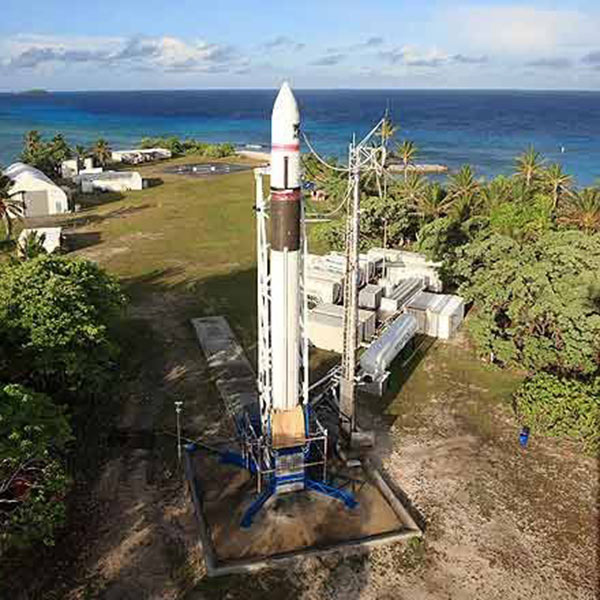
In early 2002, Elon Musk flew to Moscow. He had recently sold PayPal to eBay for $1.5 billion and had decided, with the conviction that characterised most of his decisions, that humanity needed to become a multi-planetary species and that the best way to generate public enthusiasm for Mars was to land a small greenhouse there. He needed a rocket. He had heard that Russia was selling old intercontinental ballistic missiles cheaply. The meetings did not go well.
The Russian engineers and officials he met were, by Musk’s later account, dismissive — one reportedly spat on him — and the price was not what he had been led to expect. He had gone hoping to buy two Dnepr rockets for $18 million total. They told him it was $18 million each. Then $21 million each. On the flight home, according to his biographer Walter Isaacson, Musk opened a spreadsheet he had been building on his laptop and showed his companion what was in it: a calculation of the raw material costs required to build a rocket from scratch. Aluminium, titanium, copper, carbon fibre. The materials, he had worked out, cost about two percent of the typical launch price. The gap between material cost and market price was not an engineering reality. It was an institutional one. It could be closed. In May 2002 he founded Space Exploration Technologies Corporation. He told his engineers they would fly in eighteen months. It took six years and came within a single launch of not happening at all.
The Falcon and the Brink
The Falcon 1 was a two-stage rocket burning liquid oxygen and kerosene — RP-1, the same propellant used in the Saturn V’s first stage F-1 engines, though at vastly different scale. Musk named the rocket after the Millennium Falcon, a detail he has confirmed with the matter-of-factness of a man who saw no reason not to. The Merlin engine that powered its first stage was designed from scratch by SpaceX engineers, many of whom had never built a rocket engine before. The Kestrel vacuum engine on the second stage was equally new. The company was, in its early years, making everything up.
The first launch attempt, from a pad on Omelek Island in the Kwajalein Atoll in the Marshall Islands, occurred on 24 March 2006. The rocket lifted off, flew for 25 seconds, caught fire from a leaking fuel line, and fell back on the launch pad. The second attempt, in March 2007, reached space but failed to reach orbit when the first and second stages — still carrying residual propellant — collided after separation, the liquid oxygen sloshing in the tanks and destabilising the vehicle. The third attempt, in August 2008, almost succeeded. It reached the target altitude and nearly achieved orbital velocity before the first stage’s residual propellant ignited and disrupted the separation sequence. All three failures were, in their respective ways, instructive. They were also nearly fatal to the company.
By September 2008 Musk was simultaneously burning through the last of his SpaceX cash, dealing with Tesla Motors’ funding crisis, and waking at night in what he later described as physical pain from the stress. He had enough money for one more launch attempt. On 28 September 2008, Falcon 1 lifted off on its fourth attempt carrying a mass simulator called Ratsat. The first stage separated cleanly. The second stage ignited. Eight minutes and twenty-one seconds later, the vehicle was in orbit. Musk wept at the post-flight press conference. In December of that year, NASA awarded SpaceX a $1.6 billion cargo resupply services contract. The company had been within one launch failure of non-existence.
COTS and the Reinvention of Procurement
The NASA contract that saved SpaceX did not exist before SpaceX demanded it. In 2004, NASA had quietly awarded a sole-source contract worth $227 million to Kistler Aerospace — a company that had spent eleven years and hundreds of millions of dollars developing a reusable rocket that had never flown, declared bankruptcy once, and produced no complete prototype. It had been awarded without competition, without a public announcement, on the basis that no other company could provide what Kistler was developing. SpaceX, which had 80 employees and also had no flown rocket, wrote a formal protest to the Government Accountability Office. The argument was simple: there was a competition here, if NASA would hold one. The GAO agreed. NASA withdrew the Kistler contract.
The agency then had a problem: it needed a way to resupply the International Space Station after the Shuttle retired, it didn’t want to pay what a traditional cost-plus contract would cost, and it now had a legal obligation to conduct a fair competition. What emerged was the Commercial Orbital Transportation Services programme — COTS — a fundamentally different approach to NASA procurement. Instead of NASA specifying requirements and paying whatever the contractor spent, COTS offered milestone-based funding: companies proposed what they would build, defined the milestones at which they’d be paid, and bore the financial risk if they failed to meet them. NASA was not buying hardware. It was buying services.
In August 2006, NASA announced two Phase 1 winners. Rocketplane Kistler — reorganised but still essentially the same troubled company — received $207 million. SpaceX received $278 million to develop Falcon 9 and Dragon. By October 2007, Rocketplane Kistler had failed to meet its financial milestones and NASA terminated its agreement, recovering $175 million of the potential award. A second competition awarded $170 million to Orbital Sciences Corporation, a Virginia-based company with a history of small satellite launch vehicles, to develop a medium-class rocket and cargo spacecraft.
The contrast between what the COTS programme cost and what it produced is one of the most cited data points in debates about space procurement. For the total NASA investment, the agency got two operational cargo delivery systems to the ISS. A Booz Allen Hamilton analysis found that developing Falcon 9 using NASA’s traditional contracting approach would have cost between $1.4 billion and $4 billion. SpaceX’s actual development cost was $443 million, of which NASA contributed $278 million and SpaceX contributed the rest from its own resources. The question of whether this was because SpaceX was exceptionally efficient or because traditional NASA contracting was exceptionally inefficient has an answer, and it is “both.”
Orbital Sciences and the Ghost of the N1
Orbital Sciences Corporation was not a startup. Founded in 1982, it had two decades of experience building small satellites and air-launched rockets — its Pegasus rocket, dropped from a modified L-1011 aircraft, had been launching small payloads since 1990. It understood rockets. What it did not have was a large cryogenic first stage, which the Cygnus cargo spacecraft would require to reach the ISS. Building one would take time and money it didn’t have in abundance.
The solution the company found was historically extraordinary: the NK-33 engine. These were the engines built for the Soviet N1 moon rocket — the 30-engine behemoth that had failed four times before being cancelled in 1974 and whose existence had been kept secret for two decades. After the Cold War, the engines had been discovered in storage by an American aerospace company and purchased. Twenty were refurbished and designated AJ-26 by Aerojet. Orbital bought them. Its Antares rocket — 40 metres tall, first flight April 2013 from the Mid-Atlantic Regional Spaceport on Virginia’s Wallops Island — flew to the ISS on engines that had originally been built to send Soviet cosmonauts to the Moon.
The irony had a half-life. On 28 October 2014, Antares lifted off from Pad 0A on the Orb-3 mission, carrying the Cygnus spacecraft named SS Deke Slayton with 2,296 kilograms of ISS supplies. Fifteen seconds after liftoff, an AJ-26 turbopump failed. The vehicle lost thrust, fell back toward the launch pad, and the range safety officer transmitted the destruct command just before impact. The resulting fireball was visible from twenty miles away. The investigation concluded the turbopump failure originated in a manufacturing defect — a machined bearing bore in a 40-year-old Soviet-era component, refurbished and qualified for a rocket it had never been designed to fly. The engines had been manufactured before the Apollo programme ended. They had been sitting in storage for decades. They had, as the NASA investigation delicately noted, “failure history knowledge” that traced back to their Soviet origins and was, at many points, simply not available to the engineers who were now relying on them.
Orbital flew subsequent Cygnus missions on Atlas V rockets while replacing the AJ-26 with Russian RD-181 engines on the redesigned Antares 200 series. The programme recovered and continued. The ghost of the N1 had finally, and expensively, been laid to rest.
Commercial Crew: The Test That History Will Remember
While COTS was proving the commercial cargo model, the Obama administration directed NASA to apply the same approach to human spaceflight. The Commercial Crew Programme, announced in 2010, would fund private companies to develop crew vehicles for ISS access, competing for a fixed-price contract with the financial risk borne by the contractors. NASA selected Boeing and SpaceX as its two finalists in September 2014, awarding Boeing $4.2 billion and SpaceX $2.6 billion to complete development and demonstrate operational crew transportation. The choice of two providers was deliberate and required a last-minute internal campaign by NASA’s human exploration chief William Gerstenmaier, who convinced the agency to find additional funding rather than select a single winner — his argument being that redundancy was worth the cost. The decision proved prescient.
In 2014, almost nobody in the industry doubted which company would deliver first. Boeing had built the first stage of the Saturn V, assembled the Lunar Roving Vehicles, and served as the prime contractor for the American segment of the ISS. SpaceX had been founded twelve years earlier and had, at that point, delivered cargo to the station but never flown a human being. The established wisdom was that this was a competition in name only.
SpaceX’s uncrewed Dragon 2 demonstration docked with the ISS in March 2019. Boeing’s first Starliner uncrewed test, in December 2019, suffered a software error that captured the wrong mission elapsed time, causing thrusters to fire incorrectly — the spacecraft burned too much fuel and couldn’t dock with the station. The mission was declared a “high-visibility close call” by NASA’s independent review. A second uncrewed test was required.
On 30 May 2020, SpaceX’s Crew Dragon Endeavour lifted off from Pad 39A at Kennedy Space Center, carrying astronauts Bob Behnken and Doug Hurley — the same pad from which Apollo 11 had launched 51 years earlier. It was the first crewed orbital launch from American soil since the final Shuttle flight nine years earlier. Hurley, the commander, had been the pilot on that final Shuttle mission. He and Behnken spent 64 days on the ISS before splashing down safely in the Gulf of Mexico. NASA’s commercial crew programme had delivered its first operational crew. SpaceX received less money, fewer years, and delivered first. Boeing’s second uncrewed Starliner test, in May 2022, was also declared a partial success. Its first crewed test didn’t fly until June 2024.
The June 2024 Starliner crewed flight test launched NASA astronauts Butch Wilmore and Suni Williams for what was described as an eight-day mission. By the time their eight days had elapsed, multiple helium leaks and thruster failures had prompted NASA to delay their return. The delay stretched to weeks, then months, as engineers tested and debated what they could and could not certify. On 24 August 2024, NASA administrator Bill Nelson announced that Wilmore and Williams would not return on Starliner. The spacecraft, which had brought them up, flew home empty in September. They came home in February 2025, nine months after launch, aboard a SpaceX Crew Dragon. Starliner, after $6.7 billion in total programme costs — more than twice what Crew Dragon had cost — had not completed a single operational ISS crew rotation. Boeing’s first operational Starliner mission is, as of this writing, scheduled no earlier than 2026.
The comparison between the two programmes is a controlled experiment that the space industry did not design but cannot ignore. Same customer, same destination, same contract structure, same time period, similar regulatory environment. One programme completed the work, launched thirteen crewed missions, reduced its per-seat cost as it scaled, and is now the only American vehicle flying humans to the ISS. The other spent more money, took longer, and left two astronauts on the station for nine months when its hardware couldn’t be trusted to bring them home. The lesson the industry drew from this experiment will shape space procurement policy for a generation.
What SpaceX Left on the Table
SpaceX’s dominance of commercial launch — it has flown more orbital missions than any other launch provider in the world for several consecutive years, commanding an estimated 60% or more of the global commercial launch market — has created a secondary economy for the companies fast enough to claim the niches it hasn’t yet filled.
The small satellite revolution that Rocket Lab exploited has produced a cohort of companies targeting specific market segments with purpose-built solutions. Firefly Aerospace, founded in Texas in 2014, developed the Alpha rocket to serve the small-to-medium payload gap between Rocket Lab’s Electron and SpaceX’s Falcon 9. Its first successful launch in October 2022, after an explosive first attempt in 2021, placed a demonstration payload in orbit and began a launch cadence that has since included a NASA lunar lander mission. Relativity Space built an entirely 3D-printed rocket — the Terran 1, with 85% of its structure produced by additive manufacturing — and launched it in 2023. The rocket reached space but not orbit on its first attempt. The company has since pivoted to a larger, partially-reusable medium-lift vehicle, Terran R, having concluded that the small launch market SpaceX disrupted had been disrupted thoroughly enough that the opportunity now lay in medium lift rather than small.
ABL Space Systems developed the RS1 rocket. Virgin Orbit — Richard Branson’s air-launch company, using a Boeing 747 carrier aircraft named Cosmic Girl to drop rockets over the ocean — flew four successful missions before its January 2023 launch to the UK, the first orbital attempt from British soil in 50 years, failed when a fuel filter became blocked and shut down the engine mid-flight. The company went bankrupt two months later, collapsing in days with very little warning to its employees, many of whom learned of the bankruptcy from social media. The speed of the collapse, and its human cost, illustrated the financial precariousness of the sector even for companies that had achieved technical success.
The common thread across the new entrants is the industrialisation of practices that were once considered competitive advantages and are now baseline assumptions: iterative development, failure-tolerant testing, vertical integration, fixed-price contracts, and the understanding that the cost of launch is an engineering problem with an engineering solution rather than a fact of nature. The incumbents who dismissed SpaceX in 2002 as a hobbyist operation were not simply wrong about one company. They were wrong about a method.
The Numbers That Changed Everything
Before SpaceX, a kilogram delivered to low Earth orbit cost approximately $54,000 on an expendable rocket. The Falcon 9, flying expendably, reduced this to approximately $2,700. Flying reused first stages, which we’ll discuss in the next chapter, reduced it further still. The Falcon Heavy, when it carried Musk’s personal Tesla Roadster to a Mars-crossing orbit on its February 2018 test flight — choosing a whimsical payload over ballast because Musk thought it would be funny — demonstrated that the SpaceX aesthetic was not going away even as the company matured into the most capable launch provider in history.
The established industry’s response to being disrupted is worth examining. United Launch Alliance, the Boeing-Lockheed Martin joint venture that had dominated US government launch for a decade, spent years arguing that SpaceX’s cost figures were artificially low, that its safety record was unproven, and that its dependence on a single entrepreneur made it an unreliable partner for national security launches. Then, in 2020, it lost the National Security Space Launch competition to SpaceX and its own new Vulcan rocket. In 2014, when SpaceX had first challenged ULA’s National Security Launch monopoly, an internal email from a ULA official — later made public — described the prospect of competition as “devastating” and predicted the company could not survive it. ULA survived. It adapted. But the market it returned to was not the one it had left.
The commercial space revolution did not simply produce cheaper rockets. It produced a different understanding of what rockets were for. In the old model, a launch vehicle was a bespoke product, made to order, expensive to develop and expensive to fly, its costs amortised across a handful of government contracts. In the new model, a rocket is a product in the economic sense — manufactured at scale, flown frequently, with costs falling as volume increases and reusability reduces the marginal cost of each additional flight. The difference between these models is not incremental. It is categorical.